



Energy Market Overview
The global energy sector continues to navigate a complex landscape of shifting supply dynamics, geopolitical developments, and an accelerating transition toward renewable sources. As of early August 2026, the oil market has seen prices moderate from earlier peaks. Brent crude oil spot prices recently fell from their April highs to average around $85 per barrel in June, and are forecast by the U.S. Energy Information Administration (EIA) to fall further, averaging $74 per barrel in the third quarter. This downward pressure is largely attributed to expectations of increasing global oil supply and a moderation in inventory draws following recent diplomatic efforts in the Middle East.
Simultaneously, the natural gas market is experiencing its own unique pressures. With U.S. dry natural gas production running at record levels, exceeding 105 billion cubic feet per day, the Henry Hub spot price has remained relatively contained, averaging close to $3.60 per MMBtu. Meanwhile, the renewable energy sector is celebrating unprecedented growth. According to the International Renewable Energy Agency (IRENA), renewable electricity generation grew by nearly 10% globally in 2024, now accounting for nearly a third of all electricity generation worldwide, with solar and wind power leading the charge.

Photo: Unsplash
Oil Market Analysis
The crude oil market is currently defined by a delicate balance between robust production and evolving demand expectations. Following the recent memorandum of understanding aimed at stabilizing the Strait of Hormuz, global oil production is expected to return to near pre-conflict averages by the end of 2026. The EIA anticipates that this increase in supply will result in global oil inventories falling by only 2.2 million barrels per day in the third quarter, a significant reduction from previous forecasts of more than 7 million barrels per day. This moderation in inventory draws has already begun to cool prices, with West Texas Intermediate (WTI) and Brent crude futures reflecting the anticipated shift back toward a market state of oversupply in the coming year.
Despite the downward pressure on prices, the Organization of the Petroleum Exporting Countries (OPEC) maintains a positive outlook on demand. OPEC recently raised its 2026 global oil demand forecast, projecting an increase of 1.4 million barrels per day, driven by economic optimism and resilient consumption in emerging markets. The EIA’s own forecast projects Brent crude to average $65 per barrel in 2027, reflecting the expectation of ongoing inventory accumulation. However, the interplay between OPEC’s demand optimism and the EIA’s supply-driven price moderation suggests a period of potential volatility as the market adjusts to these opposing forces. U.S. crude oil production is also projected to reach 13.8 million barrels per day in 2026, further contributing to global supply.
Investment implications: The moderation in crude prices may create near-term headwinds for upstream exploration and production companies that rely on high price environments for outsized margins. However, integrated oil majors with strong refining operations often benefit from lower feedstock costs, potentially widening their crack spreads. Investors should focus on companies with low break-even costs, robust balance sheets, and consistent dividend histories, as these firms are best positioned to weather price fluctuations while continuing to return capital to shareholders.
Natural Gas & LNG
The U.S. natural gas market is currently characterized by abundant supply meeting robust demand, particularly from the electric power sector. Record domestic production has kept working natural gas inventories comfortably above the five-year average — approximately 6% above at the end of June — helping to limit upward price pressures. The EIA forecasts that natural gas consumption in the electric power sector will reach record highs in 2027, driven by rising overall electricity demand and the expansion of the natural gas generating fleet, which is projected to reach 508 gigawatts of capacity by the end of that year.
A critical driver for the natural gas market remains the liquefied natural gas (LNG) export sector. Global LNG supply growth is set to accelerate significantly in 2026, marking its fastest pace since 2019. U.S. LNG exports are projected to expand dramatically, reaching 17.4 billion cubic feet per day in 2026 and 18.6 Bcf/d in 2027, providing a crucial demand floor for domestic producers. The Henry Hub spot price is expected to average close to $3.60 per MMBtu over 2026 and 2027, with the market remaining sensitive to weather-driven demand spikes, particularly during peak summer cooling and winter heating seasons.
Investment implications: The combination of strong domestic power demand and expanding LNG export capacity provides a supportive long-term backdrop for natural gas producers and midstream infrastructure operators. Companies with significant exposure to LNG export terminals or those holding long-term supply contracts are particularly well-positioned. While near-term price spikes may be limited by high storage levels, the structural demand growth from both domestic power generation and international LNG markets offers compelling opportunities for long-term investors in the midstream and LNG infrastructure space.
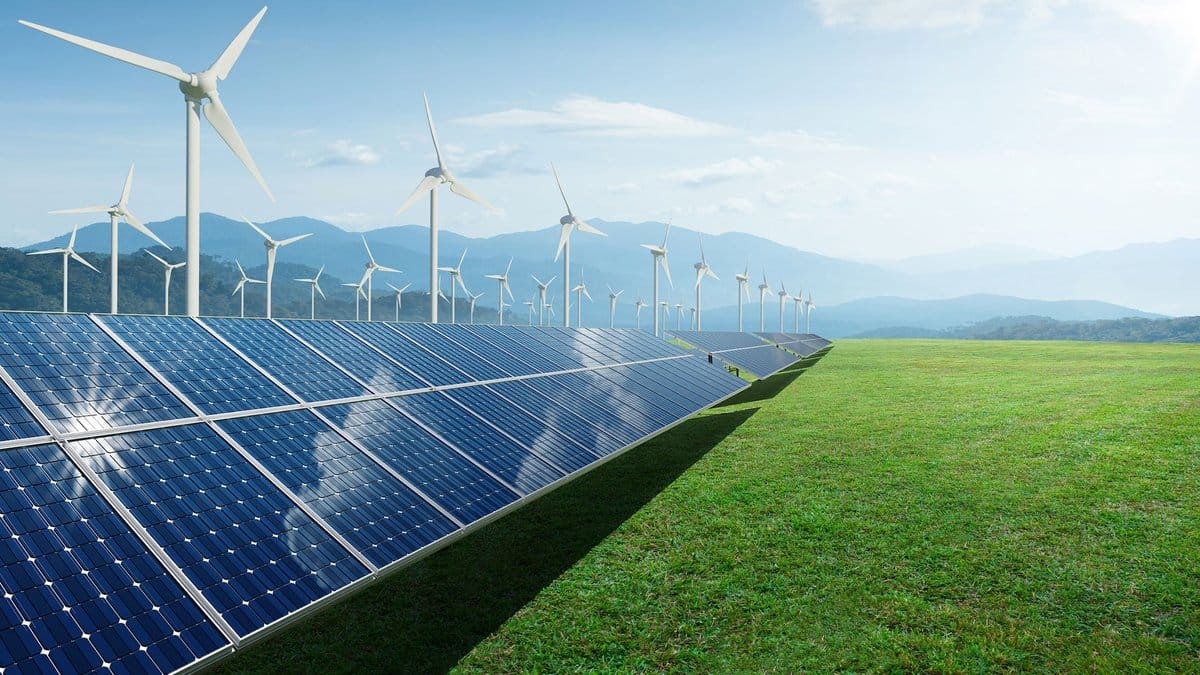
Photo: Quest Resource Management Group
Renewable Energy & Transition
The transition toward clean energy is accelerating at an unprecedented pace. Recent data from IRENA confirms that renewable power generation is recording its fastest growth ever, driven overwhelmingly by solar and wind installations. In the United States, clean energy sources accounted for more than 95% of the new capacity added to the grid in the first quarter of 2026, totaling 8,110 megawatts out of 8,465 MW total additions. This momentum persists despite policy uncertainties and market headwinds, underscoring the compelling economics and technological advancements within the sector. Investment in clean energy projects is on track to reach a record high in 2026, as developers race to meet rising demand and claim expiring wind and solar tax credits.
Solar energy production, in particular, has seen remarkable growth, with nationwide production experiencing a nearly 21% increase year-over-year. The pairing of wind and solar assets, often coupled with battery energy storage systems — which accounted for 3,149 MW of new capacity in Q1 2026 alone — is increasingly becoming the standard for new utility-scale projects. This hybrid approach helps to mitigate the intermittency issues traditionally associated with renewables, providing a more reliable and dispatchable power profile that is highly attractive to grid operators. Solar’s share of U.S. electricity generation is projected to rise from 7% in 2025 to 8% in 2026 and 9% in 2027, per EIA forecasts.
Investment implications: The structural shift toward renewable energy presents a generational investment opportunity. Investors should look toward diversified renewable energy developers, utility companies aggressively expanding their green portfolios, and manufacturers of critical components such as solar inverters and battery storage systems. While the sector can be sensitive to interest rate fluctuations due to the capital-intensive nature of project development, the long-term growth trajectory remains firmly intact, supported by both economic fundamentals and global decarbonization targets.
Energy Stocks & Outlook
Major energy equities have demonstrated remarkable resilience and strong performance in 2026, even as underlying commodity prices have fluctuated. Integrated giants ExxonMobil (NYSE: XOM) and Chevron (NYSE: CVX) have led the sector, with both companies posting year-to-date gains of approximately 30%. ExxonMobil recently reported its highest quarterly earnings on record, while Chevron continues to attract income-focused investors with a dividend yield of nearly 4%. These firms continue to reap the rewards of operational efficiency, strategic acquisitions, and robust refining margins, which have helped offset the recent moderation in crude prices.
The broader energy sector remains an attractive destination for income-focused investors. The strong cash flow generation of the major oil and gas companies has enabled significant share repurchase programs and reliable dividend payouts. ExxonMobil has announced a $20 billion share repurchase program, reflecting management’s confidence in the company’s long-term cash generation capabilities. As the market looks ahead, the focus will increasingly shift toward companies that can successfully balance traditional hydrocarbon production with investments in low-carbon technologies, ensuring their relevance and profitability in an evolving energy landscape. The EIA projects U.S. crude oil production will continue to grow, reaching 14.0 million barrels per day in 2027, providing a solid operational foundation for domestic producers.
Disclaimer: This analysis is for informational and educational purposes only and should not be considered financial advice. Energy sector investments carry significant commodity price volatility and geopolitical risks. Always conduct your own research and consult with a qualified financial advisor before making investment decisions.