



Market Overview
Wall Street suffered its worst session since April 2025 on Thursday, as the Democrats’ midterm sweep forced investors to reprice the artificial-intelligence buildout that has powered the 2026 bull market. The S&P 500 fell 4.36% to 7,353.73, the Dow Jones Industrial Average tumbled 1,833.06 points, or 3.44%, to 51,523.06, and the Nasdaq Composite dropped 5.52% to 24,315.00 — more than 10% below its October 6 record and officially in a correction. The Russell 2000 slid 4.45% to 2,729.89 and also entered correction territory.
The damage was broad. All 11 S&P 500 sectors closed lower, led by information technology’s 6.6% decline, with consumer discretionary and industrials each off about 4%; at the worst of the selling, 419 index members were lower against just 84 gainers. Roughly $3 trillion of S&P 500 market value was erased, and the Nasdaq-100 lost about $2.3 trillion. The Cboe Volatility Index closed at 28.18, up from 16.61, and volume reached 26.9 billion shares versus a 20-day average of 17.7 billion.
The single dominant theme was AI policy risk. Democratic victories in both chambers, plus wins in statehouses such as Texas, have raised the prospect of permitting delays and local opposition to data-center construction, threatening the pace of hyperscaler capital spending. Despite Thursday’s rout, the S&P 500 remains up 7.4% in 2026 and the Nasdaq 4.6% — a reminder that this was a violent de-risking of the year’s biggest winners rather than a broad repricing of the economy.
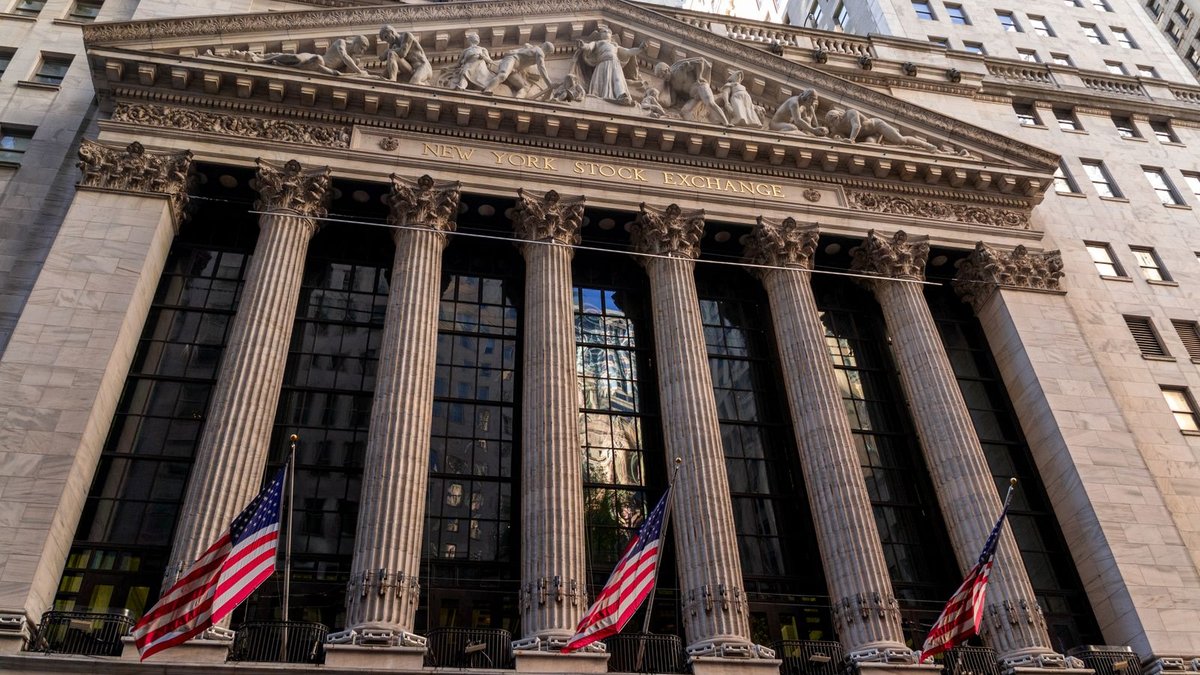
Photo: Pexels
Top Market Movers
Chipmakers post their worst day since March 2020
Semiconductors bore the brunt of the liquidation. Nvidia fell 9.3% to $181.60 and Broadcom dropped 10.4%, while Micron and AMD each lost 15%. The PHLX Semiconductor Index plunged 12.25% to 9,011.14, with every component of the iShares Semiconductor ETF down at least 6%.
Investment implications: Chips now trade on policy headlines as much as order books. Separate companies whose earnings need new U.S. data-center permits from those levered to memory pricing and global demand.
Qualcomm falls 9.5% on handset weakness
Qualcomm closed 9.5% lower at $156.75 after beating quarterly estimates but missing forecasts for smartphone chip sales and guiding cautiously, reinforcing fears that consumer hardware demand is softening just as AI spending is questioned.
Investment implications: Handset suppliers carry dual risk: a cyclical downturn and a regulatory shock to AI. Favor content growth in autos and industrial edge computing.
Neoclouds and data-center suppliers unravel
CoreWeave fell 9.8% to $43.66 as its five-year credit default swaps widened to a record, IREN sank 17%, Nebius lost 15% and Applied Digital 14.7%. Bloom Energy slid 16.4%, GE Vernova 7.5%, Caterpillar 6.4% and Constellation Energy 2.5%.
Investment implications: Leverage is the fault line. Floating-rate-funded neoclouds face higher rates and slower permitting; regulated utilities with contracted data-center load are a cleaner way to own the theme.
Tesla and SpaceX extend their slide
Tesla dropped 10.8% to $343.69 and SpaceX 9.1% to $123.62, extending losses tied to Elon Musk’s nearly $500 million of political spending on Republicans. Texas Governor-elect Gina Hinojosa said the state will pursue laws shielding residents from data-center impacts.
Investment implications: Political alignment is now a valuation variable for Musk-linked assets; expect wider risk premia around state permitting decisions.
Economic Data & Fed Watch
Thursday’s data argued that the labor market is not the source of inflation. Initial jobless claims fell 6,000 to 189,000, matching a 57-year low and beating the 196,000 estimate, while continuing claims rose 23,000 to 1.718 million. Challenger reported 43,994 announced job cuts in October, the lowest for any October since 2023, alongside 444,692 planned hires. Third-quarter nonfarm productivity rose at a 3.6% annualized rate versus a 2.8% forecast, and unit labor costs fell 0.7%, their first decline since mid-2025.
Attention turns to Friday’s October employment report. Economists surveyed by Reuters expect payrolls of 65,000 after September’s 29,000 gain, unemployment steady at 4.2% and annual wage growth slowing to 2.9% from 3.0%.
The Federal Reserve held its benchmark rate at 3.75%-4.00% on October 28 after hiking in September. Cleveland’s Beth Hammack and Richmond’s Thomas Barkin both argued Thursday for a gradual path to a restrictive stance. Futures imply roughly a 70% chance of a quarter-point hike on December 8-9, down from 83% on Wednesday. Treasuries rallied: the 10-year yield eased to 4.84% from 4.89%, the two-year fell 10 basis points to 4.47% and the 30-year slipped to 5.25%. The dollar index closed at 101.55 and firmed to 101.93 early Friday.
Investment implications: A Fed still leaning toward a December hike caps the relief rally in long-duration assets, even as softer yields help equities at the margin. Short-duration Treasuries and cash-like instruments remain a cleaner expression of policy uncertainty than duration bets.

Photo: Pexels
International Markets
Europe closed mixed before the worst of the U.S. selling: the STOXX 600 fell 0.4% to 654.87, Germany’s DAX 0.4% to 26,325.01 and the FTSE 100 0.4% to 10,782.70, while France’s CAC 40 rose 0.3% to 8,205.37. European futures were last down about 1%.
Asia took the heaviest damage. Japan’s Nikkei 225 fell 6% to 57,434.77, its steepest drop since April 2025, with SoftBank and Kioxia each down 11%. South Korea’s Kospi lost 6% to 5,059.69 after an early 8% slide triggered a circuit breaker. Taiwan’s Taiex closed 4.5% lower and lost 12.2% for the week, its worst since 1991, while Hong Kong fell 1.3% and Shanghai 1.1%.
Haven demand lifted the yen to 157.8 per dollar, while the euro held near $1.1198 and sterling traded at $1.3433 after the Bank of England raised rates to 4%. Brent settled at $98.29 and WTI at $90.52, with Brent up 1.6% early Friday near $99.86 but still 12% lower for the week as tanker attacks in the Strait of Hormuz offset de-escalation hopes. Gold closed at $4,113.50.
Looking Ahead
Friday’s payrolls report is the immediate arbiter. A print near 65,000 with unemployment at 4.2% would let the Fed keep its hiking bias intact; a much weaker number, particularly with a rising jobless rate, would sharpen the growth scare already visible in cyclical shares.
Earnings remain a swing factor. Duke Energy, Airbnb and Lumentum reported Thursday, and next week brings a heavy slate of AI-adjacent guidance alongside Anthropic’s planned IPO roadshow, which potential investors say could slip if the regulatory backlash deepens.
Three catalysts deserve close attention: whether Washington advances anything resembling a federal data-center moratorium, how aggressively Texas and other states legislate on permitting, and whether attacks in the Strait of Hormuz escalate. Credit markets are the tell — CoreWeave’s record-wide swaps show investors are already charging more for AI-levered balance sheets. With the December 8-9 FOMC meeting six weeks away, every inflation and labor print now carries outsized weight.
Sources
- Reuters: Nasdaq posts biggest daily drop in 19 months on fears of AI regulations
- Reuters: Stocks tumble as AI panic sweeps markets, bonds draw haven demand
- CNBC: Dow drops 1,800 points; Nasdaq tumbles into correction territory
- Yahoo Finance: Dow plunges 1,800 points, Nasdaq enters correction
- Reuters: Fed’s Hammack, Barkin favor gradual rate-hike path
- Reuters: Jobless claims at 57-year lows; productivity surges
- Reuters: Oil set for sharp weekly drop as Middle East supply concerns provide a floor
- Reuters: Dollar climbs on haven bid as AI rout grips Asian markets
Disclaimer: This analysis is for informational and educational purposes only and should not be considered financial advice. Market conditions can change rapidly, and past performance does not guarantee future results. Always conduct your own research and consult with a qualified financial advisor before making investment decisions.