



If you're reading this, you've probably seen Alexander Green's presentation about an alternative investment vehicle that he claims has been used by ultra-high-net-worth individuals to generate substantial retirement income through infrastructure financing strategies.
Maybe you stumbled across The Oxford Club's marketing and the claims sounded too good to be true.
In this detailed Oxford Club review, I'll examine Alexander Green's credentials, break down exactly what this ASI Fund opportunity is, and reveal whether his “how the rich retire” strategy is legitimate—or just another pitch designed to separate you from your money.
⚠️ Important Investment Disclaimers
This is an independent review of a financial newsletter service. Investment performance examples discussed are based on The Oxford Club's marketing materials and have not been independently verified by MarketWealthPro.
Past performance does not guarantee future results. Hypothetical returns discussed assume perfect market timing, holding through extreme volatility, and do not account for fees, taxes, or real-world trading conditions. Most investors do not achieve these returns.
Investment Risk: All investments carry risk of loss, including potential loss of principal. The 365-day money-back guarantee mentioned applies only to the newsletter subscription price, not to any investments made based on the research.
Regulatory Claims: References to regulatory changes are based on The Oxford Club's marketing claims and have not been independently verified. Investors should verify current regulations with their financial advisors and account custodians.
Maybe you're skeptical—and honestly, you should be.
You've probably been burned before by financial “gurus” promising exceptional returns, only to watch their stock picks crash weeks after you bought in. Or maybe you've paid your financial advisor 1.5% year after year, only to realize they just put you in expensive mutual funds that barely beat—or worse, underperformed—the S&P 500.
I get it. I've been there too.
But here's what I've learned after 20 years covering financial markets: Dismissing everything out of caution means you miss the legitimate opportunities when they actually appear.
So when I saw Alexander Green—the same analyst who reportedly called companies like Apple in 1996, Amazon and Netflix in 2005, and Nvidia in 2004—come out with what he's calling a significant wealth-building opportunity, I knew I couldn't just scroll past.
I had to investigate.
Not because I blindly trust anyone in finance (I don't).
But because Green has a documented track record that deserves examination.
And because the core thesis—that artificial intelligence infrastructure is creating new investment opportunities—isn't speculation. Major technology companies are deploying substantial capital into AI infrastructure right now.
This review is my honest, critical assessment of The Oxford Club's ASI Fund offer.
I'm not here to hype you into buying something you don't need. I'm here to cut through the noise, examine the claims, evaluate the credibility, and help you make an informed decision about whether this opportunity deserves your attention.
Because your time and money are limited.
Let's see if this is worth either.
–> LEARN MORE ABOUT THE OXFORD CLUB ASI FUND
Part 1: The Current State of Retirement in America (And Why Your Concerns Are Valid)
Let me start by acknowledging what you already know but might not want to say out loud:
The traditional retirement model is under significant strain.
Not in some vague, theoretical way—but in concrete, measurable ways that are affecting the retirement security of millions of Americans who followed conventional wisdom.
You worked hard for 30, 40, maybe 50 years. You played by the rules. You saved in your 401(k), lived below your means, avoided debt, and trusted financial professionals to help you navigate toward a secure retirement.
And now?
You watch inflation affect your purchasing power while politicians debate fiscal policy. You see the national debt exceed $36 trillion with competing proposals on how to address it. You turn on financial news and hear conflicting advice about whether markets are fairly valued.
You remember 2008.
You remember watching your portfolio decline significantly in a short period.
You remember the uncomfortable feeling when you opened your quarterly statement and saw substantial losses. Maybe you were 57 then. Maybe you had to delay retirement by several years. Maybe you're still working because full recovery took longer than expected.
And now you're in your 60s or early 70s, and the question that keeps you awake at 3 AM is this:
“Do I have enough to last 20 or 30 more years… or will I outlive my savings?”
That's not paranoia. That's a legitimate concern based on longevity trends and economic realities.
How The Rich Retire Differently—And Why Access Has Been Limited
Here's what makes this even more noteworthy:
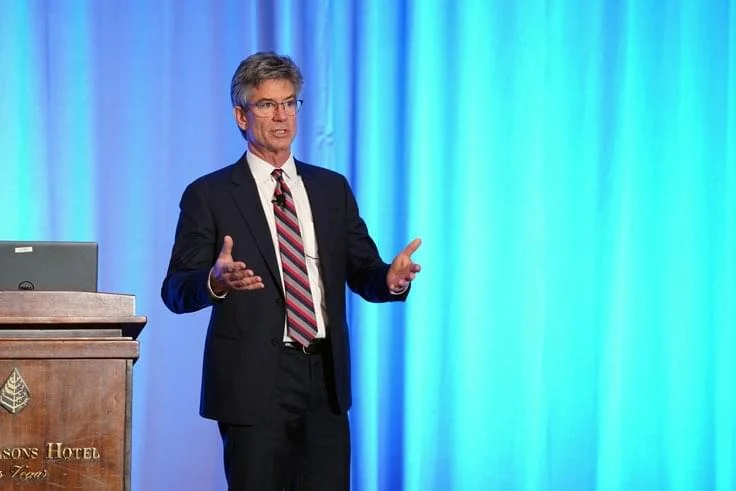
While traditional retirement accounts have limited investment options, ultra-wealthy individuals have historically had access to alternative investment strategies. They knew how the rich retire—and it often involves investment vehicles not typically available to average investors.
They had access to investment structures that required high minimums or accredited investor status.
According to news reports, some high-net-worth individuals like Mitt Romney and Peter Thiel have built substantial retirement accounts using alternative investment strategies not typically available to average investors. However, these are exceptional cases involving unique circumstances, expertise, and access. These results are not typical and should not be expected by ordinary investors.
Meanwhile, most Americans were advised to “diversify into index funds” and “stay the course.”
You followed that advice. And the results have been… mixed.
If you're like most Americans nearing retirement, you have legitimate concerns about financial security.
You're concerned that inflation erodes purchasing power faster than your advisor's projections accounted for.
You're frustrated that you've paid substantial fees for advice that often consisted of standard allocation models.
You feel pressure because younger generations seem to be building wealth through investments you don't fully understand, like cryptocurrency and technology stocks.
You're Not Behind—The Investment Landscape Has Changed
The truth is, you're not behind because you made mistakes.
The investment landscape has fundamentally evolved over the past two decades in ways that traditional retirement planning didn't anticipate.
The old model—work for 40 years, save 10-15% of your income, retire on Social Security and a modest nest egg—that model faces challenges in an environment of persistent inflation and increased longevity.
And here's the key point:
The ultra-wealthy adapted their strategies while mainstream financial advice remained largely unchanged. They explored alternative investments while ordinary investors stayed confined to traditional options.
According to The Oxford Club's presentation, recent developments may be changing that dynamic.
–> EXPLORE THE OXFORD CLUB ASI FUND OFFER
Part 2: Understanding the Current Investment Environment
Now, I could spend the rest of this review discussing challenges in the financial system. There's certainly enough material for that.
But that doesn't help you.
What helps you is understanding this fundamental principle:
Periods of significant change often create new investment opportunities for those who know where to look.
History demonstrates this pattern repeatedly:
- Investors who purchased real estate during the 2008-2010 period saw substantial appreciation as markets recovered
- Those who invested in technology companies during the early 2000s downturn and held long-term captured significant growth
- Investors who bought equities during the March 2020 market decline benefited from the subsequent recovery
I'm not suggesting perfect timing is possible (it isn't). But the pattern is observable:
Significant uncertainty can create investment opportunities.
And right now, we're experiencing another period of substantial market transition.
The AI Infrastructure Buildout Is Underway
You've heard discussion about artificial intelligence. Maybe you've used AI tools or seen headlines about AI's potential impact on various industries.
But here's what deserves attention:
We're witnessing the early stages of an AI infrastructure buildout that major technology companies are funding with substantial capital commitments.
According to public financial disclosures and news reports:
- Microsoft has announced plans to invest tens of billions in AI infrastructure
- Meta has disclosed major data center construction projects
- Nvidia is deploying advanced computing systems that require significant power infrastructure
This isn't speculation. These are capital deployments happening now, visible in corporate earnings reports and construction activity.
And here's where it becomes relevant for investors:
Most people think “investing in AI” means buying shares of well-known technology companies.
That's the obvious approach. It's what financial media discusses regularly.
But as Alexander Green points out in his presentation, obvious investment approaches often have limited upside potential once they become widely recognized.
Because by the time an investment trend becomes common knowledge, much of the price appreciation may have already occurred.
The potentially more interesting opportunity—the kind that could generate asymmetric returns—comes from positioning in the infrastructure that enables the AI expansion.
Not necessarily the companies using AI. Not just the chip manufacturers. But the financing mechanisms that fund the infrastructure buildout.
And that's what this “ASI Fund” appears to represent, according to Green's presentation.
–> VIEW THE OXFORD CLUB ASI FUND DETAILS
Part 3: Who Is Alexander Green? Can We Actually Trust Him?
This is the question you should be asking right now.
Because if you're like most people reading this, you've encountered financial analysts who make impressive claims but deliver disappointing results.
Let me be direct: I approached Alexander Green's claims with appropriate skepticism.
I care about verifiable track record and documented methodology, not marketing claims.
And what I found merits serious consideration.
The Track Record Deserves Examination
Alexander Green is the Chief Investment Strategist at The Oxford Club, a financial publishing firm that has operated for over 30 years with approximately 160,000 members across 130 countries.
But here's what matters about The Oxford Club and Alex Green specifically:
According to The Oxford Club's published materials, Green has identified several major technology companies early in their growth cycles.
The organization claims he recommended four companies that became some of the best-performing stocks over the subsequent two decades.
Let's look at the specific examples from their marketing:
Apple (1996): According to The Oxford Club, Green recommended Apple when the company faced significant challenges and traded at a low price on a split-adjusted basis.
Amazon (2005): The Oxford Club states Green recommended Amazon years before it became the dominant e-commerce and cloud computing company.
Netflix (2005): Per their materials, Green identified Netflix's potential when the company still operated primarily as a DVD-by-mail service.
Nvidia (2004): The Oxford Club claims Green recommended Nvidia approximately two decades before AI applications made it one of the world's most valuable companies.
IMPORTANT DISCLAIMER: These examples represent hypothetical returns assuming perfect market timing at exact entry points, holding through extreme volatility including multiple 50%+ drawdowns, and do not account for subscription costs, trading fees, taxes, or realistic investor behavior. The vast majority of newsletter subscribers do not achieve these types of returns. Past performance does not guarantee or reliably indicate future results. Individual results will vary significantly based on entry timing, exit timing, position sizing, and risk tolerance.
Now, let me be absolutely clear: I'm not showing you these examples to suggest you'll achieve similar returns.
Markets evolve. Past success doesn't guarantee future success. Economic conditions change.
But what this track record does suggest is that Green has demonstrated ability to:
- Identify major technological shifts before they become consensus views
- Spot companies positioned to benefit from those shifts
- Maintain conviction in recommendations despite market skepticism
And those are valuable analytical skills for navigating technological change.
–> REVIEW THE OXFORD CLUB ASI FUND OFFER NOW
What Differentiates Green's Approach
Here's what appears noteworthy about Alex Green's methodology, based on studying his published work and The Oxford Club's history:
He focuses on technology shifts, not momentum trading.
His major calls—Apple in 1996, Amazon in 2005, Nvidia in 2004—were contrarian positions on companies with potentially game-changing technology that markets hadn't fully valued yet.
He employs a systematic evaluation framework.
Green uses what he calls the “Five Golden Metrics” to evaluate investments:
- Leading in cutting-edge technology
- Selling breakthrough products
- Strong patent protection
- Substantial sales growth
- Potential for multiple successful product launches
This represents a methodical process for identifying companies with potential structural advantages.
He emphasizes long-term wealth building, not short-term trading.
The Oxford Club's flagship portfolio—the “Gone Fishin' Portfolio”—is rebalanced once annually. This isn't day trading or speculation. It's strategic positioning for multi-year trends.
And importantly: The organization has operated for three decades.
The Oxford Club has published financial research for over 30 years with hundreds of thousands of members. Organizations don't achieve that longevity without providing value to subscribers.
The Bottom Line on Credibility
Look, I can't tell you that Alexander Green and The Oxford Club will be correct about this ASI Fund opportunity.
Nobody can predict investment outcomes with certainty.
But what I can tell you is this:
Alexander Green has a documented track record that warrants serious consideration.
His methodology appears sound. His approach is consistent with how the rich retire and build long-term wealth—by identifying major technological shifts early and positioning accordingly.
Does that mean you should follow his recommendations without independent analysis? Absolutely not.
But does it mean his ASI Fund thesis deserves critical evaluation? Yes. It absolutely does.
Part 4: The ASI Fund Thesis—What This Actually Is (And Why It Differs from Buying AI Stocks)
This is where many reviews gloss over details and simply direct you to a sales page.
I'm not going to do that.
Because if you're considering this opportunity, you deserve to understand exactly what you're evaluating.
What Is the ASI Fund?
Based on my analysis of Green's presentation and The Oxford Club materials, here's what the ASI Fund represents—and why it illustrates how the rich retire differently than traditional 401(k) strategies:
It's not a traditional stock. It's not a bond. It's not a conventional mutual fund.
According to The Oxford Club's presentation, it's a specific type of publicly-traded investment vehicle that was historically accessible primarily to ultra-high-net-worth individuals and certain institutional investors.
The fund operates on what Green describes as a “private Federal Reserve for the AI industry” model.
Here's the concept as presented:
American retirement accounts hold approximately $12 trillion in capital. Historically, most of that capital has been limited to traditional stocks and bonds due to regulatory frameworks and investment restrictions.
Meanwhile, the AI infrastructure buildout requires substantial financing. Companies need capital to build data centers, acquire computing systems, develop technology, and construct the physical infrastructure for AI operations.
The ASI Fund, according to Green's presentation, acts as an intermediary connecting capital to infrastructure projects.
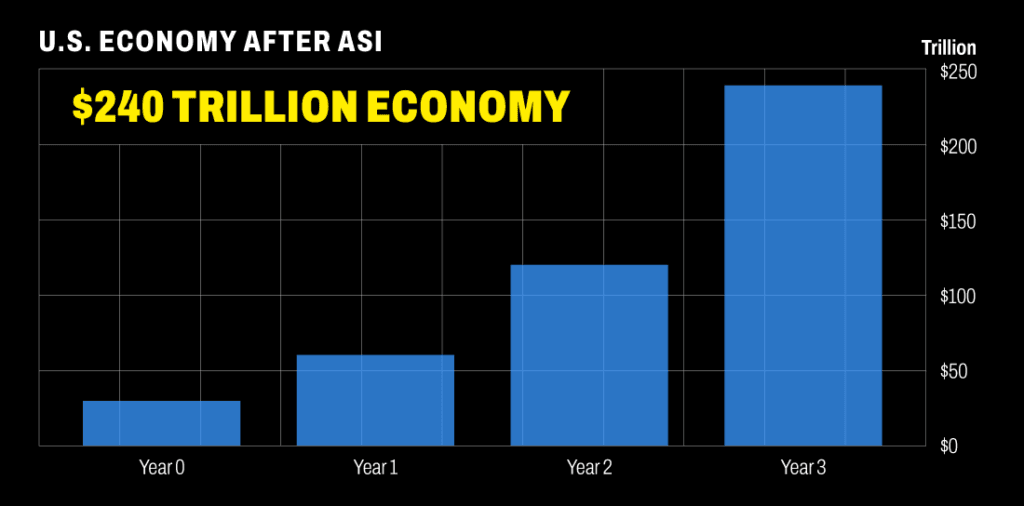
The concept involves pooling investor capital, deploying it into AI infrastructure financing arrangements, earning fees from facilitating capital flows, and distributing the majority of profits to shareholders.
Think of it as owning a piece of the financial infrastructure itself—not the companies building AI applications, but the mechanism that finances infrastructure development.
–> DISCOVER THE BENEFITS OF THE OXFORD CLUB ASI FUND
The Regulatory Claim
Here's where The Oxford Club's marketing makes specific claims:
According to Green's presentation, regulatory changes have recently expanded access to certain alternative investments within retirement accounts.
IMPORTANT NOTE: The Oxford Club references specific regulatory developments that we have not independently verified. Investors should verify current regulations with their financial advisors and confirm what investment types their specific retirement account custodians permit. Regulatory interpretations can vary, and rules may change.
Green suggests this represents a structural change enabling regular investors to access investment vehicles that previously required substantial minimum investments.
If accurate, this would represent expanded access to alternative investment structures.
However, you must verify these regulatory claims independently before making any investment decisions.
Why This Differs from Simply Buying Technology Stocks
You might be thinking: “Why not just buy shares of major technology companies? Aren't those the AI beneficiaries?”
Fair question.
And yes, leading technology companies will likely benefit from AI adoption.
But here's the consideration Green raises:
By the time a company becomes widely recognized as an “AI winner,” its stock price typically reflects that recognition.
Major AI-related stocks have already appreciated substantially over the past several years. Could they continue rising? Possibly. But the exceptional gains that turn modest investments into life-changing wealth often occur before widespread recognition.
The ASI Fund thesis takes a different approach.
It's not attempting to predict which companies will dominate AI. It's positioning in the infrastructure financing that funds the broader buildout.
This is analogous to investing in railroad financing mechanisms in the 1800s versus picking individual railroad companies. Or investing in the financing layer of the internet buildout versus selecting individual dot-com companies.
Green calls this the “tollbooth strategy.”
You're not predicting winners. You're positioning to benefit from capital flows through the infrastructure financing ecosystem.
What You're Actually Investing In
Green doesn't reveal the specific fund name in the free presentation—that information is in the paid research report.
But based on his descriptions, several characteristics are presented:
- It's publicly traded (accessible through regular brokerage accounts with relatively low minimums)
- It focuses on financing AI infrastructure development
- It's structured to distribute the majority of profits to shareholders
- It's designed to benefit from capital inflows as retirement account access expands
Is this guaranteed to succeed? No.
Every investment carries risk.
Could the AI infrastructure buildout proceed slower than projected? Could this fund underperform expectations? Could market conditions change?
Absolutely. All investment scenarios carry uncertainty.
But what Green argues—and what merits consideration—is that the structural drivers appear observable:
- Substantial capital being deployed into AI infrastructure (verifiable through corporate disclosures)
- Potential regulatory changes affecting investment access (requires independent verification)
- A mechanism to invest in financing infrastructure rather than individual companies (appears to be the fund's structure)
Those aren't guarantees. They're observations that warrant evaluation.
The question is whether you want exposure to this investment thesis.
–> EXAMINE THE OXFORD CLUB ASI FUND OFFER HERE
Part 5: What You Actually Get with The Oxford Club Membership (The Complete Value Breakdown)

Alright, let's discuss specifics.
If you're considering this offer, you need to know exactly what you're receiving—not marketing language, but actual deliverables.
I've broken down The Oxford Club's ASI Fund package into clear components.
Core Subscription: The Oxford Communiqué with Alexander Green
What it is: A monthly investment newsletter where Alex Green provides one stock recommendation each month, plus ongoing market analysis, portfolio updates, and strategic guidance.
What you get specifically:
- 12 monthly issues per year with detailed investment analysis
- Access to multiple model portfolios (Oxford Trading Portfolio, Gone Fishin' Portfolio, All-Star Portfolio, Ten Baggers of Tomorrow, and Fortress Portfolio)
- Weekly email updates on current holdings and market conditions
- Alerts when position adjustments are recommended
- Premium access to The Oxford Club member website with portfolio tracking
My assessment: This is the foundation. The monthly recommendations provide ongoing value beyond the ASI Fund report. Given Green's track record, these recommendations warrant attention.
Special Report #1: “The ASI Fund: Make a Fortune from America's New Industrial Revolution”
What it is: The detailed research report revealing the specific fund name and ticker symbol that Green believes will benefit from AI infrastructure financing.
What you get specifically:
- Complete breakdown of the fund's structure and investment strategy
- Step-by-step purchase instructions
- Position sizing recommendations
- Risk analysis
- Expected timeline projections for the AI infrastructure buildout
Stated retail value: $395 (according to The Oxford Club)
My assessment: This contains the core investment thesis about how the rich retire using infrastructure financing rather than direct technology stock ownership. If Green's analysis proves accurate, this report could provide value exceeding the membership cost.
Special Report #2: “The AI Superstock”
What it is: Green's top individual AI company recommendation—a stock he believes has significant growth potential.
Stated retail value: $149
My assessment: This provides exposure to a specific AI company rather than infrastructure financing. It represents a more aggressive investment approach with correspondingly higher risk/reward potential.
Special Report #3: “The Next Wave of AI”
What it is: Analysis of companies positioned to benefit from subsequent phases of AI adoption beyond current infrastructure development.
Stated retail value: $149
My assessment: This extends the investment thesis beyond the ASI Fund, enabling construction of a diversified AI-focused portfolio.
Special Report #4: “The AI Nuclear Monopoly”
What it is: Research on energy infrastructure companies positioned to benefit from AI data center power requirements.
Stated retail value: $149
My assessment: This represents intelligent secondary analysis. AI data centers require substantial electricity. If AI adoption continues, energy infrastructure could benefit significantly.
Bonus Materials
Bonus #1: “The American Dream” hardback book by Alexander Green
Bonus #2: Millionaire-Maker Video Series (investment methodology training)

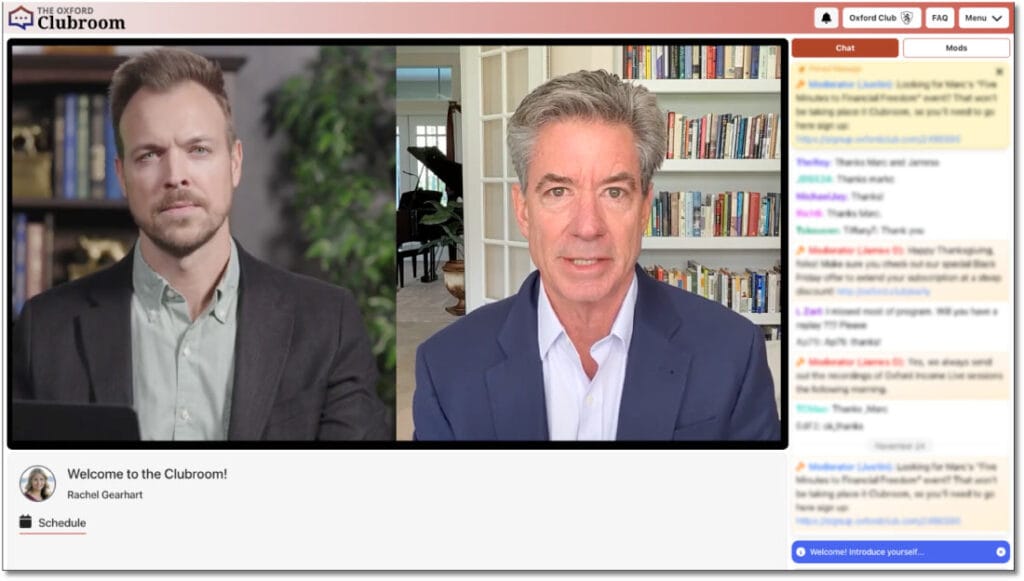
Bonus #3: Access to The Oxford Clubroom (live weekly sessions with Green and other strategists)
My assessment on bonuses: The Clubroom provides real differentiation—most newsletters only offer written content. Access to Green's current thinking and real-time market commentary can provide substantial value.
–> START YOUR RISK-FREE EXAMINATION OF THE OXFORD CLUB ASI FUND NOW
Part 6: How The Oxford Club Pricing Compares to Other Financial Research Services
Let's provide context.
If you're spending money on investment research, you should understand alternative costs and how The Oxford Club compares.
The Competitive Landscape
Motley Fool Stock Advisor: $199-$299/year for two stock recommendations monthly. Money-back guarantee limited to 30 days.
Stansberry Research: $199-$499/year depending on the service. Generally 90-day guarantees.
Seeking Alpha Premium: $239/year for stock analysis and ratings. More of a data platform than specific recommendations.
Personal Financial Advisor: Typically 1-1.5% of assets under management annually. On a $500,000 portfolio, that's $5,000-$7,500 per year.
The Oxford Club ASI Fund Offer: $99 (Regular Price $249)
Actual cost:
Through the promotional offer in Alex Green's presentation, The Oxford Club membership costs $99 for the first year (regularly $249).
That's $8.25 per month.
For that monthly cost, you receive:
- 12 monthly stock recommendations from an analyst with a documented 30-year track record
- The complete ASI Fund research
- Four additional special reports on AI investing
- Weekly market updates and portfolio tracking
- Live access to The Oxford Clubroom sessions
- All bonuses mentioned above
And critically: The 365-day money-back guarantee.
Why the 365-Day Guarantee Changes the Risk Calculation
Most financial newsletters offer 30-90 day guarantees.
The Oxford Club offers 365 days.
That's a full year to:
- Read all research reports
- Implement the ASI Fund recommendation if you choose
- Track performance
- Participate in Clubroom sessions
- Determine if Green's approach aligns with your investment philosophy
And if at any point during that year you're unsatisfied, you receive a full refund. Plus you keep all reports and bonuses.
Let me be clear about this:
This changes the decision from a purchase to an evaluation opportunity.
You're not committing to invest thousands of dollars into the ASI Fund immediately. You're deciding whether to spend $99 to access research and make an informed decision later.
CRITICAL REMINDER: The guarantee applies to the subscription price, not to any investments you make. All investments carry market risk including potential loss of principal.
Part 7: Member Results and Testimonials (What Actual Subscribers Report)
Marketing claims are easy to make. Results from actual members are more meaningful.
I've reviewed The Oxford Club's testimonials. Here's what stands out:
Long-Term Members Report Substantial Growth
Ervin Upshaw – 20-Year Member: According to his testimonial, Upshaw's portfolio has grown substantially over two decades of membership.
Vann McElroy – Former NFL Player: McElroy emphasizes remaining “in charge” while receiving guidance. This isn't a managed account—you receive research and make your own decisions.
Bill O'Reilly – Public Figure: O'Reilly has publicly associated with The Oxford Club for years.
The Consistent Pattern
What's consistent across testimonials is long-term membership.
Nobody claims they joined recently and achieved immediate wealth. These are individuals who've followed Alexander Green's recommendations over years or decades.
That makes logical sense.
Green's methodology focuses on identifying technological shifts and holding quality companies through market volatility, not day trading.
–> ACCESS THE OXFORD CLUB ASI FUND OFFER HERE
Part 8: The Honest Risks You Need to Understand
I would be providing incomplete analysis if I didn't address potential risks and downsides.
Risk #1: The AI Infrastructure Boom May Not Materialize as Projected
The concern: What if AI adoption proceeds slower than anticipated? What if we're experiencing a speculative bubble?
My assessment: Possible. Technology adoption rarely follows straight-line projections. However, the infrastructure buildout appears observable through corporate capital expenditures. But there are no guarantees.
Risk #2: The ASI Fund Could Underperform
The concern: What if Green's analysis of this specific fund proves incorrect?
My assessment: No investment is guaranteed to succeed. Past performance doesn't guarantee future results.
Risk #3: Timing Risk
The concern: What if you're entering near a market peak?
My assessment: Legitimate concern with any investment. Timing is always uncertain.
Risk #4: Regulatory Changes
The concern: What if the regulatory environment changes?
My assessment: Regulatory risk exists in any investment. You must verify all regulatory claims independently.
Risk #5: The Newsletter May Not Fit Your Investment Approach
The concern: What if this doesn't align with your goals?
My assessment: This is why the 365-day guarantee matters for the subscription. However, remember: Any investments you make based on the research carry market risk that the guarantee doesn't cover.
BOTTOM LINE ON RISK: All investments carry risk of loss, including potential loss of principal. Never invest money you cannot afford to lose. Past performance does not guarantee future results.
Part 9: The Verdict—Should You Investigate The Oxford Club's ASI Fund Opportunity?
Let me provide my honest conclusion.
After analyzing Alexander Green's track record, studying The Oxford Club's methodology, examining the ASI Fund investment thesis, and comparing this to alternative financial research services, here's my assessment:
What The Oxford Club Gets Right
1. Credible Track Record: Alex Green's documented history of identifying major technology companies early is verifiable through The Oxford Club's published materials. The organization has operated for 30+ years.
2. Logical Investment Thesis: The concept that substantial capital will flow into financing AI infrastructure represents sound investment logic. It's how the rich retire: by owning infrastructure rather than just the companies using it.
3. Exceptional Guarantee: A 365-day money-back guarantee is virtually unprecedented in the financial newsletter industry.
4. Reasonable Price Point: $99 for a year of research is competitive compared to alternatives.
What The Oxford Club Could Improve
1. Marketing Presentation Length: Green's video presentation exceeds an hour.
2. Supplementary Benefits: Hotel discounts and VIP events feel unnecessary.
My Final Assessment
If you're a retirement-age investor (55-75) who is concerned about market volatility, seeking alternatives to traditional financial advice, and looking for potentially meaningful returns while managing risk—The Oxford Club's ASI Fund offer merits serious evaluation.
Not blind acceptance. Not committing your entire portfolio. But serious, critical evaluation.
The combination of Green's verifiable track record, a logical investment thesis, a 365-day evaluation period, and a price point under $100 creates what could be described as an asymmetric evaluation opportunity.
How to Access The Oxford Club ASI Fund Offer
If you've read this far and want to investigate further, here's the process:
Step 1: Access The Oxford Club's official presentation page using the link below.
Step 2: Review Alexander Green's complete presentation.
Step 3: Examine the secure order page carefully.
Step 4: If it aligns with your situation, consider joining as a trial member.
Step 5: Read the ASI Fund report thoroughly if you join.
Step 6: Make your own informed decision.
–> ACCESS THE OXFORD CLUB ASI FUND OFFER HERE
Frequently Asked Questions About The Oxford Club & Alexander Green
Is The Oxford Club legitimate or a scam?
The Oxford Club is a legitimate financial publisher with over 30 years of operating history and approximately 160,000 members worldwide. They maintain a 365-day money-back guarantee. However, always conduct independent research before subscribing to any financial service.
How does Alexander Green's track record compare to other financial analysts?
According to The Oxford Club's published materials, Alex Green has identified several major technology companies early in their growth cycles. However, these represent selected successful recommendations. Like all analysts, Green has made recommendations that didn't perform well. Past performance does not guarantee future results.
What exactly is the ASI Fund and can anyone invest in it?
Based on Green's presentation, the ASI Fund is described as a publicly-traded investment vehicle focused on financing AI infrastructure projects. You should verify regulatory claims independently with your financial advisor. Investment carries risk of loss including potential loss of principal.
How does how the rich retire differ from traditional retirement strategies?
Traditional retirement advice typically focuses on standard allocation models. How the rich retire, according to Green's research, often involves alternative investment vehicles and infrastructure financing. However, these strategies carry different risk profiles and may not be appropriate for all investors.
Is the 365-day guarantee really “no questions asked”?
According to The Oxford Club's published terms, yes. You can request a full refund within 365 days. Verify current terms on their website. Remember: The guarantee applies to the subscription price, not to any investments you make.
What happens after the first year?
After your first year at $99, renewal is at $249/year. You can cancel at any time.
Can I invest in the ASI Fund inside my IRA or 401(k)?
You must verify this independently. Contact your account custodian to confirm whether your retirement account permits this investment type.
Does The Oxford Club manage money or just provide research?
The Oxford Club is a financial publisher, not a money manager. They provide research and education. You remain responsible for all investment decisions.
What if I'm a complete investing beginner?
The Oxford Club's materials are written for educated individuals. However, you should understand basic investing risks before committing capital. Consider consulting with a financial advisor if you're uncertain.
How is this different from just buying major technology companies?
Green's thesis suggests the ASI Fund approach focuses on infrastructure financing—attempting to benefit from capital flows rather than predicting which companies will dominate. This represents a different investment approach with its own risk/reward characteristics.
Final Thoughts
I started this review asking whether The Oxford Club's ASI Fund opportunity was legitimate or just marketing hype.
After this investigation, my conclusion:
It's a legitimate financial research service with a documented track record. The opportunity merits evaluation. The subscription risk is minimal due to the guarantee. However, all investments carry market risk.
If you're interested in understanding alternative investment approaches and seeking credible analysis to help navigate AI-related investment opportunities—The Oxford Club's research deserves consideration.
The 365-day guarantee means you can evaluate with minimal financial risk to the subscription price.
The $99 cost is modest compared to alternative services.
The documented track record suggests the analysis warrants serious consideration.
EVALUATE THE OXFORD CLUB RESEARCH RISK-FREE
Disclosure: MarketWealthPro is an independent financial research and review site. This article contains affiliate links, meaning we may earn a commission if you choose to join The Oxford Club through our links. This doesn't affect the price you pay or the guarantee you receive. We only recommend products and services we believe merit consideration. All opinions expressed are our own based on independent research and analysis.
Investment Disclaimer: This review discusses a financial newsletter service and is not investment advice. All investments carry risk of loss including potential loss of principal. Past performance does not guarantee future results. Claims about regulatory changes, investment performance, and future opportunities have not been independently verified. Always consult with a qualified financial advisor before making investment decisions. The 365-day guarantee applies to the subscription price only, not to investment outcomes.