



Week Ahead Overview
The upcoming week of April 27, 2026, promises to be one of the most consequential periods of the year for global financial markets. Investors are bracing for a convergence of critical catalysts, including the busiest stretch of the first-quarter earnings season, a highly anticipated Federal Reserve policy meeting, and crucial economic data releases. Despite ongoing geopolitical uncertainties, particularly the naval blockade and conflict in the Middle East, equity markets have demonstrated remarkable resilience. The S&P 500 recently crossed the historic 7,000 threshold, recovering from a near 10% drawdown in just eleven trading sessions to trade near all-time highs. This rapid rebound suggests that market participants are increasingly looking past geopolitical risks and anchoring their optimism on robust corporate fundamentals and the enduring strength of the technology sector.
Market sentiment has shifted decisively toward optimism, with the CNN Fear & Greed Index recently flipping from extreme fear to outright greed. The CBOE Volatility Index (VIX) has retreated below the psychologically significant 19 level, falling nearly 28% over the past month. However, options market data reveals an unusual pattern: the VIX and the S&P 500 have occasionally drifted higher in tandem, indicating that while investors are aggressively buying equities, they are simultaneously paying up for downside protection against potential crude oil shocks or geopolitical escalation. As we enter this pivotal week, the key theme will be whether the underlying economic and corporate data can justify the market's current elevated valuations and sustain the recent record-breaking rally.
Economic Calendar
The economic docket for the week is packed with high-impact releases that will provide crucial insights into the health of the U.S. economy and the trajectory of inflation. The centerpiece of the week is the Federal Open Market Committee (FOMC) meeting concluding on Wednesday, April 29. Markets widely expect the central bank to hold its benchmark interest rate steady at 3.50% to 3.75% for the third consecutive meeting. However, the accompanying press conference will be closely scrutinized, as this is anticipated to be Chair Jerome Powell's final meeting before his successor is confirmed. Investors will be listening intently for any shifts in the Fed's inflation outlook, particularly how policymakers are factoring in the recent surge in energy prices driven by Middle East tensions.
Beyond the Fed, Wednesday will also feature the advance estimate for first-quarter Gross Domestic Product (GDP). Economists' forecasts vary, with some projecting a rebound to an annualized growth rate of 2.5% to 3.0%, while others, including the Atlanta Fed's GDPNow model, suggest growth could come in below 1.5%. A weaker-than-expected GDP print, coupled with sticky inflation data from the Personal Consumption Expenditures (PCE) index, could reignite fears of stagflation. The week will round out with the ISM Manufacturing index, weekly jobless claims, and the critical April Non-Farm Payrolls report on Friday, which will offer the latest read on the resilience of the labor market.
Investment implications: A hawkish tone from the Federal Reserve or signs of reaccelerating inflation could pressure equity valuations and drive bond yields higher. Conversely, if economic data points to a “soft landing” scenario—moderate growth with cooling inflation—it could provide further fuel for the current market rally. Investors should maintain a balanced portfolio, ensuring adequate diversification to weather potential volatility stemming from unexpected macroeconomic surprises.
Earnings Season Focus
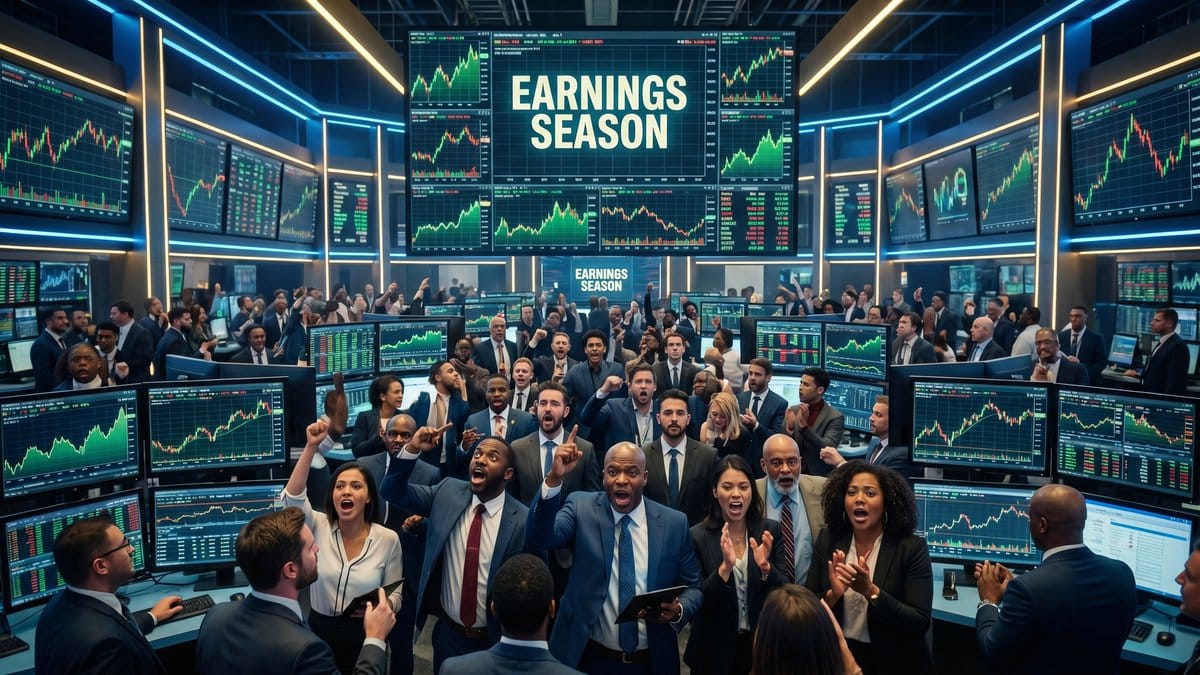
This week marks the absolute peak of the first-quarter earnings season, with approximately 44% of the S&P 500's market capitalization scheduled to report. The spotlight will shine brightest on the “Magnificent 7” technology behemoths, whose performance has been the primary engine of the market's recent gains. On Wednesday, April 29, investors will digest results from Meta Platforms, Microsoft, Alphabet, and Amazon, followed by Apple on Thursday. The stakes are exceptionally high; these companies must not only deliver strong current-quarter results but also provide robust forward guidance, particularly regarding their massive investments in artificial intelligence infrastructure and cloud computing growth.
The broader earnings picture has been overwhelmingly positive thus far. With roughly a quarter of the S&P 500 having reported, an impressive 83% of companies have beaten consensus earnings estimates, well above the five-year average of 78%. Furthermore, revenue growth is tracking at its strongest pace since 2022. If this trend holds, the index is on pace to record its sixth consecutive quarter of double-digit earnings growth. Beyond big tech, the week will also feature reports from key bellwethers across various sectors, including Caterpillar, FedEx, Visa, and major consumer brands like Coca-Cola and Starbucks, offering a comprehensive view of industrial activity and consumer spending health.
Investment implications: The market's reaction to big tech earnings will likely dictate the near-term direction of the major indices. Strong results validating AI monetization could propel the Nasdaq to fresh records, while any signs of slowing growth or margin compression could trigger a sharp tech-led selloff. Investors should look beyond the headline numbers and focus on management commentary regarding capital expenditures, consumer demand trends, and the impact of higher input costs on profit margins.

Geopolitical & Policy Watch
Geopolitical risks remain a significant, albeit currently underpriced, factor in the market outlook. The ongoing conflict in the Middle East and the naval blockade around the Strait of Hormuz continue to disrupt global shipping and elevate energy prices. While recent ceasefire talks in Islamabad offer a glimmer of hope for de-escalation, the situation remains highly volatile. A sudden disruption to oil supplies could quickly translate into higher headline inflation, complicating the Federal Reserve's policy path and squeezing corporate profit margins.
On the trade policy front, the landscape remains complex and somewhat unpredictable. The tariffs implemented earlier in April 2026 continue to impact supply chains, with the costs largely being absorbed by American importing companies. However, broader shifts in U.S.-China trade relations appear stalled, with frequent policy reversals creating uncertainty for multinational corporations. Investors must remain vigilant, as sudden geopolitical flare-ups or unexpected policy shifts have the potential to rapidly alter market sentiment and trigger sudden spikes in volatility.
Technical & Sentiment Indicators
From a technical perspective, the major indices are operating in uncharted territory. The S&P 500's recent surge past the 7,000 and 7,100 levels demonstrates powerful upward momentum. Technical analysts are currently eyeing the 6,450 to 6,830 range as a critical support zone that must hold during any potential pullbacks. On the upside, resistance levels are difficult to pinpoint given the record highs, but the 7,200 level may serve as the next psychological barrier. The Nasdaq 100's recent 13-day winning streak underscores the intense buying pressure in the technology sector.
Market sentiment indicators suggest a high degree of complacency. The CNN Fear & Greed Index's rapid shift into “Greed” territory, combined with the VIX trading below 19, indicates that investors are heavily leaning into the risk-on trade. While strong fundamentals currently support this optimism, such stretched sentiment readings often precede periods of consolidation or correction. The divergence between the soaring U.S. markets and the more subdued performance of European and Japanese equities also warrants attention, as it highlights the unique, tech-driven nature of the current American bull market.
Disclaimer: This analysis is for informational and educational purposes only and should not be considered financial advice. Market forecasts are inherently uncertain, and actual events may differ materially from expectations. Always conduct your own research and consult with a qualified financial advisor before making investment decisions.