Wall Street ended the week on a decidedly sour note, as a powerful convergence of geopolitical disappointment, surging energy costs, and inflation fears triggered a broad market selloff. The Dow Jones Industrial Average shed 537 points, retreating from its recent 50,000 milestone, while the Nasdaq Composite tumbled 1.5%, snapping a six-week winning streak. Despite Friday's sharp pullback, the S&P 500 managed to cling to a 0.1% gain for the week—its seventh consecutive weekly advance and the longest such streak since December 2023.
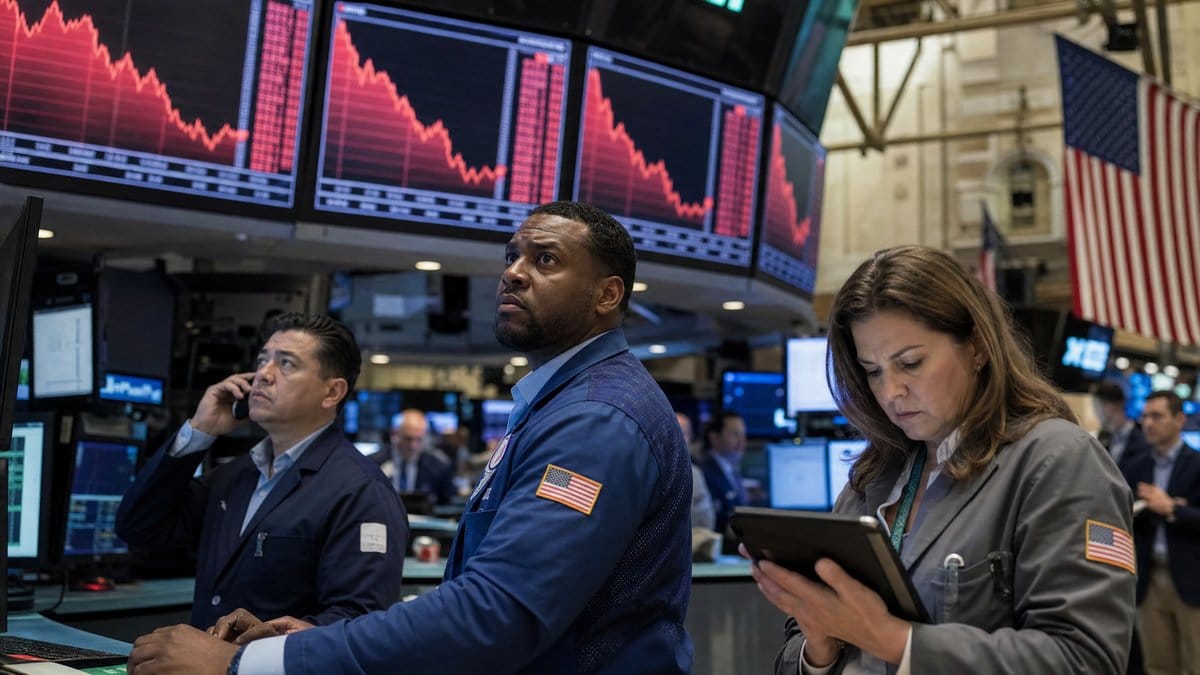
Summit Disappointment Fuels Energy Fears
The catalyst for Friday's decline was the conclusion of the highly anticipated Beijing summit between President Donald Trump and Chinese leader Xi Jinping. Investors had hoped the meeting would yield a diplomatic breakthrough capable of reopening the Strait of Hormuz and easing the global energy crisis sparked by the Iran war. Instead, the summit produced “nothing of real substance,” according to UBS analysts, with China offering only vague commitments to stable trade ties.
The lack of progress sent shockwaves through the energy markets. Brent crude, the global benchmark, surged 3.3% to settle at $109.26 a barrel, while U.S. West Texas Intermediate (WTI) jumped 4.3% to $105.45. The energy sector was the sole bright spot in the S&P 500 on Friday, gaining 2.3% as every other sector lost ground.

Bond Yields Spike as Inflation Forecasts Double
The reality of $109 oil is rapidly altering the economic outlook. A new survey of professional forecasters released Friday by the Federal Reserve Bank of Philadelphia revealed that economists now expect the Consumer Price Index (CPI) to rise at an annualized rate of 6% in the second quarter. That is more than double the 2.7% pre-war forecast, highlighting how deeply the energy shock is bleeding into the broader economy.
Bond markets reacted violently to the data. The yield on the 10-year Treasury note spiked above 4.60%, hitting its highest intraday level since May 2025. This global bond selloff reflects growing conviction that the Federal Reserve will be forced to maintain—or even tighten—its restrictive monetary policy. According to the CME FedWatch tool, the odds of a rate hike by December have surged to nearly 40%, up from just 13.6% a week ago.
This shifting landscape coincides with a historic changing of the guard at the central bank. Friday marked Jerome Powell's final day as Federal Reserve Chair. His successor, Kevin Warsh, officially takes the helm on Saturday, inheriting a highly divided Fed and an economy grappling with sticky, energy-driven inflation.
What This Means for Retirement Portfolios
Friday's market action serves as a stark reminder that the AI-driven tech boom cannot entirely insulate portfolios from macroeconomic realities. For retirement investors, the current environment demands careful navigation:
| Market Factor | Retirement Implication |
|---|---|
| 6% Inflation Forecast | If inflation doubles as economists predict, purchasing power will erode rapidly. Retirees should ensure they have adequate inflation hedges, such as Treasury Inflation-Protected Securities (TIPS) or exposure to real assets. |
| Rising Bond Yields | With the 10-year yield above 4.60%, existing bond portfolios will see price declines. However, these higher yields also offer retirees the opportunity to lock in attractive, low-risk income streams for newly deployed cash. |
| Energy Sector Strength | As the only sector to gain on Friday, energy stocks continue to act as a natural hedge against the geopolitical turmoil in the Middle East. Maintaining a diversified allocation that includes energy can help offset losses in tech and consumer discretionary sectors. |
As Kevin Warsh prepares to lead the Federal Reserve, investors should brace for continued volatility. The coming weeks will be critical in determining whether the AI rally can regain its footing, or if the gravity of $109 oil and 4.60% yields will pull the broader market lower.
Disclaimer: This article is for informational purposes only and should not be considered financial advice. Market conditions can change rapidly, and past performance does not guarantee future results. Always conduct your own research and consider consulting with a qualified financial advisor before making investment decisions.