



The U.S. stock market wrapped up the first half of 2026 with remarkable strength, despite facing a volatile, holiday-shortened trading week. Investors witnessed a significant rotation out of high-flying semiconductor stocks and into other sectors, while weaker-than-expected jobs data bolstered hopes for an impending interest rate cut by the Federal Reserve.
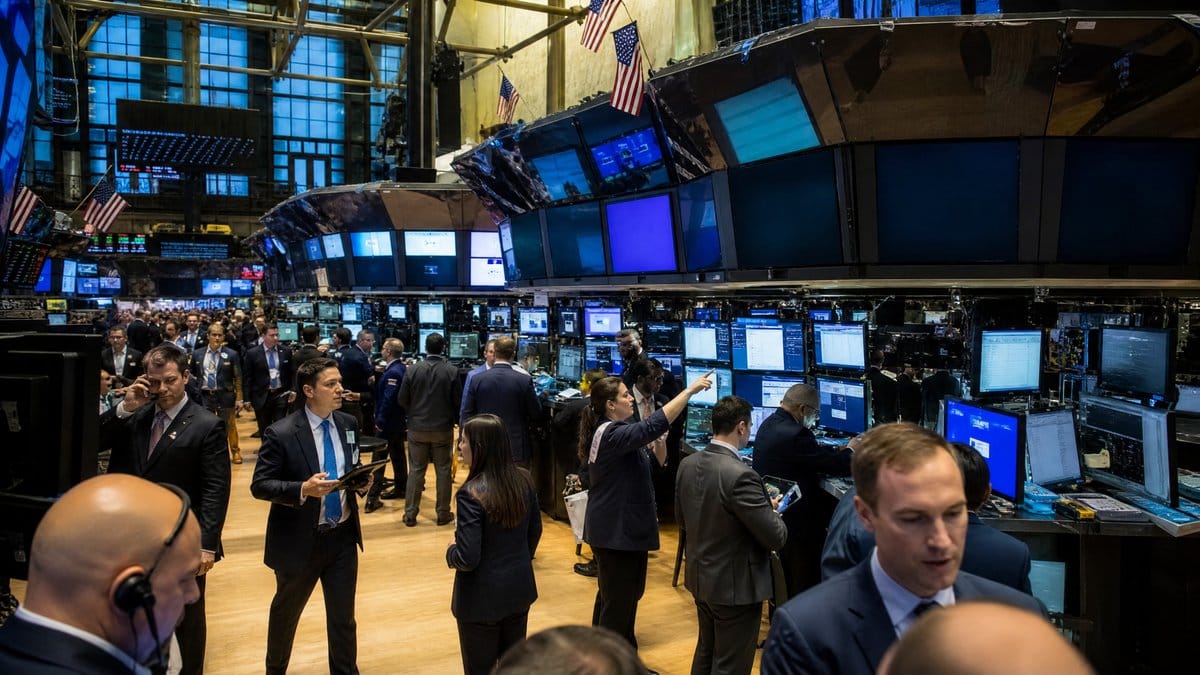
Week in Review
The major averages finished the holiday-shortened week with solid gains, capping off an impressive first half of the year. The Dow Jones Industrial Average led the charge, jumping nearly 2% for the week and closing at a record high of 52,900.07. The broad-based S&P 500 rose 1.8%, finishing at 7,483.24, while the tech-heavy Nasdaq Composite added 2.1% to settle at 25,832.67.
The week was defined by a notable shift in market leadership. The so-called “Great Rotation” saw investors taking profits from the semiconductor sector, which had surged more than 80% in the first half of 2026, and redirecting capital into blue-chip stocks and small-cap equities. This broadening of the market rally is viewed by many analysts as a healthy development for the aging bull market. Notably, the small-cap Russell 2000 index surged nearly 22% in the first half of the year, marking its best performance for that period since 1991, according to CNBC.
Top Stories of the Week
Cooling Labor Market Spurs Rate Cut Hopes
The June jobs report, released a day early due to the July 4th holiday, revealed a significant cooling in the labor market. Nonfarm payrolls increased by a mere 57,000 jobs, falling well short of the 110,000 expected by economists polled by Reuters. Furthermore, payroll gains for April and May were revised downward by a combined 74,000 jobs. While the unemployment rate ticked down to 4.2%, this was primarily driven by a sharp decline in the labor force participation rate, which dropped to 61.5%, its lowest level since March 2021.
Investment implications: The softer jobs data has led traders to pare back expectations for a near-term rate hike and increase bets on a potential rate cut later in the year. This environment generally favors equities, particularly those sensitive to interest rates, as lower borrowing costs can stimulate economic growth and boost corporate profits. Market-based tools adjusted Fed rate-hike probabilities to roughly 41.8% for a 25-basis-point increase later this year, down from about 75% before the report.
Meta Platforms Eyes Cloud Computing Revenue
Shares of Meta Platforms surged nearly 11% following reports that the social media giant is developing plans for a cloud infrastructure business. The company intends to sell access to its excess artificial intelligence computing power and models, setting up a potential rivalry with established cloud providers. This move represents a new vector for revenue growth as Meta seeks to monetize its massive AI infrastructure investments, Bloomberg first reported.
Investment implications: Meta’s entry into the cloud computing space highlights the growing importance of AI infrastructure monetization. Investors should monitor how this new venture impacts Meta’s bottom line and its competitive positioning against industry heavyweights like Amazon Web Services and Microsoft Azure. JPMorgan, however, cautioned that it would prefer Meta focus on its core advertising business rather than renting out computing power.
Tesla Surprises with Record Q2 Deliveries
Tesla shares experienced a volatile week, initially rallying before sinking as much as 7.3% on Thursday. The electric vehicle maker reported second-quarter deliveries of 480,126 vehicles, significantly exceeding Wall Street estimates of around 406,600 units. Despite the strong delivery numbers, which represent a 25% year-over-year increase, some analysts expressed concerns about the company’s energy storage deployments, which came in at 13.5 GWh — below some estimates — and the stock’s prior 13% run-up heading into the report.
Investment implications: Tesla’s robust delivery numbers suggest that demand for its vehicles remains resilient, but the stock’s sell-the-news reaction underscores the market’s high expectations. Investors should weigh the strong auto sales against potential weaknesses in the energy storage segment and consider whether the current valuation reflects the company’s long-term growth prospects.

Sector Performance Analysis
The week’s sector performance was characterized by a distinct rotation away from technology and into more cyclical and value-oriented areas of the market. The semiconductor sector bore the brunt of the selling pressure, with the VanEck Semiconductor ETF (SMH) dropping 4.5% on Thursday alone. Industry heavyweights like Micron and SanDisk saw double-digit declines for the week, while Nvidia and Broadcom also experienced notable pullbacks. The Roundhill Memory ETF (DRAM) was on pace for its worst week since its inception, down nearly 15%.
Conversely, industrials, financials, and healthcare sectors attracted significant inflows. The Dow Jones Industrial Average, which is heavily weighted toward these sectors, outperformed the Nasdaq during the week. This shift suggests that investors are becoming more confident in the broader economic outlook and are seeking opportunities beyond the mega-cap tech stocks that have dominated the market’s recent gains. Bank of America’s Savita Subramanian noted that “it’s hard to be bearish on America right now,” pointing to strong corporate earnings and healthy GDP-sensitive companies in industrials, energy, and materials.
Investment implications: The rotation into cyclical sectors presents an opportunity for investors to diversify their portfolios. Companies tied to economic growth, such as industrials and financials, may offer compelling value as the market rally broadens. However, investors should remain cautious and selective, focusing on companies with strong fundamentals and reasonable valuations. The semiconductor sector’s pullback, while sharp, may present a longer-term buying opportunity for investors with a higher risk tolerance.
Economic & Fed Developments
The primary economic focus of the week was the labor market, with the June jobs report taking center stage. The weaker-than-expected payroll growth and downward revisions to previous months suggest that the Federal Reserve’s restrictive monetary policy is finally having a cooling effect on employment. This development provides the central bank with more flexibility regarding future interest rate decisions. The Fed’s current benchmark overnight interest rate stands in the 3.50%–3.75% range, following a pause at the June meeting.
Earlier in the week, Federal Reserve Chairman Kevin Warsh spoke at the European Central Bank conference in Portugal. While he did not provide explicit forward guidance on monetary policy, he acknowledged that “prices are too high,” indicating that the Fed remains vigilant about inflation despite the softening labor market. Warsh has notably removed so-called “forward guidance” from the FOMC statement, making the upcoming release of June meeting minutes particularly important for gauging the Fed’s direction.
Looking Ahead
As Wall Street returns from the long July 4th holiday weekend, the economic calendar will be relatively light but consequential. The key event to watch will be the release of the minutes from the Federal Reserve’s June meeting on Wednesday, July 8. Investors will scrutinize the minutes for insights into the central bank’s internal discussions and potential clues regarding the timing of future interest rate moves, especially in light of the recent jobs data. Other releases include the ISM Services PMI on Monday and the May trade balance on Tuesday.
Market participants will also be monitoring the ongoing sector rotation to see if the shift away from semiconductors and into cyclical sectors has staying power. With the second-quarter earnings season approaching rapidly, corporate commentary and forward guidance will soon become the primary drivers of market sentiment. The Dow’s record close and the breadth of the market’s gains suggest that the bull market remains intact, but investors should remain vigilant for signs of deterioration in economic fundamentals.
Disclaimer: This article is for informational purposes only and should not be considered financial advice. Market conditions can change rapidly, and past performance does not guarantee future results. Always conduct your own research and consider consulting with a qualified financial advisor before making investment decisions.