



NVIDIA Corporation is no longer valued as a cyclical graphics-chip supplier. The market now treats it as a central supplier of accelerated-computing infrastructure: GPUs, networking, systems and the CUDA software ecosystem used to deploy AI workloads. The investment thesis rests on whether customer demand can keep compounding fast enough to justify both exceptional revenue growth and an already enormous equity value.
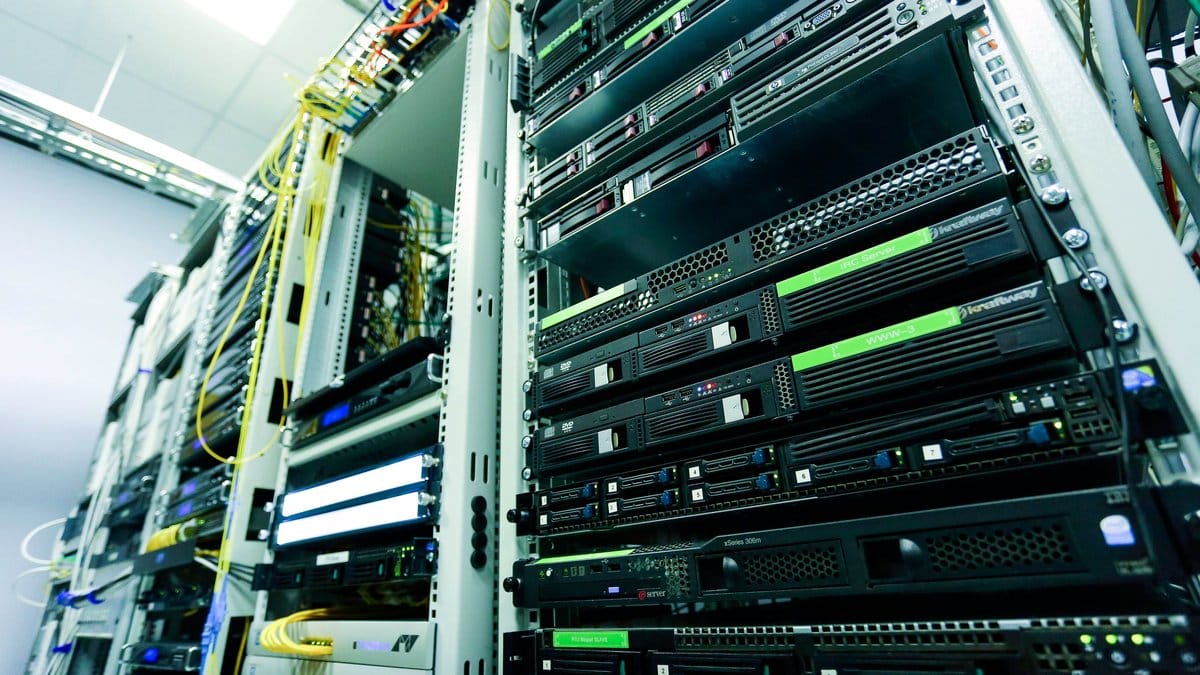
NVIDIA’s AI Infrastructure Thesis
NVIDIA monetizes a stack that includes chips, networking, software libraries and increasingly complete AI-factory systems. Customers buying at scale are not selecting a standalone processor; they are integrating hardware, software and operating know-how across data centers. CUDA, broad cloud and OEM relationships, and a rapid product cadence raise switching costs even as competitors invest heavily.
The core thesis is therefore not simply that AI is growing. It is that the buildout is broadening from hyperscalers toward cloud providers, frontier-model labs, enterprises and sovereign projects. NVIDIA’s second-quarter fiscal 2027 release showed Data Center revenue of $89.0 billion, up 117% year over year. The counterweight is valuation: success must continue at an extraordinary base, and even a modest slowdown in growth or gross margin can change the market’s willingness to pay for each dollar of earnings.
Recent Developments and Catalysts
For the quarter ended July 26, 2026, NVIDIA reported revenue of $96.2 billion, an 18% sequential increase and a 106% year-over-year gain. GAAP net income was $59.7 billion, up 126% from a year earlier, while diluted GAAP earnings per share reached $2.46. The 75.0% GAAP gross margin was 2.6 percentage points above the prior-year quarter. Those results show that Data Center demand remains the principal driver of the company’s earnings power.
The most immediate catalyst is the third-quarter outlook: management guided to $108.0 billion of revenue, plus or minus 2%, while assuming no Data Center compute revenue from China. Reuters reported that the guide exceeded the then-current LSEG consensus of $104.19 billion. It also reported management’s expectation for roughly 70% revenue growth in the following fiscal year, a rare long-range signal that demand may outlast a single product cycle.
Product-transition execution is the next test. Vera Rubin systems are entering production, and Reuters reported that the platform could account for about one-fifth of Data Center revenue in the current quarter. At the same time, memory-component shortages and higher input costs matter: management expected gross margin to bottom around 71% to 72% in the fourth quarter. China remains a swing factor because it was excluded from the third-quarter Data Center compute outlook.
Investment implications: A guide above consensus and the platform ramp support the near-term setup. Revenue, margin, supply availability and China assumptions should be viewed together, however. A revenue beat achieved with a sharper-than-expected gross-margin concession would send a different valuation signal from a balanced beat.
Financial Analysis
NVIDIA’s reported numbers show unusual operating leverage. Quarterly revenue climbed from $46.7 billion in the comparable fiscal-2026 quarter to $96.2 billion, while GAAP operating income increased from $28.4 billion to $63.7 billion. In the same comparison, net income rose from $26.4 billion to $59.7 billion. The pattern reflects both scale and a product mix centered on high-value accelerated-computing systems, though it should not be extrapolated indefinitely as platform transitions and supply costs pressure margins.
On a trailing-twelve-month basis, the S&P Global Market Intelligence data displayed by Stock Analysis showed $303.0 billion of revenue, $192.9 billion of net income, $134.4 billion of operating cash flow and $127.0 billion of free cash flow as of October 5. It also showed a 74.67% gross margin, a 65.21% operating margin and a 63.66% profit margin. These metrics point to a business producing significant cash without relying on heavy balance-sheet leverage.
The same snapshot listed $62.47 billion of cash, $38.86 billion of total debt and $23.61 billion of net cash, alongside a current ratio of 4.59. NVIDIA returned about $26.0 billion to shareholders through repurchases and dividends during the July quarter and still reported roughly $99.0 billion remaining under its authorization. The key analytical benefit is flexibility: the company can fund product transitions and supply commitments without a fragile capital structure.
Investment implications: Financial quality is a strength, not a reason to ignore cyclicality. The earnings engine is powerful because revenue growth, margin and cash conversion are reinforcing one another. The monitoring question is whether revenue can compound while gross margin stays sufficiently resilient through the Vera Rubin ramp and memory-cost pressure.
Valuation and Competitive Position
Valuation requires precision about timing. Yahoo Finance market data showed NVDA closing at $238.90 on October 5, near its 52-week high of $240.10. An S&P Global Market Intelligence snapshot shown by Stock Analysis listed a $5.65 trillion market capitalization, a 29.58 trailing P/E, a 19.41 forward P/E and a 0.37 PEG ratio. It put EV/EBITDA at 27.95 times and price to free cash flow at 44.48 times.
Because price snapshots differ, these are not a synchronized point estimate. What matters is that the stock is priced for substantial continuing growth even after earnings have risen sharply. The PEG ratio looks favorable because the provider’s consensus model embeds rapid EPS growth, but it is not intrinsic value: the denominator can fall quickly if customers slow capex or margins normalize faster.
Stock Analysis reported a $327.70 average analyst price target from 61 analysts; that aggregate is not a MarketWealthPro target or a promise. NVIDIA’s competitive position rests on CUDA, system and networking breadth, and relationships across cloud, laboratory, enterprise and sovereign customers.
Investment implications: The stock does not need a low absolute multiple to work, but it does need sustained execution. The forward P/E and PEG are more defensible if consensus growth persists. Delayed deployments, weaker pricing, a sharper margin reset or slower customer capex could compress the multiple before reported earnings visibly weaken.
Risks and Outlook
The central risk is a mismatch between AI-infrastructure spending and end-customer monetization. Large customers can remain committed to AI while changing order timing, which matters when NVIDIA’s revenue base is so large. Memory shortages, component inflation and a complex platform transition could weigh on delivery timing and gross margin. Export controls and an uncertain China opportunity add policy risk, while custom accelerators and competing platforms may narrow portions of the addressable market over time.
The more constructive case is that NVIDIA delivers its $108.0 billion third-quarter outlook, manages the Vera Rubin ramp without a deeper-than-expected margin reset and demonstrates that demand is broadening across customer types. The November 18 estimated earnings date is the next major checkpoint. Until then, focus on revenue-guide quality, gross-margin commentary, supply availability, customer concentration and the gap between earnings delivery and market expectations. In a stock priced for durable AI leadership, the direction of those evidence points matters as much as the headline beat.
Sources
- NVIDIA second-quarter fiscal 2027 earnings release
- NVIDIA investor relations financial reports and latest 10-Q
- Reuters coverage of NVIDIA’s August 2026 results and outlook
- Stock Analysis statistics sourced from S&P Global Market Intelligence
Disclaimer: This analysis is for informational and educational purposes only and should not be considered financial advice. Individual stock investments carry significant risks including company-specific and market risks. Always conduct your own research and consult with a qualified financial advisor before making investment decisions.