



Week Ahead Overview
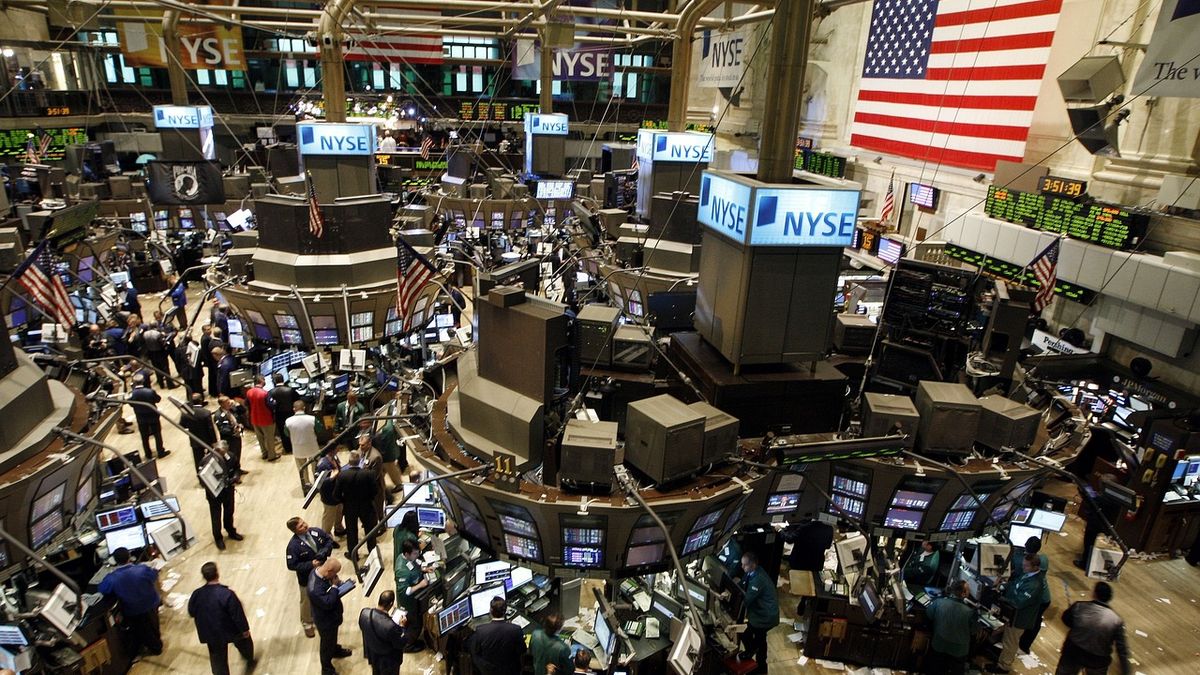
Wall Street enters the week of November 9 with confidence dented and leadership in question. The S&P 500 fell 2.7% last week, its worst showing since the April 2025 tariff shock, while the Nasdaq Composite confirmed a technical correction and sits roughly 12% below its October 6 record. Thursday alone erased more than $2 trillion in market value on fears that Democratic control of Congress means slower, costlier data-center buildouts.
Three catalysts compete for the tape. October’s consumer price index lands Tuesday and will largely decide whether the Federal Reserve raises rates again on December 8–9, a move futures price at roughly 80%. Thursday brings Cisco and Applied Materials, the week’s largest reporters and the closest thing to a referendum on AI capital spending. Hanging over both is Washington, where incoming Democratic majorities are already drafting legislation on AI systems and data-center siting.
Positioning has adjusted, but only partly. The VIX closed at 25.64 after spiking to 28.18 on Thursday, the dollar climbed to 102.32 on strong October payrolls, and only about one in three S&P 500 members trades above its 50-day average. That is no longer complacent, and not yet capitulation.
The base case is an event-driven week of binary reactions. A soft core CPI and credible AI guidance would let the S&P 500 challenge its 50-day average near 7,680; a hot print paired with cautious capital-spending commentary likely retests Thursday’s lows and puts the 200-day at 7,323 in play.
Economic Calendar
Monday is thin. China releases October consumer and producer prices overnight, then the U.S. session offers September wholesale inventories and remarks from Governor Michelle Bowman, Chicago’s Austan Goolsbee and Richmond’s Thomas Barkin.

Tuesday is the week. The Labor Department publishes October CPI at 8:30 a.m. Eastern alongside real earnings. Economists look for a 0.2% monthly headline gain after September’s 0.6% advance, with core inflation moderating following two consecutive upside surprises; Barclays economist Pooja Sriram expects a 1% monthly drop in gasoline prices to do much of the work. The annual headline rate was 3.7% in September, and The Kiplinger Letter expects it to end the year near 4%. Four Fed officials speak that day, and the Treasury auctions 10-year notes into the commentary.
Wednesday is Veterans Day. No federal data is scheduled and the bond market is closed, though stocks trade; thin volume tends to exaggerate moves around headlines.
Thursday brings jobless claims after the prior week’s 189,000, a 57-year low, plus October existing home sales and the federal budget statement. Hammack, Barr, Goolsbee, Daly and Williams all appear, and the Treasury sells 30-year bonds with the long bond at 5.26%. Friday closes with October producer prices and remarks from Bowman, Daly and Vice Chair Philip Jefferson.
Investment implications: With an 80% chance of a December hike already priced, the asymmetry favors short-duration Treasuries and cash-like instruments over long duration. A downside surprise on core CPI would pull front-end yields lower; an upside surprise would hit the long end hardest, with two coupon auctions absorbing supply.
Earnings Season Focus
The week carries 169 reports from companies worth at least $2 billion, but the value is concentrated Thursday evening, when 11 companies worth roughly $775 billion report. Cisco and Applied Materials account for about $700 billion.
Cisco opens with fiscal first-quarter results and guidance of $18.0 billion to $18.2 billion in revenue, against consensus earnings of $1.15 a share versus $0.81 a year earlier. The read-through is less about routing gear than about whether hyperscalers are still accelerating AI backbone orders and whether campus demand has stabilized.
Applied Materials follows with fiscal fourth-quarter numbers and consensus of $4.06 a share, up from $2.17, against guidance of about $10.25 billion in revenue, give or take $500 million, after a record $9.12 billion the prior quarter. Cerebras Systems, newly public, reports the same evening.
CoreWeave anchors Tuesday with a consensus loss of $1.45 a share, widening from $0.31. The company more than doubled revenue to $2.58 billion in the second quarter, but its credit-default swaps have widened to records as investors price the financing risk behind AI leasing. Pair it with Nebius on Thursday morning and the week becomes a stress test of the leveraged end of the buildout.
Elsewhere, Constellation Energy and NRG test the power-demand trade, Occidental and Petrobras read on crude near $90, Barrick and Franco-Nevada on gold above $4,000, and Take-Two and Skydance on consumer spending. Nvidia waits until November 17.
Investment implications: The market is no longer paying for AI exposure alone; it is paying for self-funded growth. Favor suppliers with visible backlog and free cash flow over names that must raise capital, and read a wide CoreWeave loss as a warning for the entire neocloud complex.
Geopolitical & Policy Watch
Democrats won both chambers of Congress, and the policy response is forming quickly. Reuters reported that incoming lawmakers plan a flood of AI bills, while state-level action is moving faster: Texas Governor-elect Gina Hinojosa has said the state will pursue laws shielding residents from data-center impacts. A federal moratorium is unlikely to pass soon, but permitting risk can reprice equities long before legislation does.
Iran remains the swing factor for energy. Tehran is reviewing mediator proposals that would trade sanctions relief and an end to the U.S. naval blockade for a ceasefire, and crude fell 7% on November 2 when talks surfaced. Brent settled at $97.79 and WTI at $90.37 after a sharp weekly slide. Hormuz has been largely blocked since late February, so a credible deal would hit crude again, while a collapse in talks would restore the war premium fast.
Technical & Sentiment Indicators
The S&P 500 closed at 7,376.86, about 5.7% below its October 6 record of 7,818.93 and now beneath its 50-day average at 7,679. It has flipped from support to resistance. The 200-day at 7,323 is the line that matters: it has held on a closing basis all year, and a break would turn a rotation into a trend problem.
The Nasdaq Composite at 24,579.42 is the weaker chart, down more than 10% from its record with semiconductor breadth deteriorating. The Nasdaq-100 at 26,989.99, the Dow at 51,285.73 and the Russell 2000 at 2,754.11 round out a market where small caps outperformed and mega-cap technology did not.
Cross-asset confirmation is mixed. The 10-year yield at 4.86% and the 30-year at 5.26% remain restrictive, the dollar at 102.32 is a headwind for multinational earnings, and gold near $4,080 with bitcoin around $75,900 suggests investors are hedging rather than hiding. A VIX close back above 28 would signal Thursday’s fear is unresolved; a move below 20 would confirm the bounce has legs.
Investment implications: Size positions for two-sided risk around Tuesday’s CPI, keep stop discipline near the 200-day average, favor quality balance sheets over high-multiple duration, and treat a VIX below 20 as permission to add risk rather than an all-clear.
Source Notes
Calendar: BLS, Federal Reserve, Kiplinger. Earnings: Nasdaq via StockTitan. Market data: AP, CNBC, Reuters. Technicals: Barchart, StreetStats.
Disclaimer: This analysis is for informational and educational purposes only and should not be considered financial advice. Market forecasts are inherently uncertain, and actual events may differ materially from expectations. Always conduct your own research and consult with a qualified financial advisor before making investment decisions.