



Precious metals opened the week of November 9 with a broad rally intact, one session after a shockingly strong U.S. jobs report briefly threatened to unravel it. Spot gold traded at $4,112.90 an ounce by 06:30 GMT, up 1.2% on the day and roughly 5% higher for the week ended November 6, according to Reuters. Silver changed hands at $52.57, platinum at $1,546.83 and palladium at $1,037.58. Each has recovered from the one-year lows struck in late October.
The rebound has been sharp but narrow in its drivers. Softer crude prices, a marginally weaker dollar and short covering after October’s liquidation did most of the work, while the Federal Reserve’s December decision still hangs over the complex. Tuesday’s consumer price index is the next test, with futures pricing a 79% chance of a rate increase on December 8 to 9, according to CME data cited by Reuters.
| Metal | Monday spot | Week to Nov. 6 | 2026 to date |
|---|---|---|---|
| Gold | $4,112.90 | +5.2% | -5.4% |
| Silver | $52.57 | +5.5% | -26.1% |
| Platinum | $1,546.83 | +7.0% | -27.8% |
| Palladium | $1,037.58 | +3.0% | -38.8% |
Weekly and year-to-date changes are calculated from front-month futures settlements; Monday levels are spot quotes at 06:30 GMT. All four metals remain well below January’s records, when gold touched roughly $5,590 and silver peaked near $121.70.
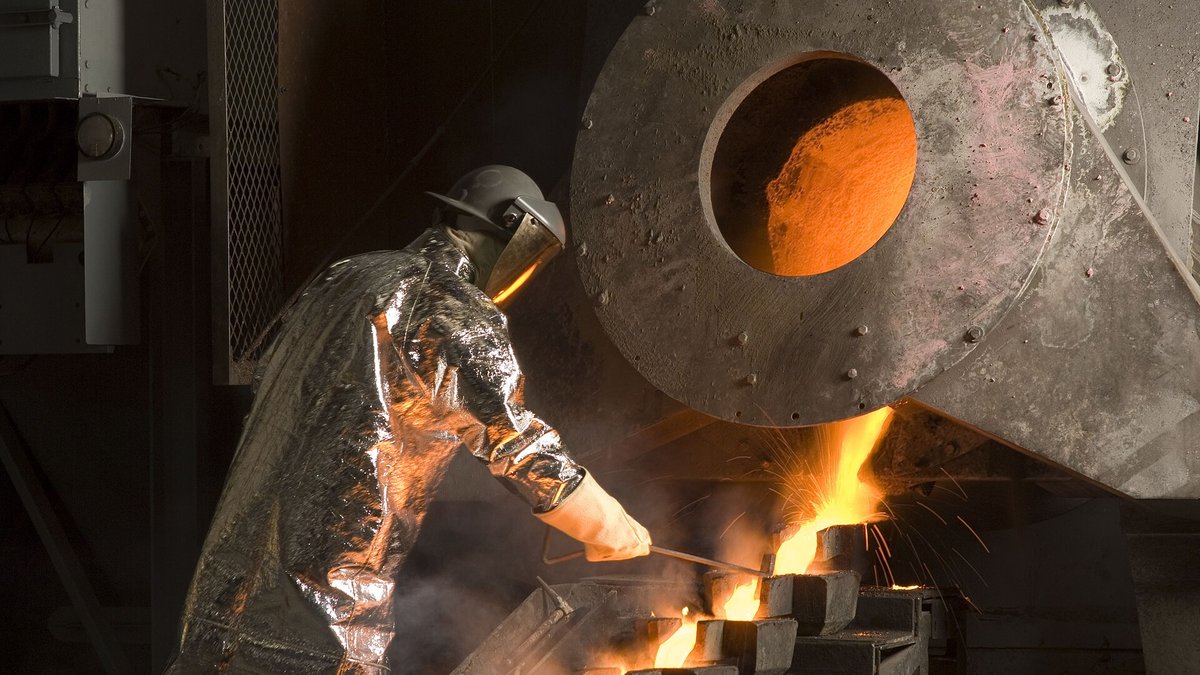
A refinery worker casts molten gold into ingots. Photo: Wikimedia Commons
Gold Market Analysis
Gold’s path since election day has been a study in conflicting forces. Spot bullion bottomed at $3,869.85 on October 30, its weakest level in a year, then rallied to an intraday high of $4,145 as the Democratic sweep of Congress landed, helped by falling bond yields, a softer dollar and short covering. December futures settled Friday at $4,074.90, down 0.9% on the day but up more than 5% for the week.
Friday’s retreat came from the labor market. Employers added 165,000 jobs in October against a consensus near 59,000, and unemployment slipped to 4.1%. The dollar rose 0.7% and Treasury yields climbed, lifting the opportunity cost of an asset that pays no coupon. Cleveland Fed President Beth Hammack said policy will need a restrictive stance, and Richmond’s Thomas Barkin called inflation too high.
Underneath the rate debate, official-sector demand has strengthened. The World Gold Council reported that central banks bought 321 tonnes in the third quarter, up 42% year on year and the largest quarterly total since late 2024, taking nine-month purchases to 675 tonnes. ETFs added 211 tonnes in the quarter, and holdings rose another 19 tonnes in October to a record 4,275 tonnes even as assets under management fell 6% with the price.
Forecasters disagree on what that support is worth. The World Bank sees gold averaging $4,600 this year before easing to $4,250 in 2027 and $4,000 in 2028; Goldman Sachs cut its year-end target to $4,150 from $4,650. Both assume the fiscal-debasement trade, with federal debt above $40 trillion, keeps a floor under prices.
Investment implications: Gold is trading as a rate-sensitive asset first and a crisis hedge second. With a December hike largely priced, a soft CPI print Tuesday would do more for bullion than any political headline. Position sizing should reflect that $4,000 has been tested twice in three weeks, and a hot reading would quickly reopen October’s lows.
Silver Market Analysis
Silver has traveled further in both directions than gold. Spot metal fell to $48.62 on November 3, its lowest since November 2025 and 57% below January’s record, before recovering to $52.57; front-month futures gained 5.5% in the week to November 6. The gold-to-silver ratio near 78 has compressed only modestly, a sign investors still treat silver as the higher-beta expression of the same macro trade.
Industrial demand is where the argument gets harder. The Silver Institute’s World Silver Survey projected a sixth consecutive annual deficit of roughly 46 million ounces for 2026, but photovoltaic manufacturers are accelerating thrifting and copper-based metallization as prices stay elevated, and the World Bank warned that substitution could erode solar offtake.
Physical flows offer a counterweight. Heraeus reported that India approved import permits for about 6,500 tonnes of silver, roughly 209 million ounces, covering the next six months, after imports jumped 127% to $1.02 billion. Western bar and coin demand remains the weak link, and silver ETFs saw outflows in October even as gold funds attracted $2.7 billion.
Investment implications: Silver offers leverage to any dovish inflation surprise, but its industrial leg makes the December decision double-edged. A hike that slows manufacturing would hit fabrication demand just as solar thrifting bites. Investors wanting the monetary case with less cyclical exposure still have a stronger argument in gold, while silver allocations should be sized for 20% swings rather than treated as a bullion proxy.
Platinum & Palladium Update
Platinum was the week’s best performer among the four majors, rising 7.0% to $1,538.20 in front-month futures and trading at $1,546.83 spot on Monday, up from a $1,432 low on October 30. Palladium lagged with a 3.0% weekly gain at $1,037.58, roughly $509 below platinum, an inversion that would have seemed implausible when palladium traded above $2,100 in January.
Both remain hostage to the automotive cycle. The World Platinum Investment Council forecasts a 265,000-ounce platinum surplus in 2026 on a 4% decline in automotive demand, only partly offset by industrial growth, before deficits return from 2027. Above-ground stocks are projected to cover just 3.4 months of demand by year-end. Catalysed vehicle production is down more than 10% year to date, while South African power reliability and Russian supply risk keep the mine-side story tight. Palladium carries the heavier structural burden: demand is concentrated in gasoline autocatalysts, where platinum substitution and electric vehicles both erode the market.
Mining Stocks & ETFs
Mining equities delivered the week’s most violent move, and in the right direction. The VanEck Gold Miners ETF rose 13.6% to $87.60 from $77.09, while the Global X Silver Miners ETF added 11.4% to $79.36. Newmont climbed 13.4% to $120.91, Agnico Eagle 15.8% to $191.57, Barrick Mining 9.6% to $40.56 and Wheaton Precious Metals 16.9% to $136.31. On November 4 alone, Newmont and Agnico each rose about 10%.

An open-pit gold operation, where realized prices and all-in sustaining costs set the margin. Photo: Pexels
Third-quarter results explain the sensitivity. Wheaton reported record revenue of $772 million and a cash operating margin of $3,466 per gold-equivalent ounce, up 39%. IAMGOLD sold at $4,277 an ounce against all-in sustaining costs of $2,184. B2Gold realized $4,289 and cut full-year cost guidance to $2,230 to $2,410, while Pan American Silver generated $377 million of free cash flow.
The leverage cuts both ways. At $4,047 an ounce, about 5% below the third-quarter average of $4,262, unhedged producers would see margins compress roughly 9% at the industry’s average cost base of $1,785 and 13% at $2,600. Every dollar of cost reduction offsets a dollar of price decline, which is why low-cost operators have outperformed.
Investment implications: The rally restored momentum but not the central risk: miners are priced for gold near $4,100 while the Fed may still tighten in December. Diversified funds such as GDX and SIL spread that leverage, but single-name exposure requires checking hedge books and cost guidance. Managers including Shelter Cove’s Ted Oakley argue for holding bullion and trimming miners after a run this size.
Sources
Spot prices and weekly moves: Kitco and Reuters. Central bank and ETF data: World Gold Council, Gold Demand Trends Q3 2026 and Gold ETF Flows October 2026. Silver balances: Silver Institute World Silver Survey 2026 and Heraeus via Kitco. Platinum outlook: World Platinum Investment Council. Forecasts: World Bank Commodity Markets Outlook via Kitco and Goldman Sachs via Crux Investor. Mining results: company filings. Share and ETF performance: daily closes from Yahoo Finance data retrieved November 9, 2026.
Disclaimer: This analysis is for informational and educational purposes only and should not be considered financial advice. Precious metals investments carry significant price volatility and market risks. Always conduct your own research and consult with a qualified financial advisor before making investment decisions.