



Market Overview
U.S. equities enter Wednesday, November 11, balancing renewed enthusiasm for artificial intelligence against a tougher inflation outlook. This morning report uses Tuesday’s completed U.S. session and overnight developments available around 4:00 a.m. EST; European quotes represent early trading, not closing results.
The S&P 500 fell 0.38% to 7,520.93, the Dow Jones Industrial Average lost 157.86 points, or 0.30%, to 52,231.89, and the Nasdaq Composite declined 0.74% to 25,065.87. Yahoo Finance’s dated history put the Russell 2000 at 2,821.38, down 0.68%. Small-cap weakness suggests the setback extended beyond the largest technology companies.
October’s hotter-than-expected consumer-price report and hawkish Federal Reserve commentary interrupted a two-session recovery. Higher borrowing costs threaten both equity valuations and financing for capital-intensive businesses. Technology was the weakest S&P 500 sector, falling 1.4%; the broader semiconductor index slipped a more restrained 0.4%, highlighting the influence of Nvidia’s company-specific problems.
Market breadth remained defensive: Reuters reported roughly 2.3 declining stocks for every advancer on both the NYSE and Nasdaq. Trading volume was below its recent average, suggesting caution rather than an unusually intense liquidation. Meanwhile, cheaper oil offered potential relief for consumers and transportation costs, although geopolitical uncertainty remained substantial. CoreWeave’s earnings subsequently revived overnight AI sentiment, leaving investors to distinguish improving demand from the financing risks that have unsettled growth stocks. Reuters close; Russell history.
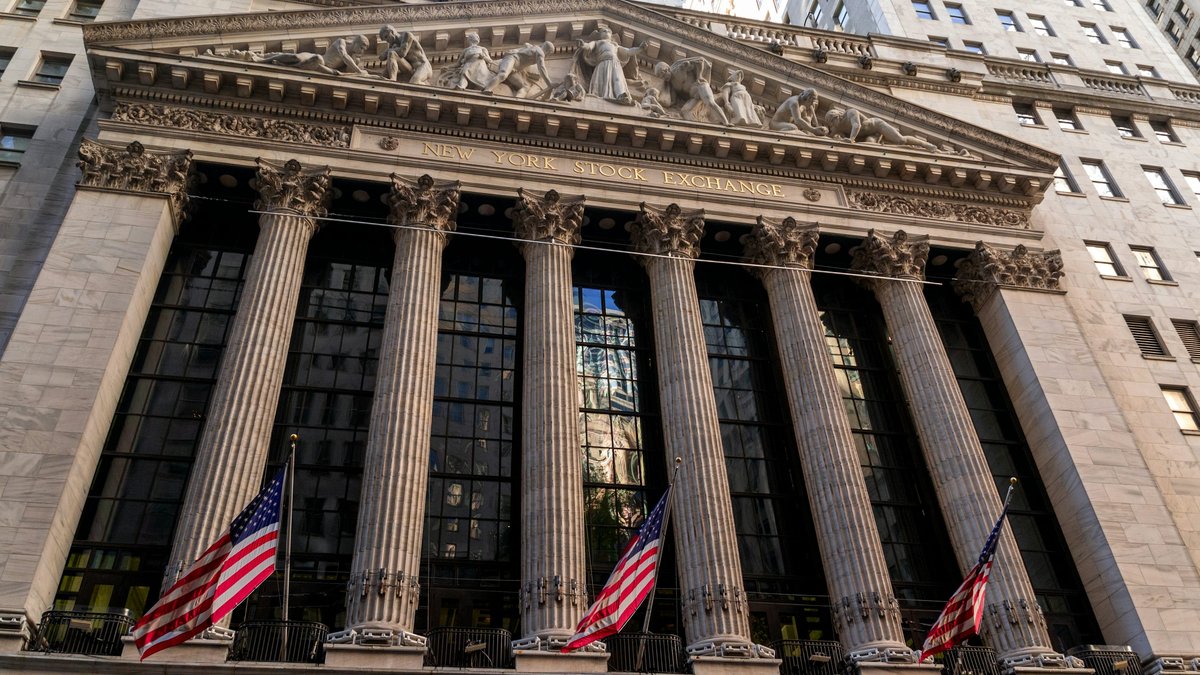
Photo: David Vives / Unsplash.
Top Market Movers
Nvidia: governance concerns compound rate pressure
Nvidia closed Tuesday at $168.89, down 5.47%, according to Yahoo Finance’s dated prices. Reuters and CNBC linked the selling to a board investigation and questions surrounding CEO Jensen Huang’s leadership and relationships with overseas customers. Those unresolved governance issues amplified the pressure from rising yields; they should not be treated as established findings of misconduct. Price history; CNBC reporting.
Investment implications: Concentrated chip exposure carries company-specific risk alongside AI demand risk. Semiconductor diversification does not eliminate broader sensitivity to rates and regulation.
CoreWeave: earnings energize overnight trading
CoreWeave finished at $48.73, down 0.51%, before reaching $57.66, up 18.33%, in Yahoo’s 3:59 a.m. EST overnight ATS quote. This is not Wednesday’s opening price. Its SEC-hosted release reported quarterly revenue of $3.661 billion and raised 2026 revenue guidance to $13.0–$13.3 billion. The company also projected $37–$39 billion of annual capital spending. Dated prices; Company results.
Investment implications: Strong contracted demand supports the AI infrastructure thesis, but growth should be weighed against financing costs, spending commitments and continued losses. Overnight gains can reverse in regular trading. Revenue growth alone does not establish that a capital-intensive business can generate durable cash returns for shareholders.
Oil: lower geopolitical premiums offer partial relief
Brent settled at $91.49 a barrel, down 1.2%, and WTI at $86.04, down 0.9%, on Tuesday. U.S. officials downplayed additional strikes against Iran, easing supply fears. Iran’s denial of current negotiations and continuing shipping risks limited confidence in durable de-escalation. Reuters settlements.
Investment implications: Lower fuel costs can aid consumer spending and transport margins while pressuring producers’ revenue. A sustained decline matters more for inflation than a brief diplomatic headline.
Economic Data & Fed Watch
The Bureau of Labor Statistics reported that October headline CPI increased 0.4% month over month, while core prices rose 0.3%. Both exceeded Dow Jones survey expectations of 0.3% and 0.2%, respectively. Shelter contributed more than 30% of the headline increase; food rose 0.5% and energy 0.7%. BLS did not publish annual headline or core inflation rates because October 2025 comparison data were unavailable following the funding lapse. The missing annual readings should not be interpreted as an improvement in inflation.
The Fed’s latest committee decision, on October 28, held the policy range at 3.75%–4.00%. Tuesday’s speeches were commentary, not a new decision. Governor Christopher Waller favored a December quarter-point increase and discussed a half-point move if inflation proved sufficiently persistent. Dallas Fed President Lorie Logan called for at least two additional quarter-point increases.
Treasury’s November 10 par-yield table showed two-year yields at 4.73% and ten-year yields at 4.98%, up 17 and 10 basis points from Monday. These official par rates differ from intraday benchmark-note quotations. Reuters’ Wednesday Asian snapshot placed the dollar index at 102.30, reflecting support from tightening expectations.
Investment implications: Higher yields can pressure long-duration equities and bond prices while improving reinvestment income. Businesses needing repeated refinancing deserve particular scrutiny. A stronger dollar can also weigh on translated overseas earnings and dollar-funded emerging-market borrowers. BLS CPI; Waller; Treasury.

Photo: LinkedIn Sales Solutions / Unsplash.
International Markets
International equities were firmer Wednesday despite the U.S. inflation setback. Reuters placed Europe’s STOXX 600 0.7% higher at 662.83 at 8:07 a.m. UTC, an early-session observation. At 8:17 a.m. UTC, WSJ reported gains of 0.8% for Britain’s FTSE 100, 1.1% for Germany’s DAX and 0.75% for France’s CAC 40. CoreWeave’s outlook helped renew confidence in AI-related demand.
In completed Asian sessions, Japan’s Nikkei 225 advanced 1.31% to 61,248.59, according to its official daily summary. Yahoo Finance’s dated KOSPI history showed South Korea up 2.60% to 5,375.36. These closes should not be compared directly with Europe’s unfinished session as simultaneous prices.
The currency backdrop remained less comfortable for risk assets. Reuters’ Asian snapshot quoted the euro at $1.1163 and the dollar at 158.82 yen. Higher U.S. rates can constrain emerging-market financing even when local stocks benefit from technology optimism. Middle East shipping risks and uncertainty over the durability of falling energy costs remained global catalysts. Europe; Nikkei; KOSPI; Currencies.
Looking Ahead
Veterans Day brings an uneven trading calendar. U.S. equities remain open for normal Wednesday trading, while SIFMA recommends a full close for U.S.-dollar fixed-income markets. That recommendation is voluntary and should not be generalized to every futures contract. Reduced cash-bond participation may make cross-asset signals less representative.
The next scheduled U.S. releases are weekly jobless claims Thursday at 8:30 a.m. EST and October existing-home sales at 10:00 a.m. October producer prices follow Friday at 8:30 a.m. These are upcoming events, not reported outcomes. Following Tuesday’s CPI surprise, investors will watch whether producer-price pressures and labor resilience reinforce the case for further tightening.
On earnings, Cisco will release fiscal first-quarter results after Thursday’s close. Applied Materials has scheduled its fiscal fourth-quarter and full-year conference call for 4:30 p.m. EST Thursday. Their commentary can test enterprise technology demand and semiconductor equipment spending. The Fed’s next meeting is December 8–9. Between now and then, inflation, corporate financing and geopolitical energy developments remain intertwined drivers of market volatility. Economic calendar; BLS schedule; Fed calendar.
Sources
CNBC: CPI and expectations; Fed: October decision; Dallas Fed: Logan; WSJ: global markets; Yahoo: Veterans Day equities; SIFMA: fixed-income holiday; Cisco: earnings notice; Applied Materials: earnings notice.
Disclaimer: This analysis is for informational and educational purposes only and should not be considered financial advice. Market conditions can change rapidly, and past performance does not guarantee future results. Always conduct your own research and consult with a qualified financial advisor before making investment decisions.