



Week Ahead Overview
The week of November 16–20 puts Wall Street’s rebound through two distinct tests: whether artificial-intelligence investment remains durable and whether consumers can withstand elevated prices and borrowing costs. Nvidia’s Tuesday results, an expected Thursday trading debut for Anthropic, and earnings from major retailers could drive sharp sector moves. October retail sales and Federal Reserve minutes provide the macroeconomic backdrop. Together, these catalysts will help distinguish improving fundamentals from a temporary recovery in risk appetite.

Photo: David Vives / Unsplash. Stock photograph.
Last week’s recovery did not eliminate underlying strain. The S&P 500 gained 2.51%, the Nasdaq Composite rose 2.27%, and the Dow advanced 2.07%, according to Reuters. Yet Friday brought renewed technology selling, with the S&P down 0.40% and Nasdaq down 0.91%. Investors enter Monday with a rebound to defend rather than an unambiguous return to broad-based strength.
CNBC’s market coverage highlights rotation away from parts of the AI infrastructure trade as Nvidia faces leadership uncertainty. That makes earnings-call detail especially important: customers’ spending commitments and financing arrangements may matter as much as reported profits. Positioning may shift quickly as those assumptions change. This preview uses information available November 15; event times below are Eastern Standard Time. Scenarios are conditional, not predictions of results or a guaranteed market direction.
Economic Calendar
Monday, November 16: The Empire State Manufacturing Survey arrives at 8:30 a.m. Fed Chair Kevin Warsh gives opening remarks at a productivity and jobs conference at noon. The announced topic concerns productivity; investors should not assume the appearance promises a policy decision.
Tuesday, November 17: October retail sales and import/export prices are scheduled for 8:30 a.m., followed by industrial production at 9:15 a.m. and business inventories at 10:00 a.m. Retail sales are the central consumer test. Separate price effects from purchasing volumes and examine category mix and revisions. MarketWatch’s calendar lists a 0.2% monthly retail-sales forecast, which is a provider estimate rather than an established cross-source consensus.
Wednesday, November 18: Housing starts and permits arrive at 8:30 a.m.; pending home sales follow at 10:00 a.m. The October 27–28 FOMC minutes are due at 2:00 p.m. They describe an earlier meeting, not a new rate announcement. There is no scheduled FOMC decision this week.
Thursday and Friday: Thursday brings initial unemployment claims and Philadelphia Fed manufacturing at 8:30 a.m., then the Leading Economic Index at 10:00 a.m. Friday’s final Michigan sentiment survey, including inflation expectations, is due at 10:00 a.m. Governor Lisa Cook speaks on the economy in global context at 12:15 p.m. Dates are confirmed by Census and official Fed calendars.
Investment implications: Strong spending alongside persistent inflation could reinforce renewed-tightening concerns and pressure rate-sensitive valuations. Weak consumption and housing would instead raise growth risks. Read claims alongside revisions and the four-week average; one release rarely establishes a trend. GDP and PCE inflation are scheduled for November 25, not this week.
Earnings Season Focus
Nvidia, Tuesday, November 17: The company confirms fiscal third-quarter 2027 results, covering the period ended October 25, at approximately 4:20 p.m., with its call at 5:00 p.m. The official CEO-transition announcement reconfirms that schedule. Interim CEO Colette Kress will face questions about leadership continuity, customer commitments and the financing relationships supporting AI expansion. Watch forward demand and product execution rather than treating any headline earnings beat as sufficient reassurance.
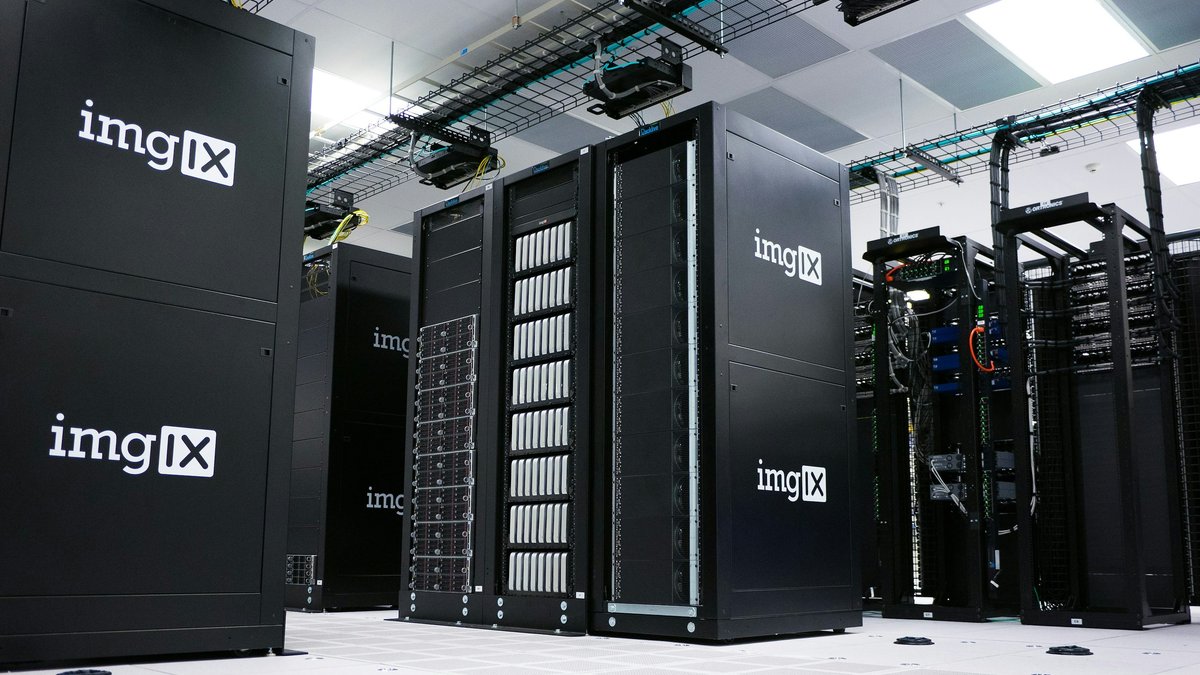
Photo: imgix / Unsplash. Stock photograph.
Home Depot, Tuesday; Target, Wednesday; Walmart, Thursday: Home Depot’s fiscal third-quarter 2026 call is at 9:00 a.m. Target’s fiscal third-quarter 2026 call begins at 8:00 a.m. Walmart releases fiscal third-quarter 2027 results at 7:00 a.m., followed by an 8:00 a.m. call. These are issuer–confirmed events; call times should not be confused with separate release times.
The retailers offer contrasting views of household finances. Home Depot tests renovation and interest-sensitive spending. Target provides a window into discretionary demand, while Walmart’s value positioning helps illuminate consumers’ search for affordability. Comparable sales, customer traffic, average transaction size, inventory discipline and holiday guidance deserve attention. Margin changes also matter because sales growth driven by prices can coexist with weaker underlying demand.
Investment implications: Compare management guidance with the market’s subsequent reaction, not just backward-looking profits. Strong retailers alongside cautious AI commentary could extend sector rotation; broadly weaker outlooks would challenge the recovery. Reuters and WSJ report Anthropic is expected to begin trading Thursday, adding another AI sentiment test. That anticipated debut is not a guaranteed timetable or evidence that AI-linked shares must rise.
Geopolitical & Policy Watch
The aftermath of the midterm elections remains relevant to trade policy and AI regulation. Bloomberg reports that the incoming Democratic-led Congress is preparing to challenge President Donald Trump’s tariff powers, while cautioning that changes will not be easy or quick. Political statements should therefore be separated from enacted measures. Retailers’ sourcing costs and manufacturers’ investment plans may react to expectations before legislation changes.
For AI infrastructure, watch proposals affecting data-center expansion, electricity access and advanced-chip trade. Nvidia’s leadership transition adds company-specific uncertainty, but a governance development does not by itself establish a change in export rules or customer demand. Official announcements carry more weight than speculation.
Middle East conflict remains an energy and inflation risk highlighted in Reuters’ week-ahead reporting. Higher fuel costs would squeeze household budgets and transport margins; easing tensions could relieve pressure. Neither path is assured. Investors should monitor confirmed diplomatic and supply developments without assuming a scheduled breakthrough or extrapolating one headline into a durable oil trend.
Technical & Sentiment Indicators
Friday’s verified closes were 7,561.67 for the S&P 500, 25,136.27 for the Nasdaq Composite and 52,347.55 for the Dow. For the coming week, use 7,500 and 7,600 on the S&P, 25,000 and 25,500 on Nasdaq, and 52,000 and 52,500 on the Dow as nearby round-number reference markers. These are analyst-selected psychological levels, not calculated moving averages or proven support and resistance.
Holding above the lower markers after major catalysts would be constructive; sustained breaks would suggest the rebound is losing traction. Moves above the upper markers are more persuasive when accompanied by wider participation. Avoid treating a brief intraday crossing as confirmation.
Breadth deserves particular scrutiny. Reuters reported 37 new Nasdaq 52-week highs against 340 new lows on Friday, despite the index’s weekly gain. WSJ also reported the 10-year Treasury yield above 5%. Improving breadth alongside calmer yields would strengthen the recovery’s credibility; concentrated gains and rising yields would leave equities vulnerable to disappointing guidance.
Sources
Reporting: Reuters, CNBC, The Wall Street Journal, Bloomberg and MarketWatch, linked above. Calendar and earnings dates were checked against original agency and company notices. Market levels refer to the November 13 close; forecasts and interpretations are identified separately.
Disclaimer: This analysis is for informational and educational purposes only and should not be considered financial advice. Market forecasts are inherently uncertain, and actual events may differ materially from expectations. Always conduct your own research and consult with a qualified financial advisor before making investment decisions.