



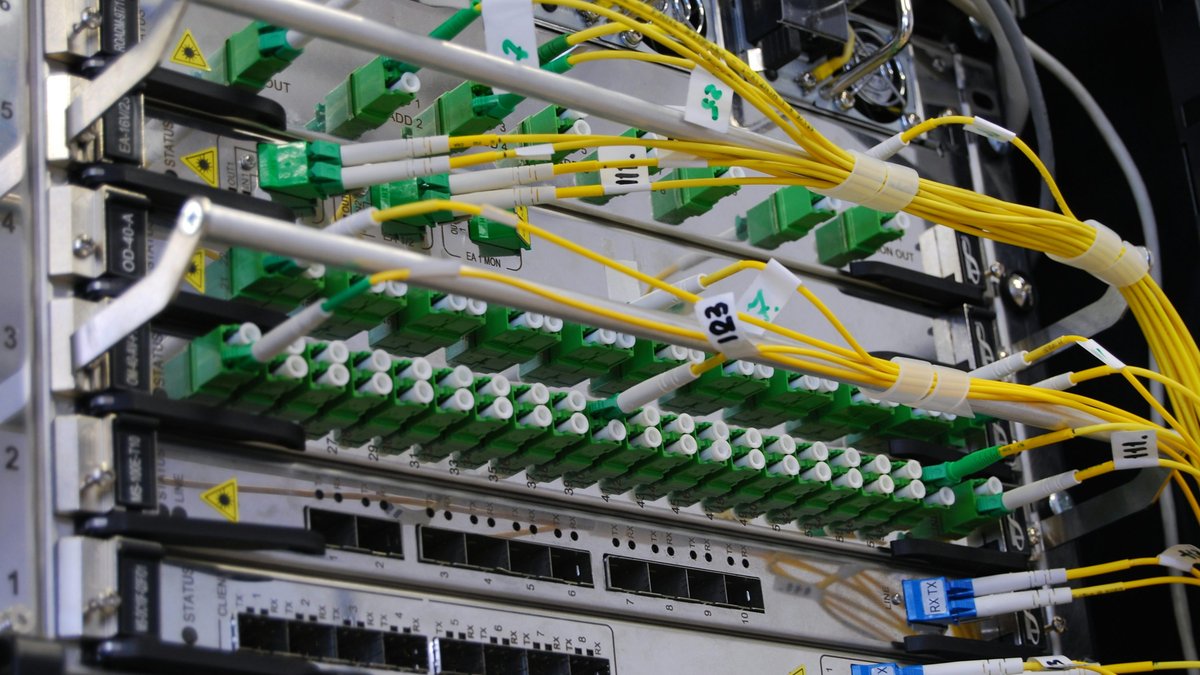
Photo: Kirill Sh on Unsplash
Cisco’s Investment Thesis
Cisco Systems (NASDAQ: CSCO) is better known for connecting corporate offices than for making artificial intelligence chips. Yet its switches, routers and network-management software help move the huge volumes of data between servers that train and run AI systems. The company also sells security, collaboration and support services to businesses, governments and telecommunications providers. That mix gives it exposure to both the AI infrastructure buildout and the less glamorous work of keeping existing networks running.
The investment question is whether faster networking demand can lift Cisco’s earnings without permanently eroding profitability. For its fiscal first quarter, ended October 24, 2026, the company reported 24% revenue growth and a 43% jump in networking product revenue. It also raised its full-year sales forecast. But the share price fell sharply after the report, a reminder that good results alone do not guarantee a good investment when expectations and hardware costs are changing.
The case for the stock rests on a large installed base, strong cash generation and Cisco’s opportunity to sell the connective infrastructure behind data centers. The counterargument is that the most rapidly growing products may carry lower margins than investors have historically expected. With shares at $94.52 at the November 16 close, the debate is less about whether AI matters than about how much lasting profit Cisco can capture from it.
Recent Developments and Catalysts
Cisco’s November 12 earnings release showed fiscal first-quarter revenue of $18.5 billion, compared with $14.9 billion a year earlier. Net income under generally accepted accounting principles, or GAAP, rose to $4.6 billion from $2.9 billion, and diluted GAAP earnings per share increased to $1.14 from $0.72. Adjusted earnings per share were $1.40, up from $1.00; this non-GAAP figure excludes certain costs and is not directly interchangeable with GAAP earnings.
Management now expects fiscal 2027 revenue of $74.8 billion to $75.8 billion. The prior range was $72.2 billion to $73.4 billion, according to Reuters. Cisco also increased its expected fiscal 2027 AI infrastructure revenue from hyperscale customers to $9 billion, versus $7.5 billion previously and $4 billion in fiscal 2026. Those are management expectations, not completed sales, and hyperscalers are a particularly concentrated customer group.
For fiscal second quarter, Cisco guided to revenue of $18.0 billion to $18.2 billion and GAAP earnings of $1.07 to $1.09 per share. Its full-year GAAP earnings forecast of $4.38 to $4.44 per share depends on management’s operating and tax assumptions. The next report will show whether demand and margins are tracking those estimates. Investors can also watch customer spending plans, order conversion and the pace of AI-related deliveries rather than treating a single quarter as proof of a durable cycle.
Investment implications: The raised forecast creates a clearer near-term growth path, but it also raises the bar for execution. A slowdown in large data-center orders or difficulty meeting the new outlook could matter more to the shares than the recent earnings beat.
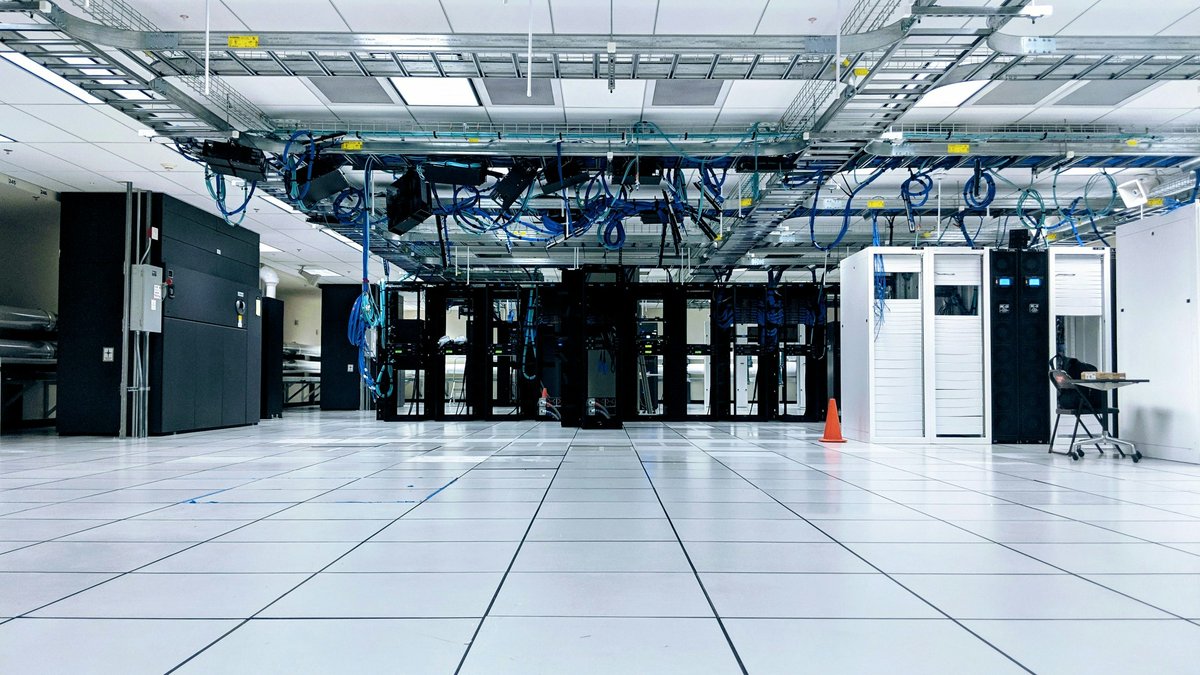
Photo: Taylor Vick on Unsplash
Financial Analysis
The latest quarter builds on a meaningful improvement in Cisco’s fiscal 2026 results. Annual revenue rose to $63.3 billion from $56.7 billion, while GAAP earnings per share climbed to $3.33 from $2.55, according to its full-year earnings release. The midpoint of the new fiscal 2027 revenue outlook is $75.3 billion, roughly 19% above fiscal 2026 sales. That is guidance, not a guarantee. Fiscal 2027 also has 53 weeks against 52 in fiscal 2026, so the comparison benefits from an extra week.
The mix behind the growth deserves attention. Fiscal first-quarter product revenue increased 32%, whereas services revenue increased only 1%. Networking products drove the acceleration, while security product revenue rose 7%. That makes Cisco more exposed to a hardware spending cycle even as it continues to sell support and software. Remaining performance obligations, a measure of contracted future revenue that is not the same as cash or firm orders, were $46.2 billion, up 8% from a year earlier.
Profitability improved at the operating level, but not everywhere. GAAP operating margin reached 30.2%, and operating cash flow grew to $4.4 billion from $3.2 billion. At the same time, GAAP gross margin declined to 63.7% from 65.5%, reflecting pressure on the profitability of goods sold. Cisco ended the quarter with $15.8 billion in cash and investments against $29.8 billion in short- and long-term debt, and returned $3.7 billion to shareholders through dividends and buybacks.
Investment implications: Faster sales are currently spreading operating expenses over a larger revenue base, but weaker gross margin is an early warning. Sustained cash generation, rather than adjusted earnings alone, will be important evidence that growth is creating durable value.
Valuation and Competitive Position
At the November 16 closing price of $94.52, Cisco traded at approximately 25.2 times estimated trailing GAAP earnings. The estimate adds the latest quarter’s $1.14 to fiscal 2026 earnings of $3.33 and subtracts the prior-year quarter’s $0.72, yielding approximately $3.75 per share. Rounding and changing weighted share counts make this approximate.
Using the midpoint of Cisco’s fiscal 2027 GAAP earnings guidance, $4.41 per share, the forward price-to-earnings ratio is about 21.4. Separately, Finviz showed a PEG ratio of 1.13 on November 13, based on its 16.09 forward P/E and projected five-year annual EPS growth of 14.18%. That older snapshot uses a different earnings basis and price; its growth forecast is not guaranteed.
Illustrative bear, base and bull cases using respective GAAP EPS assumptions of $3.90, $4.41 and $4.80 and multiples of 17, 21 and 25 produce values of roughly $66, $93 and $120 per share. These are sensitivities, not predictions; the outer EPS assumptions fall outside company guidance. Cisco benefits from established customer relationships but competes with Arista and other networking suppliers. TheFly reported that Truist cut its individual target to $127 from $140 on November 13; targets can change and are not guarantees.
Investment implications: The stock offers exposure to infrastructure growth, but today’s multiple still depends on Cisco delivering the projected earnings and defending its position against competitors.
Risks and Outlook
Customer concentration is a central risk: a few hyperscale buyers can defer large projects, negotiate hard or favor competing equipment. Component shortages and higher memory prices can squeeze hardware margins even when unit demand is healthy. Reuters highlighted both the margin pressure and the risk that data-center construction could slow as financing costs rise.
There is also execution risk outside AI. Slower enterprise spending, acquisition integration problems, cybersecurity failures or changing trade restrictions could affect Cisco’s broad installed base. The business has substantial debt as well as cash, so shareholder returns should be assessed alongside balance-sheet obligations. And while the quarterly dividend is $0.42 per share, future payments remain subject to board approval.
The thesis would strengthen if Cisco meets its raised outlook while stabilizing gross margin and converting growth into cash. It would weaken if AI revenue falls short, hyperscale customers pull back or margin declines persist. For now, Cisco looks like a profitable way to participate in networking demand, but the recent share-price reaction shows that the market is not treating growth as risk-free.
Disclaimer: This analysis is for informational and educational purposes only and should not be considered financial advice. Individual stock investments carry significant risks including company-specific and market risks. Always conduct your own research and consult with a qualified financial advisor before making investment decisions.