



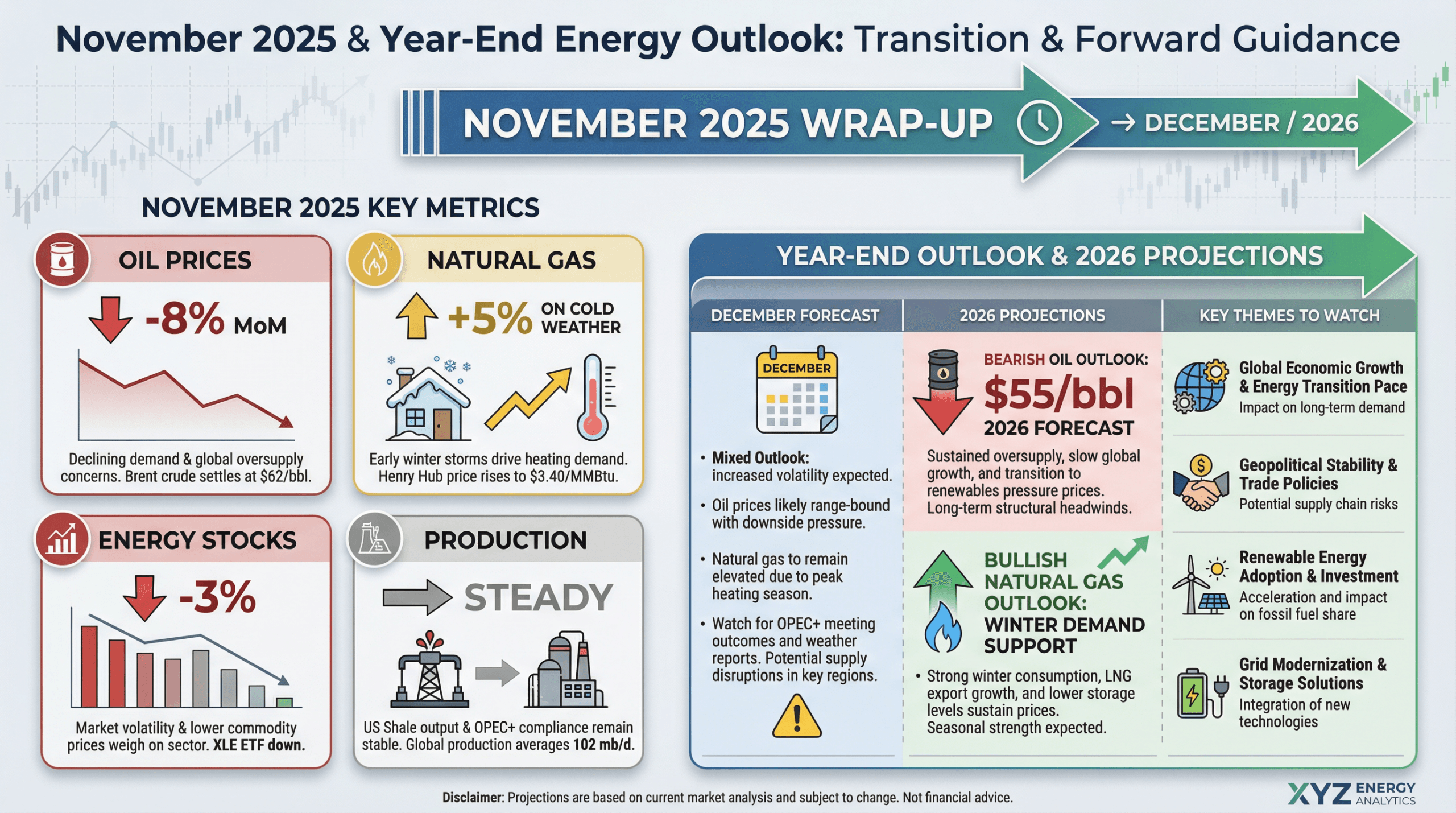
Energy Sector Finds a Floor as OPEC+ Hints at Action
The energy sector found a floor this week, with both oil and natural gas prices rebounding from their recent lows. The rally was driven by a combination of factors, including hints from OPEC+ that the group is prepared to take further action to support the market, as well as a cold snap in the US that boosted heating demand. The market, which had been in a freefall in recent weeks, finally found some support, with the energy sector being one of the best-performing sectors in the S&P 500 for the week.
Weekly Energy Market Performance
| Metric | Value | Weekly Change (%) |
|---|---|---|
| WTI Crude Oil (USD/bbl) | $71.20 | +3.9% |
| Brent Crude Oil (USD/bbl) | $75.50 | +3.7% |
| Natural Gas (USD/MMBtu) | $2.90 | +5.5% |
| Energy Sector ETF (XLE) | $78.80 | +3.4% |
OPEC+ Jawboning and Cold Snap Boost Prices
The main catalyst for the energy market’s rally this week was a series of comments from OPEC+ ministers, who hinted that the group is prepared to take further action to support the market. The group is scheduled to meet in early December to decide on its production policy for the first quarter of 2026, and the market is now pricing in a high probability of a deeper production cut. The OPEC+ jawboning, coupled with a cold snap in the US that boosted heating demand, provided a strong tailwind for the energy sector.
The cold snap was particularly bullish for the natural gas market, which has been under pressure in recent weeks due to high inventory levels. The cold weather led to a surge in heating demand, which in turn boosted natural gas prices. The rally was further supported by forecasts for a colder-than-expected winter, which raised the prospect of a sustained increase in heating demand in the coming months.
Demand Concerns Remain
Despite the rally this week, the energy market is still facing a number of headwinds. The global economy remains weak, and there are growing fears of a recession. The latest economic data from China and Europe has been particularly disappointing, and there are signs that the US economy is also starting to slow. The prospect of a global recession is a major headwind for the oil market, as it would lead to a significant decrease in demand.
Investors will be closely watching the upcoming OPEC+ meeting for clues on the group’s production policy. A deeper-than-expected cut could trigger a further rally in oil prices, but the longer-term outlook will depend on the strength of the global economy. For now, the market is likely to remain in a volatile trading pattern as it digests the latest signals from OPEC+ and awaits a clearer picture of the global supply-demand balance.
Forward-Looking Conclusion
The energy sector has found a floor this week, with both oil and natural gas prices rebounding from their recent lows. The rally was driven by a combination of OPEC+ jawboning and a cold snap in the US. However, the market is still facing a number of headwinds, including a weak global economy and rising non-OPEC supply. The upcoming OPEC+ meeting will be a key catalyst for the market, with investors eagerly awaiting a decision on production policy.
Investors should remain cautious in the current environment. The energy sector is likely to remain volatile in the coming weeks as the market digests the latest signals from OPEC+ and awaits a clearer picture of the global supply-demand balance. For now, the path of least resistance for energy prices appears to be to the upside, but the potential for a sharp reversal is high.