



1. Stock Market Hits New Records Following Fed Rate Cut and Dovish Commentary

The Dow Jones Industrial Average and the S&P 500 both closed at new all-time highs, extending a rally that began after the Federal Reserve's latest policy meeting. The Fed voted to lower interest rates for the third time this year and Chair Jerome Powell signaled a more gradual easing path, while also hinting that a rate hike is off the table for the near future [1]. This positive sentiment was driven by the central bank's acknowledgment of the economy's strength and a perceived “one-time” nature of recent inflation pressures.
Why it matters for investors: The Fed's dovish stance and continued rate cuts provide a strong tailwind for equity markets, particularly for value stocks and those sensitive to interest rates. However, the divergence between the record-setting Dow and the lagging Nasdaq Composite suggests investors are rotating out of high-growth tech and into broader market sectors.
2. Oracle's Earnings Reignite AI Overspending Fears, Weighing on Tech Stocks
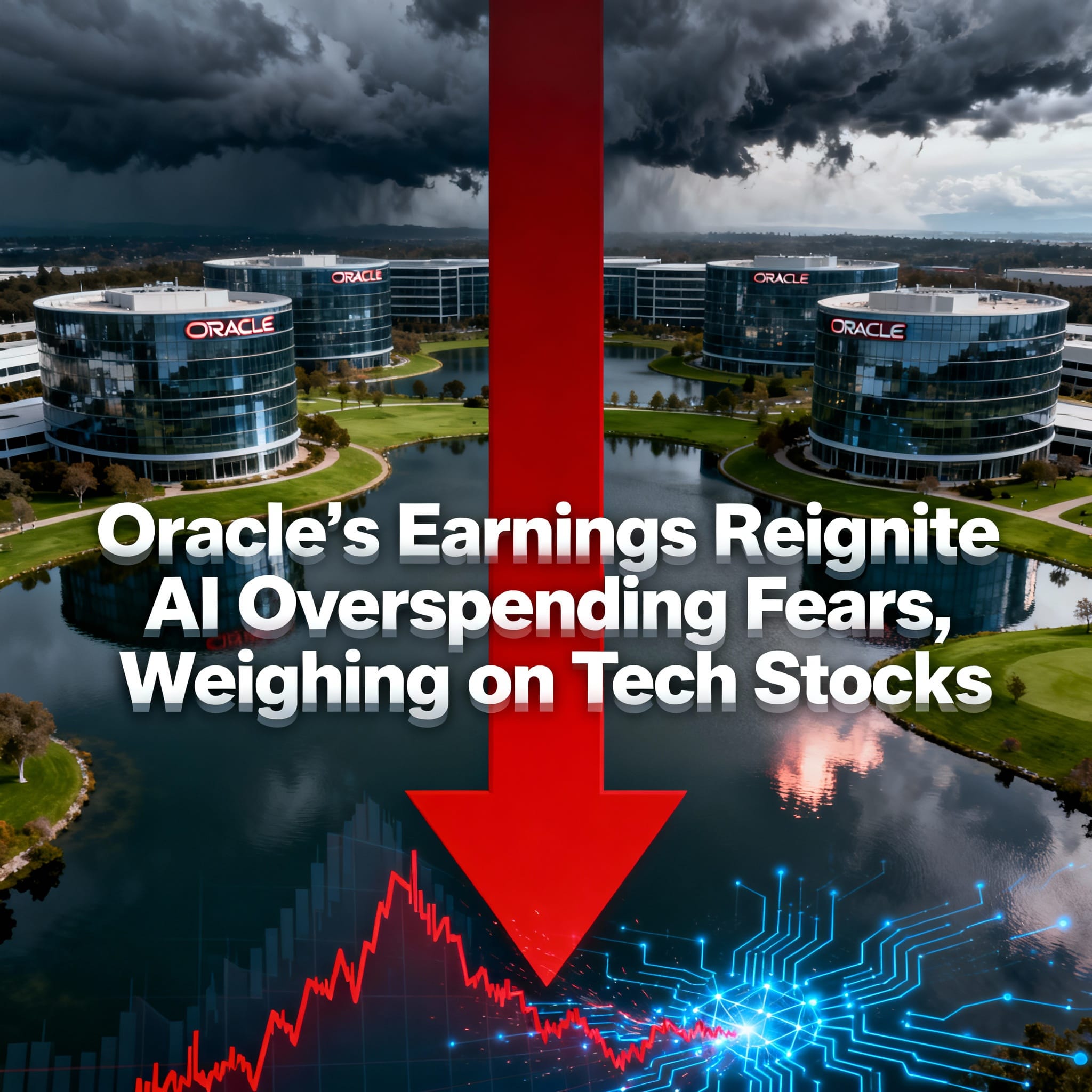
Oracle's stock plunged nearly 11% after its latest earnings report missed expectations on cloud sales and the company announced a massive $15 billion increase to its already aggressive data center spending plan [1]. This performance revived investor concerns about the high cost and uncertain return on investment in the current AI infrastructure buildout. The news directly impacted other AI-related stocks, with chip giant Nvidia (NVDA) falling over 3.5% on the day.
Why it matters for investors: This news serves as a crucial reality check for the AI sector, suggesting that the massive capital expenditure required for AI development may not immediately translate into proportional revenue growth. Investors should scrutinize the balance sheets of companies heavily invested in AI infrastructure for signs of overspending and delayed profitability.
3. Jobless Claims Jump to Highest Level Since 2020
Weekly jobless claims came in significantly higher than expected at 236,000, marking the biggest jump since 2020 [1]. This unexpected rise in unemployment filings follows a recent dip to a three-year low and puts the spotlight on the labor market ahead of the delayed November jobs report.
Why it matters for investors: A weakening labor market could reinforce the Federal Reserve's dovish pivot, potentially accelerating the pace of future interest rate cuts. While this is generally positive for stocks, a rapid deterioration in employment could signal broader economic weakness, which would be a negative for corporate earnings.
4. Natural Gas Prices Deepen Plunge on Mild Weather and High Supply
Natural gas futures continued their steep decline, falling by more than 16% over the past five days, to trade below $4.30 [1]. The price plummet is attributed to a combination of consistently mild winter weather forecasts, which reduce heating demand, and record-high US dry gas production.
Why it matters for investors: The sustained drop in natural gas prices is a boon for energy-intensive industries and consumers, acting as a form of disinflationary pressure. However, it negatively impacts the earnings and stock prices of natural gas producers and energy companies exposed to the commodity.
5. Robinhood Stock Plummets on Disappointing November Trading Volumes
Shares of Robinhood (HOOD) dropped as much as 9% after the company reported disappointing trading volumes for November. The decline suggests a slowdown in retail trading activity, which is a key revenue driver for the brokerage platform.
Why it matters for investors: Robinhood's performance is a bellwether for the broader retail investor sentiment and activity. A drop in trading volumes indicates that the speculative fervor seen in previous years may be cooling, suggesting a more cautious or less engaged retail investor base.