



U.S. stock markets closed out a choppy week with modest losses on Friday as investors grappled with mounting uncertainty over Federal Reserve leadership and the central bank's policy trajectory. The major indices finished in negative territory for the week, with the S&P 500, Dow Jones Industrial Average, and Nasdaq Composite all posting declines despite a late-week rally in semiconductor stocks. Small-cap stocks bucked the trend, with the Russell 2000 notching gains as investors rotated into domestically focused companies.
Market Performance Overview
The S&P 500 declined 0.06% on Friday to close at 6,940.01, capping a week that saw the benchmark index fall 0.4%. The Dow Jones Industrial Average dropped 87 points, or 0.17%, to finish at 49,359.33, while the Nasdaq Composite edged down 0.06% to 23,515.39. Despite the modest daily losses, all three major indices remain near record highs, with the S&P 500 up nearly 21% over the past twelve months and approximately 41% from its April 2024 low.
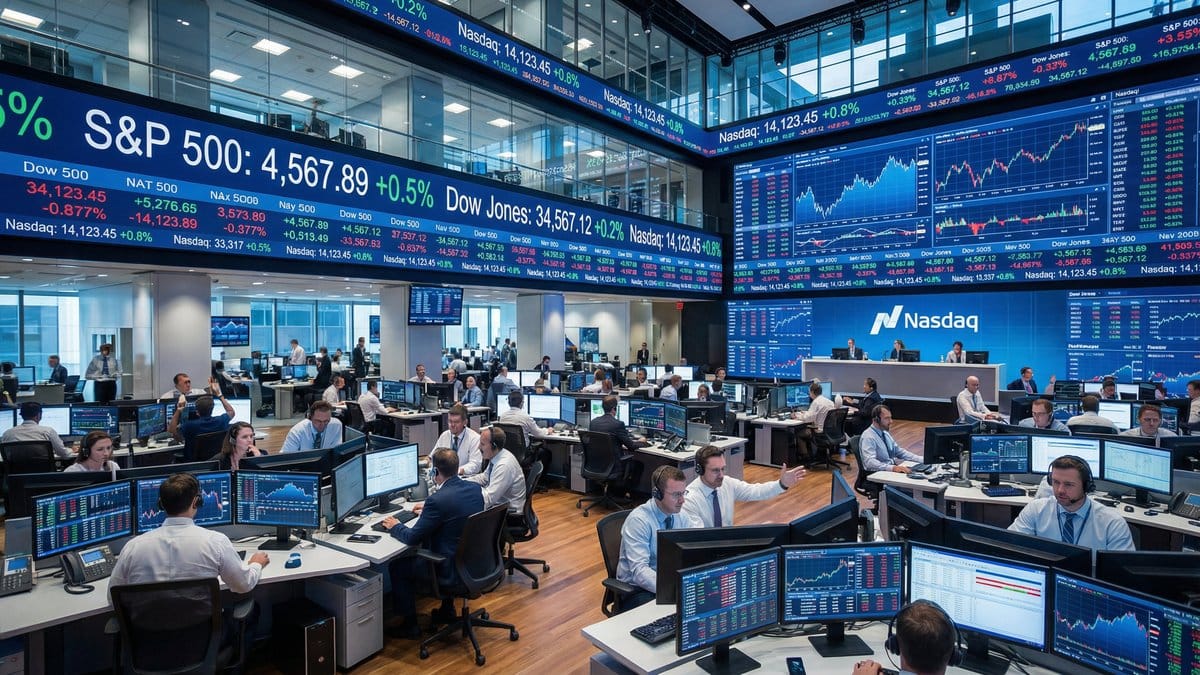
The Russell 2000 small-cap index provided a bright spot, rising 0.12% to 2,677.74 and wrapping up a strong week of performance. Small-cap stocks have attracted increased investor interest in recent sessions as traders position for potential policy changes under the Trump administration that could disproportionately benefit domestically focused companies. The rotation into small-caps suggests that some investors are taking profits from large-cap technology stocks and seeking value in other areas of the market.
Trading volume remained below average as markets prepared for the Martin Luther King Jr. Day holiday on Monday, which will keep U.S. exchanges closed. The subdued volume contributed to choppy price action throughout the session, with major indices oscillating between modest gains and losses before settling in negative territory. The VIX volatility index rose slightly to 15.86, indicating that while investor anxiety has increased marginally, it remains well below levels associated with significant market stress.
Investment implications: The modest weekly decline represents a healthy consolidation after strong gains in recent months. Investors should view near-term volatility as a normal part of market dynamics rather than a signal of a broader trend reversal. The rotation into small-cap stocks suggests that market breadth is improving, which historically has been a positive indicator for the sustainability of bull markets.
Fed Chair Speculation Roils Treasury Market
The most significant market-moving development on Friday came from President Donald Trump's comments regarding Federal Reserve leadership. Trump suggested that National Economic Council Director Kevin Hassett would remain in his current White House role rather than being tapped to replace Fed Chair Jerome Powell, whose term expires in May 2026. The remarks shifted prediction markets decisively in favor of former Fed Governor Kevin Warsh, who is now viewed as the leading candidate for the position.
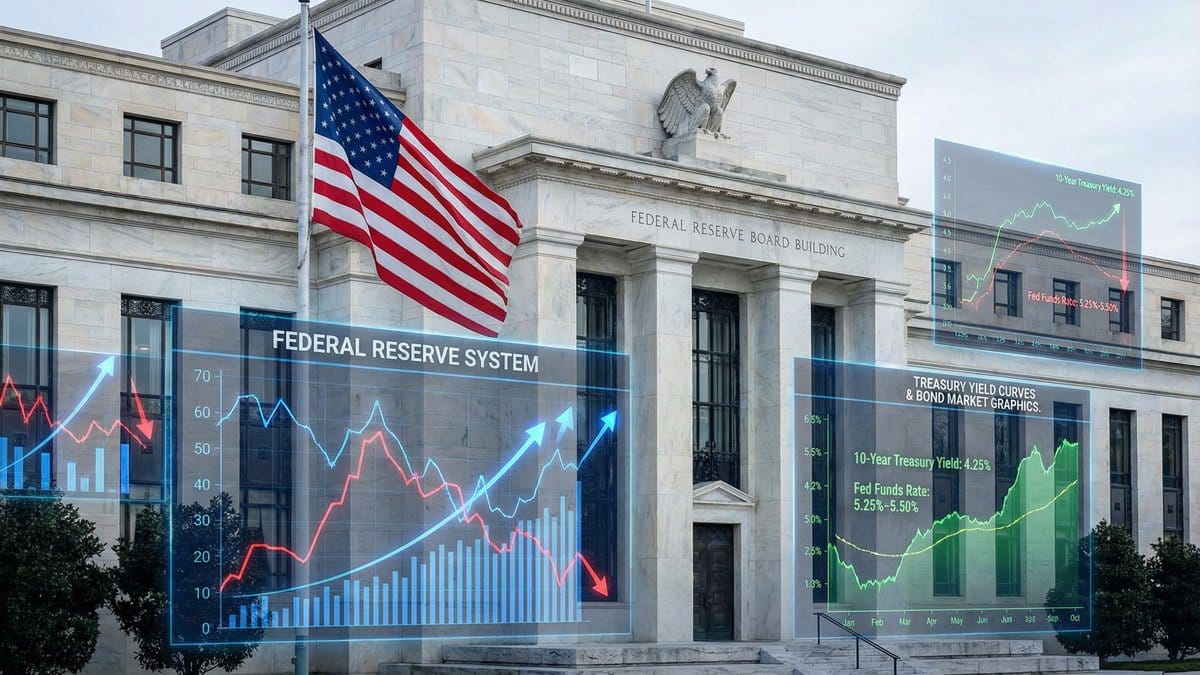
The Treasury market reacted swiftly to Trump's comments, with the yield on the 10-year Treasury note breaking above the closely watched 4.2% level to finish at 4.227%. This represents a significant technical breach, as yields had largely traded below 4.2% in recent months despite various geopolitical tensions and policy uncertainties. The move higher in yields reflects investor concerns that Warsh may pursue a more hawkish monetary policy stance than Hassett, who had been viewed as more dovish and market-friendly.
The shift in Fed leadership expectations has important implications for monetary policy and asset prices. Warsh, who served as a Fed governor from 2006 to 2011, has historically advocated for tighter monetary policy and has been critical of the central bank's aggressive quantitative easing programs. If appointed, he would likely prioritize inflation control over supporting asset prices, potentially leading to higher interest rates for longer than markets currently anticipate. This prospect has weighed on rate-sensitive sectors such as utilities and real estate, while providing support for financial stocks that benefit from steeper yield curves.
Investment implications: The uncertainty surrounding Fed leadership introduces a new variable into investment decision-making. Investors should prepare for the possibility of a more hawkish Fed under Warsh, which could pressure valuations in growth stocks and other rate-sensitive assets. Conversely, financial sector stocks may benefit from a steeper yield curve and higher net interest margins. Maintaining portfolio diversification and avoiding excessive concentration in any single sector will be crucial as this situation develops.
Semiconductor Sector Provides Bright Spot
Despite broader market weakness, semiconductor stocks rallied strongly during the week following Taiwan Semiconductor Manufacturing Company's blowout fourth-quarter earnings report. The world's largest contract chipmaker exceeded analyst expectations across all key metrics, demonstrating robust demand for advanced semiconductor manufacturing capacity. TSMC's strong results provided a tailwind for the entire semiconductor sector, with shares of Broadcom, Advanced Micro Devices, Intel, Nvidia, and Micron all posting gains.
The semiconductor rally received additional support from a landmark trade agreement between the United States and Taiwan announced during the week. Under the deal, Taiwanese chip and technology companies committed to investing at least $250 billion in U.S. production capacity over the coming years. This massive investment represents a significant step toward onshoring critical semiconductor manufacturing and reducing supply chain vulnerabilities that have plagued various industries in recent years.
The U.S.-Taiwan agreement addresses longstanding concerns about America's dependence on foreign semiconductor production, particularly for advanced chips used in artificial intelligence, defense systems, and other critical applications. The commitment to build substantial manufacturing capacity domestically should alleviate concerns about potential supply disruptions from geopolitical tensions in the Taiwan Strait region. However, it will take several years for this new capacity to come online, meaning near-term supply dynamics remain dependent on existing facilities.
Investment implications: The semiconductor sector's strength and the U.S.-Taiwan trade deal provide a constructive backdrop for chip stocks, particularly those involved in manufacturing equipment and materials. Companies such as Applied Materials, Lam Research, and KLA Corporation should benefit from the massive capital expenditure cycle required to build new U.S. fabrication facilities. However, investors should be selective, as not all semiconductor companies will benefit equally from this trend.
Banking Sector Pressured by Rate Cap Proposal
Financial stocks faced significant headwinds during the week despite reporting strong fourth-quarter earnings that demonstrated the resilience of the banking system and healthy consumer credit quality. JPMorgan Chase and Bank of America both fell approximately 5% for the week as investors reacted negatively to President Trump's proposal to cap credit card interest rates. The proposed policy raised concerns about potential margin compression in consumer lending businesses, which have been key profit drivers for major banks in the current higher interest rate environment.
The banking sector's weakness highlighted the tension between robust fundamental performance and regulatory uncertainty. Fourth-quarter results showed that banks continue to benefit from higher net interest margins, strong loan growth, and improving credit quality. However, the prospect of interest rate caps on credit cards introduces a new variable that could materially impact profitability. Analysts estimate that credit card lending generates approximately 15-20% of total revenue for major consumer banks, making any regulatory intervention in this area significant for earnings.
The actual implementation of credit card interest rate caps remains highly uncertain. Such a policy would likely face legal challenges and could have unintended consequences, including reduced credit availability for consumers with lower credit scores. Banks might respond by tightening lending standards, reducing credit limits, or shifting their business models toward fee-based services. The uncertainty surrounding this proposal has created an overhang on bank stocks that may persist until more details emerge about the administration's specific plans.
Investment implications: The selloff in banking stocks appears overdone given the strong underlying fundamentals and the uncertain prospects for credit card rate caps. Long-term investors may find attractive entry points in high-quality banks with diversified revenue streams that extend beyond consumer lending. Regional banks with less exposure to credit card lending may outperform larger money center banks if the regulatory threat materializes. However, investors should monitor developments closely and be prepared for continued volatility in the sector.
Inflation Data Reinforces Fed Pause
Economic data released during the week provided mixed signals on the inflation front but generally reinforced expectations that the Federal Reserve will remain on hold for the foreseeable future. The December Consumer Price Index showed core inflation rising 0.2% on a monthly basis and 2.6% annually, both coming in 0.1 percentage point below expectations. Headline CPI increased 0.3% for the month, bringing the annual rate to 2.7%, exactly in line with consensus estimates.
The inflation report demonstrated that price pressures continue to moderate gradually but remain above the Fed's 2% target. Shelter costs, which account for more than one-third of the CPI weighting, rose 0.4% for the month and were up 3.2% year-over-year, highlighting persistent stickiness in housing-related inflation. This component has been particularly challenging for the Fed, as housing costs tend to adjust slowly and have proven resistant to monetary policy tightening.
Food prices jumped 0.7% for the month, though egg prices tumbled 8.2% after previous spikes related to avian flu outbreaks. Energy prices increased 0.3% monthly and 2.3% annually, with gasoline showing declines of 0.5% and 3.4%, respectively. The divergent trends across different CPI components underscore the complexity of the current inflation environment, where some categories are experiencing disinflation or outright deflation while others remain stubbornly elevated.
Real wages remained flat for the month but were up 1.1% year-over-year, providing some support for consumer spending. The modest real wage growth suggests that households are maintaining purchasing power despite elevated price levels, which should support economic growth in the near term. However, the lack of stronger real wage gains may limit the pace of consumer spending growth and could eventually weigh on corporate revenue expansion.
Investment implications: The gradual moderation in inflation provides a favorable backdrop for risk assets by reducing the likelihood of additional Fed tightening. However, the persistence of inflation above the 2% target means that interest rate cuts are unlikely in the near term, keeping pressure on rate-sensitive sectors. Investors should focus on companies with strong pricing power that can maintain margins in a moderating but still-elevated inflation environment.
Geopolitical Tensions Add Volatility
Geopolitical concerns remained elevated during the week, with President Trump threatening to impose tariffs on European nations if they do not support U.S. positions on various issues, including the Greenland dispute. The president suggested that eight countries could face tariffs rising to 25%, adding another layer of uncertainty to global trade relations. These threats come as the administration pursues an aggressive foreign policy agenda aimed at advancing American economic and strategic interests.
The heightened geopolitical rhetoric contributed to market volatility and raised concerns about potential trade disruptions. Defense and aerospace stocks rallied on the news, with investors anticipating increased military spending and geopolitical tensions that typically benefit companies in these sectors. Space-related stocks also posted strong gains as the Greenland dispute highlighted the strategic importance of Arctic resources and satellite communications infrastructure.
Despite the elevated tensions, Treasury yields remained relatively stable until Friday's Fed chair comments, suggesting that investors continue to view U.S. government debt as a safe haven amid global uncertainty. The dollar maintained its strength against major currencies, reflecting confidence in the U.S. economy and the Federal Reserve's commitment to price stability. However, prolonged geopolitical tensions could eventually weigh on risk sentiment and prompt a flight to quality that benefits defensive assets.
Earnings Season Gains Momentum
The fourth-quarter earnings season continued to gain momentum, with approximately 7% of S&P 500 companies having reported results. The early scorecard shows a mixed picture, with 79% of companies beating earnings per share estimates—above the five-year average of 78%—but the magnitude of earnings surprises coming in below historical norms at 5.8% versus a five-year average of 7.7%. This suggests that while companies are generally meeting or exceeding expectations, they are doing so by narrower margins than in recent quarters.
The blended earnings growth rate for the fourth quarter stands at 8.2%, marking the tenth consecutive quarter of year-over-year earnings growth for the S&P 500. Revenue growth remains robust at 7.8%, representing the 21st consecutive quarter of revenue expansion. The Information Technology and Materials sectors are leading earnings growth, while Consumer Discretionary and Energy sectors are reporting declining earnings. This divergence highlights the uneven nature of the current economic expansion, with some sectors thriving while others struggle.
Looking ahead, analysts are projecting earnings growth of 12.2% for the first quarter of 2026 and 14.6% for the second quarter. For the full year 2026, earnings are expected to grow 14.9%, reflecting optimism about continued economic expansion and corporate profit growth. However, these projections may prove optimistic if economic growth slows, geopolitical tensions escalate, or regulatory changes materially impact corporate profitability. The forward 12-month price-to-earnings ratio for the S&P 500 stood at 22.2, above both the five-year average of 20.0 and the ten-year average of 18.8, indicating that valuations remain elevated by historical standards.
Investment implications: The strong earnings growth outlook supports the case for equities despite elevated valuations. However, investors should be selective and focus on companies with sustainable competitive advantages and the ability to maintain margins in a challenging environment. The upcoming wave of earnings reports from major technology companies will be particularly important in determining whether current valuations are justified by fundamental performance.
Looking Ahead to Next Week
The coming week will bring a significant increase in earnings reports, with 35 S&P 500 companies scheduled to release fourth-quarter results. Major technology firms, consumer goods companies, and industrial names will all report, providing investors with a clearer picture of corporate health and forward guidance. Economic data releases will be relatively light, with housing market indicators and regional manufacturing surveys on the calendar. Markets will be closed Monday for the Martin Luther King Jr. Day holiday, resulting in a shortened trading week.
Investors will continue to monitor developments related to Federal Reserve leadership, as the uncertainty surrounding Jerome Powell's replacement remains a key source of volatility. Any additional comments from President Trump regarding Fed policy or potential candidates could move markets, particularly if they signal a shift in administration priorities. The Treasury market will be closely watched for signs of how investors are positioning ahead of the leadership transition.
Geopolitical developments will also remain in focus, with particular attention on U.S.-Europe trade relations and the ongoing situation in Iran. Any escalation in tensions could prompt increased volatility and a flight to safe-haven assets. Conversely, signs of de-escalation could provide a tailwind for risk assets and extend the current bull market. The combination of strong earnings growth, moderating inflation, and geopolitical uncertainty creates a complex environment for investors that will require careful navigation in the weeks ahead.
Disclaimer: This article is for informational purposes only and should not be considered financial advice. Market conditions can change rapidly, and past performance does not guarantee future results. Always conduct your own research and consider consulting with a qualified financial advisor before making investment decisions.