



Why Roth IRA Conversions Are One of the Most Powerful Retirement Tools Available Today
As retirement planning horizons shorten, the search for strategies to maximize savings and minimize future tax burdens intensifies. One of the most powerful, yet often misunderstood, tools available to savvy investors is the Roth IRA conversion. This strategy involves transferring funds from a traditional, pre-tax retirement account — such as a 401(k) or traditional IRA — into a Roth IRA. While this move triggers an immediate income tax liability on the converted amount, it unlocks a significant long-term advantage: completely tax-free growth and withdrawals in retirement.
For those who anticipate being in a similar or higher tax bracket in their later years, a Roth conversion can be a cornerstone of a tax-efficient retirement income plan. The core principle is straightforward: pay taxes now, at a known rate, to avoid uncertain — and potentially higher — tax rates in the future. This proactive approach to tax planning provides a level of certainty and control that is invaluable when crafting a durable financial future, allowing your investments to compound without the looming shadow of future tax obligations.
According to the IRS, for 2026, the income phase-out range for Roth IRA contributions is between $153,000 and $168,000 for single filers, and between $242,000 and $252,000 for married couples filing jointly. Importantly, there is no income limit on Roth conversions — meaning virtually any investor with a traditional IRA or 401(k) can take advantage of this strategy, regardless of income level.

The Mechanics of a Roth Conversion and the Conversion Ladder Strategy
A Roth IRA conversion is the process of moving assets from a traditional retirement account to a Roth IRA. The amount converted is added to your ordinary income for the tax year and taxed at your marginal rate. For example, if you are in the 24% federal tax bracket and convert $50,000, you will owe approximately $12,000 in additional federal income taxes. It is crucial to have funds outside of your retirement account to pay this tax bill; using the converted funds themselves to cover the tax would trigger penalties and dramatically reduce the long-term benefit of the conversion.
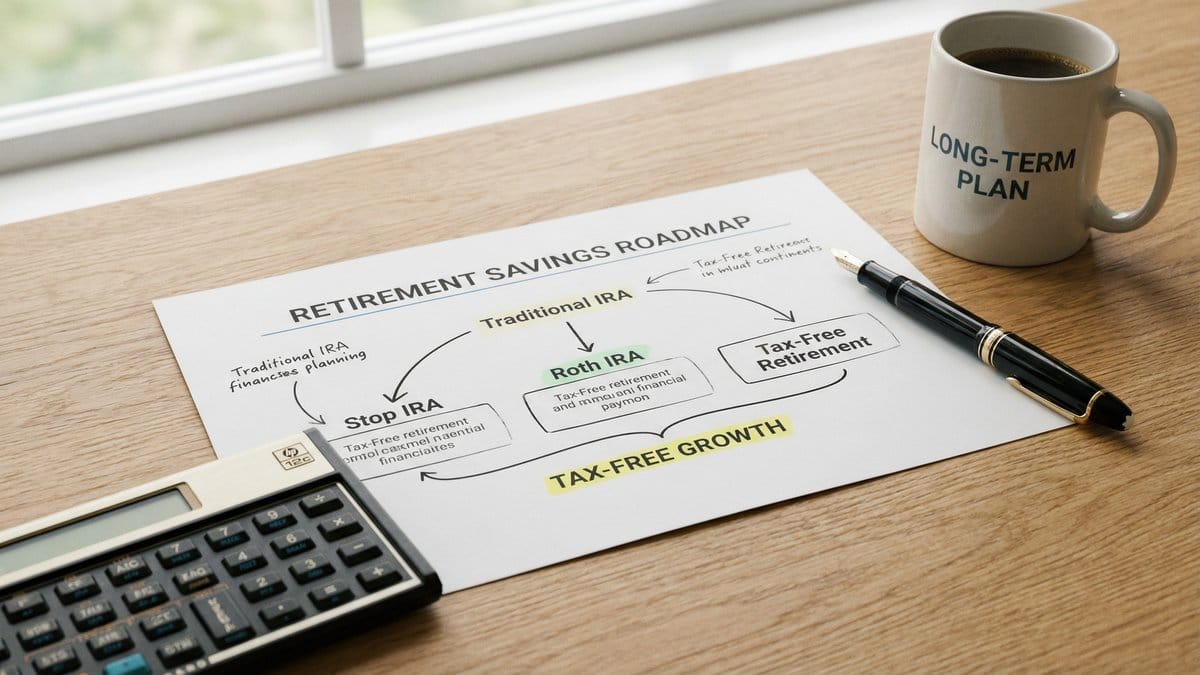
The primary benefit is that once the funds reside in the Roth IRA, all future qualified withdrawals — including both contributions and earnings — are 100% tax-free. This is particularly advantageous for those who expect their income, and thus their tax bracket, to be higher in retirement. A powerful extension of this concept is the Roth conversion ladder, a strategy where you execute a series of smaller conversions over multiple years. This allows you to strategically manage your annual tax liability by converting amounts that keep you within a lower tax bracket each year, while steadily building your tax-free retirement nest egg over time.
Action steps:
1. Assess Your Current and Future Tax Situation: Evaluate whether you expect to be in a higher tax bracket in retirement. If so, a conversion may be highly beneficial.
2. Calculate the Tax Impact: Determine the amount you can afford to convert and the resulting tax liability. Use a qualified tax professional to model different conversion scenarios.
3. Secure Funds for the Tax Bill: Ensure you have non-retirement savings available to pay the income taxes on the converted amount without dipping into the converted funds.
4. Initiate the Conversion: Contact your brokerage firm to execute a direct rollover from your traditional IRA to a Roth IRA. The process is typically straightforward and can often be completed online.
Investment and Tax Implications of Roth Conversions
The decision to execute a Roth conversion carries significant implications for both your investment strategy and your long-term tax outlook. By converting, you are effectively locking in today's tax rates on a portion of your retirement savings. This can be particularly advantageous in years where your income is temporarily lower — such as during early retirement, a career transition, or a year with significant deductible expenses — or before tax rates are scheduled to increase.
A key benefit is the elimination of future Required Minimum Distributions (RMDs) on the converted funds. Traditional IRAs and 401(k)s mandate that you begin taking taxable withdrawals at age 73, whether you need the income or not. Roth IRAs, however, have no such requirement for the original owner, allowing your investments to continue growing tax-free for your entire lifetime. This provides greater flexibility in managing your retirement income and can also be a powerful estate planning tool, as your heirs will inherit the Roth IRA tax-free (subject to their own distribution rules).
Investment implications:
From an investment perspective, converting during a market downturn can be a particularly strategic move. When asset values are depressed, you can move more shares from your traditional IRA to your Roth IRA for the same tax cost. When the market recovers, all of that rebound and subsequent growth will be entirely tax-free. This allows you to leverage market volatility to your long-term tax advantage. Furthermore, having a pool of tax-free funds in retirement provides a valuable buffer against market fluctuations and unexpected expenses, giving you more control over your withdrawal strategy without having to worry about the tax consequences of every transaction.
Common Mistakes to Avoid When Executing a Roth Conversion
While Roth conversions offer compelling benefits, several common mistakes can undermine their effectiveness. The most significant error is converting too much in a single year. A large conversion can push you into a higher tax bracket, dramatically increasing the tax cost and potentially triggering higher Medicare premiums (IRMAA surcharges). It is often more prudent to execute a series of smaller conversions over several years to stay within a favorable tax bracket.
Another critical mistake is using funds from the conversion itself to pay the tax bill. This is treated as an early withdrawal, subject to both income tax and a 10% penalty if you are under age 59½. Always use external, non-retirement funds to cover the taxes. Finally, failing to account for the five-year rule can lead to unexpected penalties. Each Roth conversion has its own five-year waiting period before the converted principal can be withdrawn tax- and penalty-free. It is essential to track these periods carefully, especially if you are planning to access the funds in early retirement.
Next Steps and Resources for Your Roth Conversion Strategy
If you believe a Roth IRA conversion may be a good fit for your retirement strategy, the first step is to consult with a qualified financial advisor and a tax professional. They can help you analyze your specific financial situation, project your future income and tax rates, and determine the optimal conversion amount and timing for your goals. It is also essential to stay informed about the latest IRS regulations and tax law changes that may affect your strategy.
The IRS website provides detailed information on IRA contribution limits, conversion rules, and tax implications. The Social Security Administration offers resources for understanding how retirement income affects your Social Security benefits, and AARP's retirement planning resources provide accessible guides for individuals approaching retirement. By carefully planning, staying informed, and seeking professional guidance, you can harness the power of the Roth IRA conversion to build a more secure, flexible, and tax-efficient retirement.
Disclaimer: This analysis is for informational and educational purposes only and should not be considered financial or tax advice. Retirement planning involves complex tax and legal considerations that vary by individual circumstances. Always conduct your own research and consult with a qualified financial advisor and tax professional before making retirement planning decisions.