




Energy Market Overview
The global energy sector is currently navigating one of the most volatile periods in recent history, driven by a confluence of geopolitical tensions, supply chain disruptions, and an accelerating transition toward renewable energy sources. As of mid-March 2026, the energy markets are reacting to a new reality shaped by significant supply constraints and shifting demand forecasts. The International Energy Agency (IEA) has highlighted that the ongoing conflict in the Middle East is creating the largest supply disruption in the history of the global oil market. With crude and oil product flows through the Strait of Hormuz plunging from around 20 million barrels per day (mb/d) before the war to a mere trickle, the impact on global energy prices has been profound.
Currently, oil prices have surged significantly, with the Brent crude benchmark hovering around $101 per barrel and West Texas Intermediate (WTI) trading above $96 per barrel. This represents a substantial increase from earlier in the year, reflecting the market's pricing in of the geopolitical risk premium and actual supply losses. Meanwhile, the natural gas market is experiencing its own set of challenges. Despite global Liquefied Natural Gas (LNG) crises, U.S. natural gas prices have remained relatively calm, with the Henry Hub spot price trading around $3.27 per million British thermal units (MMBtu). The U.S. Energy Information Administration (EIA) forecasts that the Henry Hub spot price will average about $3.80 per MMBtu in 2026, down 13% from previous projections, as domestic production remains robust.
Oil Market Analysis
The oil market is currently defined by a severe supply shock that has fundamentally altered the short-to-medium-term outlook. The effective closure of the Strait of Hormuz has forced Gulf countries to cut total oil production by at least 10 mb/d. In response to this unprecedented disruption, global oil supply is projected to plunge by 8 mb/d in March. While curtailments in the Middle East are partly offset by higher output from non-OPEC+ producers, the sheer scale of the disruption has sent shockwaves through the market. The IEA has noted that consumer countries have significant amounts of oil in storage to bridge temporary supply losses, with global observed inventories of crude and products assessed at more than 8.2 billion barrels.
In an effort to stabilize the market, IEA member countries agreed to make available an unprecedented 400 million barrels of oil from their emergency reserves. This historic release aims to mitigate the negative impact on economies from the supply disruptions. However, the market remains highly sensitive to the duration of the conflict. Goldman Sachs has revised its oil price outlook, now expecting Brent crude to trade at $71 per barrel in the final quarter of the year, and WTI to average $67 per barrel over the same period, assuming a gradual recovery in flows. The investment bank's revision was based on the assumption that oil flows via the Strait of Hormuz would be severely constrained for a period of 21 days, followed by a month of gradual recovery.
On the demand side, the suspension of flights at major airports in the Middle East and a deteriorating economic outlook have begun to erode demand across the product spectrum. The IEA has reduced its forecast for global oil demand growth in 2026 by 210,000 barrels per day to 640,000 barrels per day. Despite this downward revision in demand, the supply constraints are expected to keep prices elevated in the near term.
Investment implications: The current environment of elevated oil prices and significant supply disruptions presents a complex landscape for investors. While the short-term outlook favors upstream producers outside the conflict zone, particularly those in North America, the long-term trajectory remains uncertain. Investors should consider the potential for increased volatility and the impact of strategic reserve releases on price stability. Companies with strong balance sheets and the ability to navigate supply chain challenges are likely to outperform. Additionally, the heightened geopolitical risks underscore the importance of diversification within the energy sector, balancing exposure to traditional fossil fuels with investments in alternative energy sources.
Natural Gas & LNG
The natural gas market presents a contrasting picture to the oil sector, characterized by regional disparities and shifting trade flows. The ongoing conflict has placed a significant spotlight on global Liquefied Natural Gas (LNG) markets, as approximately 20% of global LNG trade typically flows through the Strait of Hormuz. The shutdown of major facilities, such as the Ras Laffan LNG facility in Qatar following a drone strike, has removed nearly a fifth of the global LNG supply from the market. Consequently, European LNG benchmarks have surged dramatically as countries scramble to secure alternative supplies.
In contrast, the U.S. natural gas market has remained relatively insulated from these global shocks. U.S. natural gas futures have seen modest gains, trading above $3.2 per MMBtu, but remain well below the peaks seen in previous years. The EIA projects that U.S. dry gas production will rise from a record 107.7 billion cubic feet per day (bcfd) in 2025 to 109.5 bcfd in 2026. This robust domestic production, coupled with a mild winter forecast, has kept prices in check. Furthermore, U.S. export policy has remained supportive of domestic midstream providers, with the Department of Energy recently approving increases in authorized exports from key facilities.
Investment implications: The divergence between global LNG prices and domestic U.S. natural gas prices creates unique opportunities for investors. U.S. LNG exporters and midstream infrastructure companies are well-positioned to benefit from the increased global demand for reliable energy supplies. The Alerian Energy Infrastructure ETF (ENFR), which has significant exposure to natural gas pipeline transportation and liquefaction, has already demonstrated strong performance, surging 9.5% in February. Investors should focus on companies with long-term LNG contracts and robust export capabilities, as these entities offer a degree of insulation from domestic price fluctuations while capitalizing on the global energy crisis.
Renewable Energy & Transition
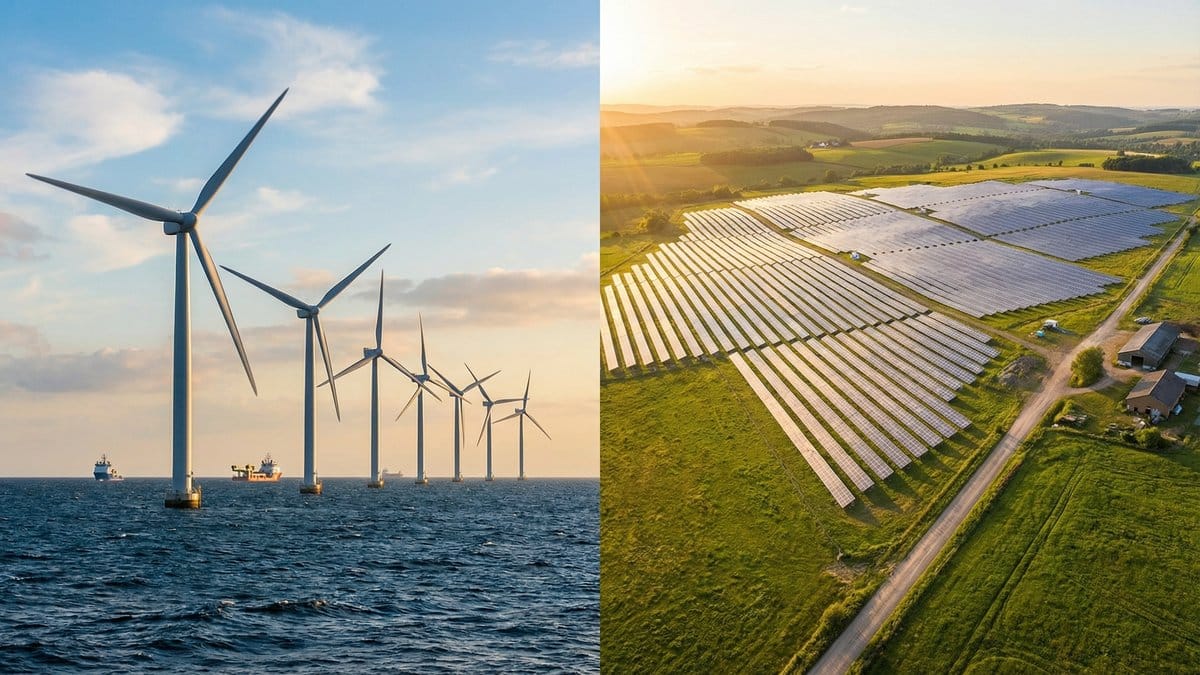
The transition toward renewable energy sources continues to accelerate, driven by both environmental imperatives and the economic realities of the current energy crisis. In 2026, renewable energy has firmly established itself as the most cost-effective source of new electricity generation. The cost of solar power dropped 41% below the cheapest fossil fuels in 2024, and wind power is now 53% cheaper than coal or gas. This economic advantage is driving a structural shift in how the world generates power, with solar and wind together accounting for the bulk of new electricity capacity added to grids globally.
Technological advancements are playing a crucial role in this transition. New sun-tracking solar panels can now achieve efficiency rates above 30%, significantly increasing the energy yield from the same amount of sunlight. In the wind sector, the focus has shifted toward offshore installations, where floating turbine foundations allow for placement in deeper waters with stronger and more consistent winds. However, the intermittent nature of solar and wind power remains a challenge, highlighting the critical need for energy storage solutions. Grid-scale storage facilities, utilizing advanced lithium-ion and emerging solid-state batteries, are essential for maintaining grid stability and preventing price spikes during periods of low generation.
Investment implications: The renewable energy sector offers compelling long-term growth prospects, supported by favorable economics and strong policy tailwinds. Investors should look toward companies involved in the development and deployment of advanced solar and wind technologies, as well as those pioneering energy storage solutions. The pairing of hydrogen fuel cells with battery storage presents a particularly promising area for investment, offering a two-layered safety net for grid operators. While high upfront costs and grid congestion remain hurdles, the increasing availability of green financing options, such as green bonds and long-term Power Purchase Agreements (PPAs), is facilitating the rapid expansion of clean energy infrastructure.
Energy Stocks & Outlook
The energy sector has been a standout performer in the broader equity markets, driven by the surge in commodity prices and the strategic importance of energy security. Energy remains the best-performing S&P 500 sector so far in 2026, with the Energy Select Sector SPDR Fund (XLE) demonstrating significant resilience. The robust performance of energy stocks reflects the strong cash flows and improved capital discipline of major oil and gas companies, many of which are prioritizing shareholder returns through dividends and share buybacks.
Looking ahead, the outlook for energy stocks remains positive, albeit subject to the uncertainties of the geopolitical landscape. The ongoing transition toward a lower-carbon economy will require substantial investment in both traditional and renewable energy sources. Companies that can successfully navigate this dual mandate—maintaining profitable legacy operations while investing in future growth areas—are likely to deliver superior returns. As the global energy map is redrawn, investors must remain agile, continuously assessing the balance of risks and opportunities across the entire energy value chain.
Disclaimer: This analysis is for informational and educational purposes only and should not be considered financial advice. Energy sector investments carry significant commodity price volatility and geopolitical risks. Always conduct your own research and consult with a qualified financial advisor before making investment decisions.