



Energy Market Overview
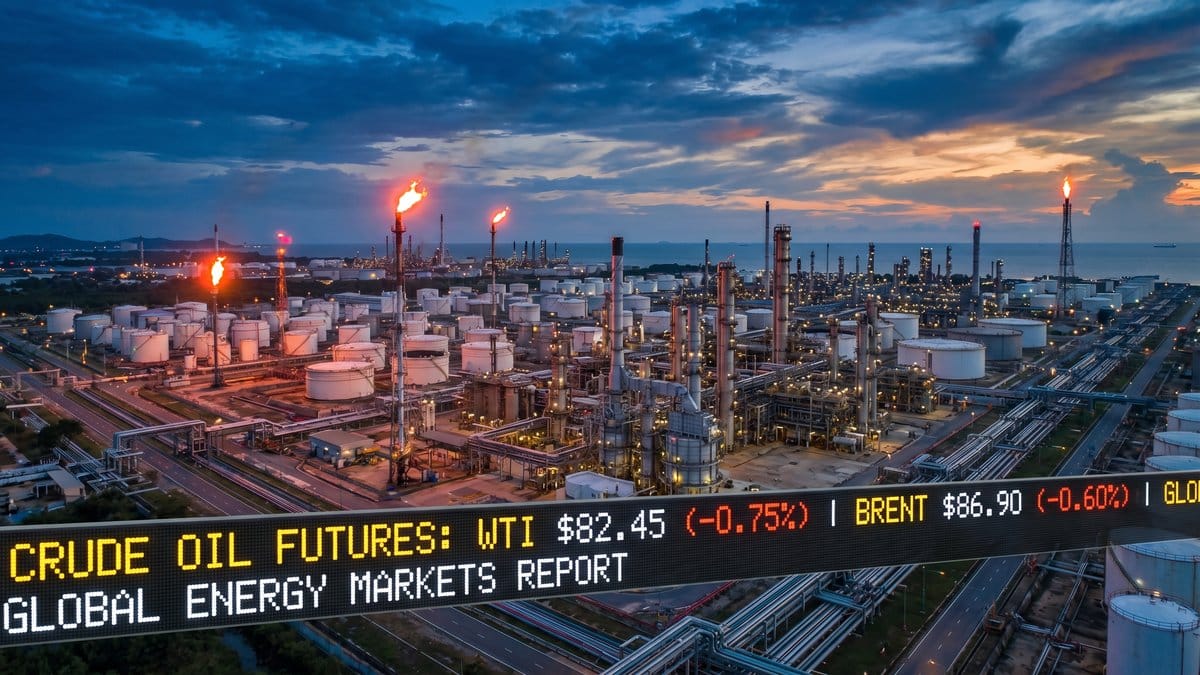
The global energy landscape in late April 2026 is characterized by intense geopolitical volatility, shifting supply-demand dynamics, and a rapidly accelerating transition toward renewable power sources. Crude oil markets have been particularly turbulent, with Brent crude pushing above the critical $100 per barrel threshold, trading between $103 and $106. This surge is primarily driven by the ongoing closure of the Strait of Hormuz, which has severely constrained global supply. Meanwhile, West Texas Intermediate (WTI) crude has also seen significant gains, trading around $94 to $96 per barrel. The prolonged geopolitical standoff has forced markets to price in substantial risk premiums, as traders warn of a more severe supply crunch if the conflict drags on.
In contrast to the bullish oil market, natural gas prices have faced near-term downward pressure due to robust storage builds and mild weather forecasts. The Henry Hub spot price for the May 2026 contract recently settled around $2.72 per MMBtu. Despite this short-term weakness, the long-term outlook for natural gas remains strong, supported by the anticipated expansion of liquefied natural gas (LNG) export capacity and surging power demand from data centers. Across the broader energy sector, stocks have demonstrated remarkable resilience, with the Energy Select Sector SPDR ETF (XLE) emerging as a top performer in an otherwise uncertain macroeconomic environment.
Oil Market Analysis
The defining feature of the current oil market is the severe supply shock resulting from the 46-day closure of the Strait of Hormuz. This critical chokepoint's blockage has removed an estimated 1 billion barrels of crude oil, refined products, and other liquids from the global market. The resulting supply deficit has dealt a massive blow to global inventories, prompting acute shortages in Asian markets that threaten to spill over into Europe. In response to the crisis, Iraq has begun rerouting crude exports via the Mediterranean Sea, but these alternative routes are insufficient to fully offset the lost volumes. The indefinite extension of the US-Iran ceasefire by the Trump administration has provided some diplomatic breathing room, but physical supply constraints remain severe.
On the demand side, the geopolitical crisis is forcing significant downward revisions to global consumption forecasts. The International Energy Agency (IEA) recently cut its oil demand forecast, projecting a contraction of 80,000 barrels per day in 2026 compared to 2025. Similarly, OPEC has lowered its second-quarter demand estimates by 500,000 barrels per day, though it maintains an expectation of full-year growth. S&P Global and Energy Intelligence both suggest that the Middle East war could erase nearly all oil demand growth for 2026, as high prices and supply shortages force consumers to adapt. This dynamic creates a complex environment where supply destruction is currently outpacing demand destruction, keeping prices elevated.
Investment implications: The current environment strongly favors large, integrated oil companies with geographically diversified production assets that are insulated from Middle East disruptions. Companies like Exxon Mobil (XOM) and Chevron (CVX) are well-positioned to capture the upside of $100+ oil prices while leveraging their robust refining margins. However, investors must remain vigilant regarding demand destruction risks; if prices remain too high for too long, it could trigger a broader economic slowdown that ultimately undermines oil consumption. Defensive positioning within the sector, focusing on companies with strong balance sheets and reliable dividend yields, is prudent given the extreme geopolitical volatility.
Natural Gas & LNG
The US natural gas market is currently navigating a period of oversupply, driven by strong production and growing storage inventories. The Energy Information Administration (EIA) recently reported a substantial storage build of approximately 94 billion cubic feet, significantly exceeding the five-year average of 64 BCF. This injection brings total US supplies to over 2.06 trillion cubic feet. Consequently, prompt-month Henry Hub futures have struggled to break out, trading near $2.72 per MMBtu. The EIA has also raised its 2026 US dry natural gas production forecast to 109.59 Bcf/day, indicating that supply will remain plentiful in the near term.
Despite current pricing headwinds, the medium to long-term outlook for natural gas is highly constructive, anchored by the rapid expansion of the LNG export market. The Golden Pass LNG facility, the 10th US export terminal, is expected to begin shipments later in 2026, further integrating US gas into global markets. Furthermore, domestic demand is poised for significant growth; Kinder Morgan projects US natural gas demand could reach 150 Bcf/d by 2031, driven heavily by the power requirements of artificial intelligence data centers. Analysts at Bernstein forecast that the global LNG market will revert to a net long position from 2026 onward, with substantial supply additions expected through 2028.
Investment implications: The current weakness in natural gas spot prices presents a potential accumulation opportunity for long-term investors. Midstream infrastructure companies and LNG export terminal operators offer compelling value, as their toll-road business models provide steady cash flows largely insulated from commodity price fluctuations. Additionally, exploration and production companies with low break-even costs and significant exposure to the LNG export thematic are well-positioned to benefit as new export capacity comes online and data center power demand materializes.

Renewable Energy & Transition
The global transition toward renewable energy has reached a critical inflection point in 2026, accelerating rapidly despite various political and economic headwinds. In 2025, solar and wind power dominated global energy growth, delivering approximately six times more new capacity than all other power sources combined. The world added a staggering 814 GW of wind and solar capacity last year, a 24% year-over-year increase. Solar energy alone grew by 30% in 2025, meeting three-quarters of the net rise in global electricity demand. At current growth rates, combined solar and wind generation is on track to surpass combined coal and gas generation by 2030.
In the United States, the renewable sector is demonstrating remarkable resilience. The US wind industry rebounded sharply, installing 8.2 GW in 2025—a 49% increase—and is forecast to reach 11 GW in 2026. This growth comes despite regulatory challenges, including the cancellation or delay of over 57 GW of clean energy projects due to federal permitting rollbacks. However, recent court rulings have curtailed some of these administrative hurdles. Furthermore, the ongoing geopolitical crisis in the Middle East has underscored the strategic imperative of energy independence, with many analysts noting that the Iran conflict has made the clean energy transition non-negotiable for long-term price stability and national security.
Investment implications: The structural tailwinds supporting renewable energy are stronger than ever, driven by both environmental mandates and energy security concerns. Investors should look toward utility-scale solar and wind developers, as well as companies providing critical grid infrastructure and energy storage solutions. While the sector experienced an 11% dip in investment during the fourth quarter of 2025, the long-term trajectory remains steeply upward. The upcoming IPO of advanced nuclear firm X-Energy also highlights growing opportunities in next-generation clean baseload power. Diversified exposure through clean energy ETFs can mitigate individual project or regulatory risks.
Energy Stocks & Outlook
Energy equities have been a standout performer in 2026, representing the only major market sector firmly in positive territory amid broader macroeconomic uncertainty. The Energy Select Sector SPDR ETF (XLE) has seen massive inflows, with investors pouring $5.5 billion into the fund as a hedge against inflation and geopolitical risk. The sector scores exceptionally high on stagflation resilience metrics, making it a favored destination for institutional capital. While major integrated producers like Exxon Mobil (XOM) and Chevron (CVX) experienced brief pullbacks during minor oil price dips, they have broadly benefited from the sustained high-price environment.
Looking ahead, the energy sector's performance will remain tightly coupled to developments in the Middle East and the pace of the global economic response to high fuel costs. The current environment of constrained supply and robust cash flow generation allows energy companies to maintain strong capital discipline, prioritizing shareholder returns through dividends and share buybacks over aggressive production growth. This disciplined approach, combined with the structural necessity of both traditional hydrocarbons and emerging clean energy technologies, suggests that the energy sector will continue to offer compelling risk-adjusted returns for the remainder of 2026.
Disclaimer: This analysis is for informational and educational purposes only and should not be considered financial advice. Energy sector investments carry significant commodity price volatility and geopolitical risks. Always conduct your own research and consult with a qualified financial advisor before making investment decisions.