



Tech Week in Review
The technology sector has experienced a remarkable resurgence this week, with the United States market climbing 3.5% over the past seven days and an impressive 31% over the last year. Despite this recent upswing, technology stocks have recently suffered their worst stretch of performance against the broader market in a half-century. However, this underperformance has created what Goldman Sachs strategists are calling a generational buying opportunity. The price-to-earnings-to-growth ratio for the technology sector has fallen below that of the global aggregate market, reaching levels not seen since the trough following the dot-com bubble burst between 2003 and 2005.
Earnings projections remain robust, with consensus forecasts suggesting that technology sector earnings-per-share growth hit 44% for the first quarter of 2026. This exceptional growth accounts for nearly 90% of the overall earnings growth within the S&P 500 index. While geopolitical tensions, particularly the ongoing conflict in Iran and disruptions in the Strait of Hormuz, have suppressed some technology shares, the sector’s relative insensitivity to economic growth shocks makes it a potentially defensive play in the current macroeconomic environment.

Big Tech & AI Developments
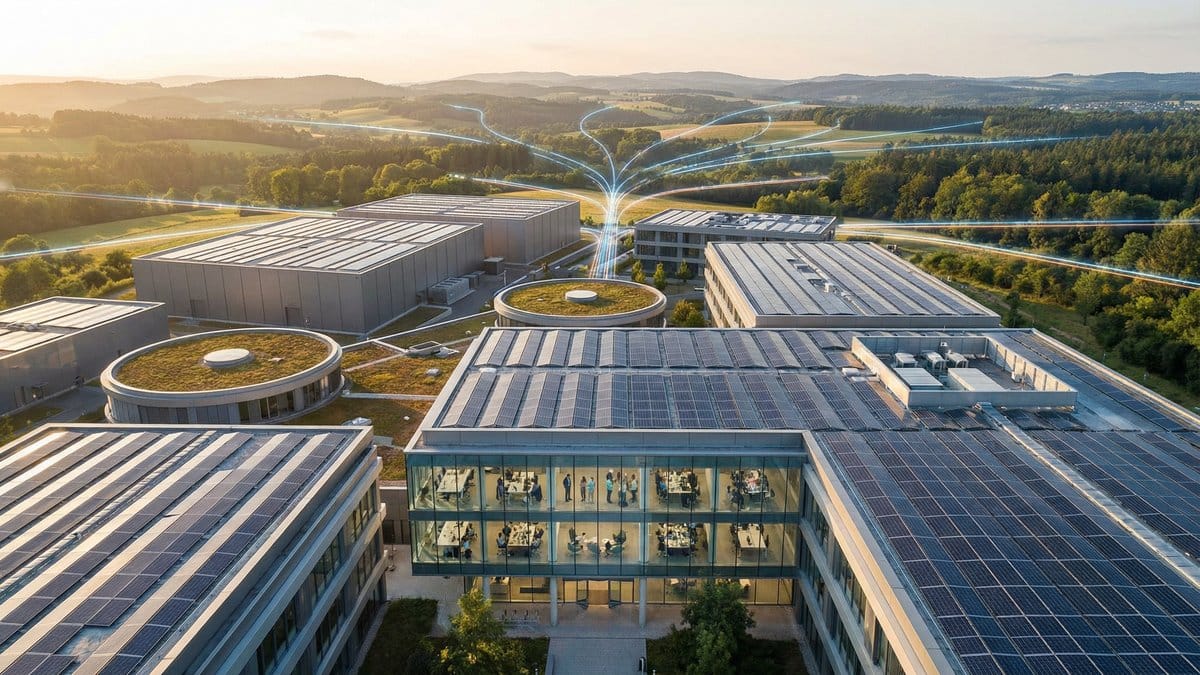
The artificial intelligence arms race continues to accelerate, with major hyperscalers including Amazon, Google, Microsoft, and Meta projected to spend a staggering $650 billion on capital expenditures in 2026. The vast majority of this investment is directed toward building massive AI data centers and developing next-generation models. This unprecedented infrastructure build-out has led to a surge in energy demand, prompting technology giants to secure dedicated power sources. Microsoft is collaborating with Chevron to build a 5-gigawatt natural gas power plant in West Texas, while Google has confirmed plans for a 933-megawatt facility in North Texas. Meta is expanding its Hyperion data center in Louisiana with seven new natural gas plants, bringing its total capacity to 7.46 gigawatts—enough to power the entire state of South Dakota.
This aggressive expansion is not without its challenges. Investors are increasingly pressing Amazon, Microsoft, and Google regarding the water and power consumption of their United States data centers. Furthermore, the scramble for natural gas infrastructure has resulted in a severe shortage of turbines, with prices expected to rise 195% by the end of the year compared to 2019 levels, and new orders delayed until 2028. Despite these hurdles, the financial returns on AI investments are beginning to materialize. Nvidia reported fiscal 2026 revenue of $215.9 billion, representing a 65% increase, while Amazon’s AWS division generated $128.7 billion in revenue with 35% operating margins.
Investment implications: The massive capital expenditures by hyperscalers indicate a sustained commitment to AI infrastructure. Investors should monitor companies involved in data center construction, energy provision, and cooling technologies, as they are positioned to benefit from this secular trend. However, the reliance on natural gas and the associated environmental concerns may introduce regulatory and ESG-related risks.
Emerging Tech Trends
Beyond the dominant narrative of artificial intelligence, several emerging technology trends are shaping the sector’s landscape. Cybersecurity remains a critical focus, as a recent Red Hat report revealed that 97% of organizations experienced at least one cloud-native security incident over the past twelve months. The industry is shifting its attention toward zero trust architectures, AI-driven security solutions, and post-quantum cryptography to address the fragmented nature of cloud security and the persistent talent shortages highlighted in Fortinet’s 2026 Cloud Security Report.
In the telecommunications space, the integration of 5G networks with agentic AI emerged as a central theme at the Mobile World Congress 2026. Communications service providers are pursuing autonomous network operations to manage the increasing complexity of 5G infrastructure. Meanwhile, the technology sector continues to navigate the lingering impacts of international trade policies. One year after the implementation of the “Liberation Day” tariffs, the industry has faced significant job losses, while the 25% tariffs on semiconductors remain in effect, keeping the effective United States tariff rate near historic highs.
Investment implications: The persistent threat landscape and the high rate of cloud security incidents underscore the necessity of robust cybersecurity solutions. Companies offering unified cloud-native security platforms and AI-enhanced threat detection are well-positioned for growth. Additionally, the transition toward autonomous 5G networks presents opportunities in telecommunications equipment and software providers.
Tech Stock Spotlight
Nvidia (NVDA) continues to dominate the technology landscape, demonstrating exceptional financial performance and market leadership. The company has achieved an average annual growth rate of 101.5% over the past three years and recently saw 104 large institutional buys. Despite its massive appreciation, Nvidia trades at a relatively modest 21 times forward earnings, with a price-to-earnings-to-growth ratio of just 0.37x. CEO Jensen Huang’s projection of more than $1 trillion in revenue through 2027 underscores the company’s confidence in sustained AI chip demand.
Microsoft (MSFT) presents a compelling case for investors seeking a balance of growth and stability. While the company has faced recent stock performance challenges, it remains a top performer among the Magnificent Seven. Microsoft’s aggressive investments in AI infrastructure, including its natural gas power plant initiatives, position it to capture significant value in the cloud computing and enterprise software markets. Goldman Sachs analysts have identified Microsoft, along with Nvidia and Meta, as trading at attractive valuations below 20 times expected earnings, offering a rare entry point for long-term investors.
Investment implications: The current valuation reset in mega-cap technology stocks provides a strategic opportunity to accumulate shares in industry leaders with strong earnings growth and clear AI tailwinds. Nvidia’s reasonable forward multiple relative to its growth rate makes it an attractive core holding, while Microsoft’s diversified business model offers resilience amid market volatility.
Week Ahead for Tech
The upcoming week promises to be pivotal for the technology sector as the second-quarter earnings season begins to unfold. Investors will be closely monitoring the financial results of key players such as Applied Digital (APLD) and Aehr Test Systems (AEHR), which will provide early indications of the health of the semiconductor and digital infrastructure markets. Additionally, the highly anticipated earnings report from Netflix will offer insights into consumer spending and the streaming landscape.
Looking further ahead, the market is bracing for the major hyperscaler earnings reports from Amazon, Meta, Microsoft, and Alphabet later this month. These reports will be heavily scrutinized for updates on capital expenditure plans, cloud revenue growth, and the monetization of artificial intelligence initiatives. The commentary from executive leadership regarding future investments and macroeconomic conditions will likely set the tone for the technology sector in the coming months.
Disclaimer: This analysis is for informational and educational purposes only and should not be considered financial advice. Technology sector investments carry significant risks including rapid technological change, intense competition, and regulatory uncertainty. Always conduct your own research and consult with a qualified financial advisor before making investment decisions.