



Week in Review
The U.S. stock market delivered a stellar performance during the week of April 13, 2026, driven by a powerful combination of geopolitical de-escalation and robust corporate earnings. The S&P 500 surged 4.5% to close the week at a record 7,126.06, fully erasing the losses incurred during the recent Middle East conflict. The technology-heavy Nasdaq Composite led the major indices with a remarkable 6.8% weekly gain, closing at 24,468.48 and securing its longest winning streak since 2009. The Dow Jones Industrial Average also participated in the rally, adding 3.2% to finish at 49,447.43, while the Russell 2000 index of smaller companies jumped 5.6% to 2,776.90.
Weekly Market Performance Snapshot
| Index | Friday Close | Weekly Change | YTD Change |
|---|---|---|---|
| S&P 500 | 7,126.06 | +4.5% | +4.1% |
| Dow Jones Industrial Average | 49,447.43 | +3.2% | +2.9% |
| Nasdaq Composite | 24,468.48 | +6.8% | +5.3% |
| Russell 2000 | 2,776.90 | +5.6% | +11.9% |
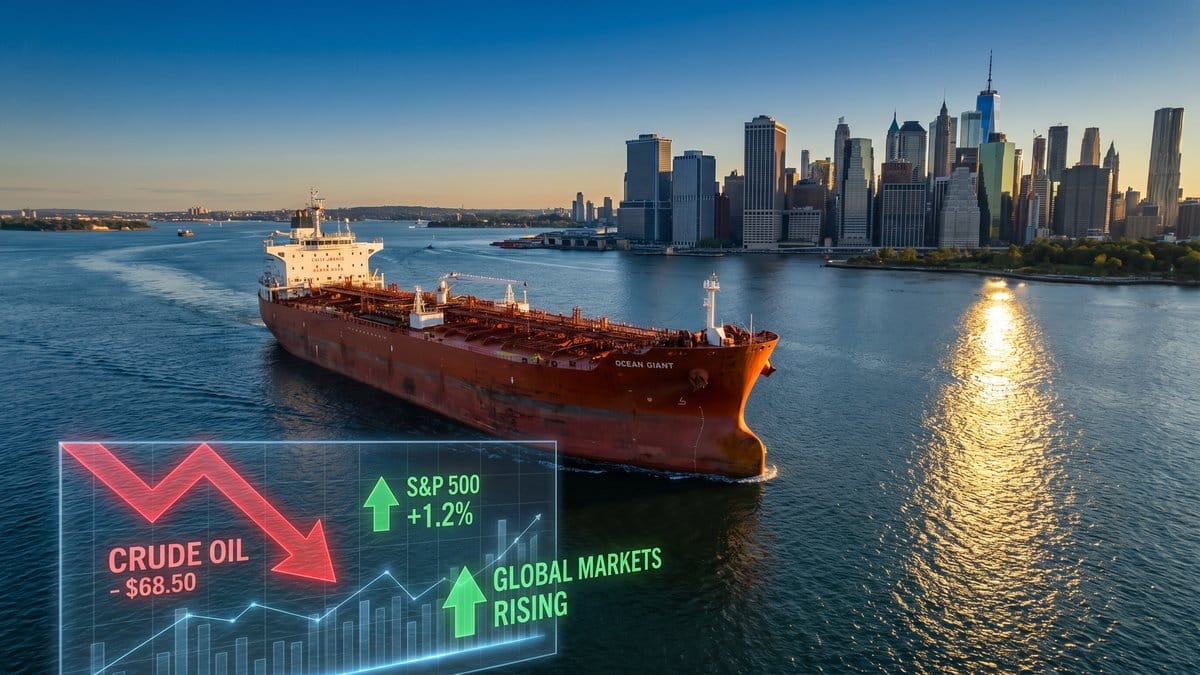
The primary catalyst for this broad-based rally was the growing optimism surrounding a potential ceasefire between Iran and allied forces. This sentiment was solidified on Friday when Iran declared the Strait of Hormuz completely open for commercial shipping. The reopening of this critical maritime chokepoint triggered a massive sell-off in energy markets, with Brent crude plunging approximately 9% to settle near $90 per barrel, and West Texas Intermediate (WTI) dropping nearly 10% to under $84 per barrel. The sharp decline in oil prices alleviated significant inflationary concerns, providing a substantial tailwind for equities and prompting a sharp drop in market volatility, as evidenced by the VIX falling below 18.
Top Stories of the Week
The most consequential development of the week was the rapid de-escalation of tensions in the Middle East. Following direct communications involving U.S. President Trump, Israeli Prime Minister Netanyahu, and Lebanese President Aoun, the prospects for a formal ceasefire ahead of the April 22 deadline improved dramatically. The subsequent reopening of the Strait of Hormuz effectively removed a major risk premium from global markets, leading to the dramatic recalibration of energy prices and a resurgence in risk appetite across asset classes.
Investment implications: The normalization of energy costs provides immediate relief to consumer discretionary and industrial sectors by lowering input costs and transportation expenses. Investors should monitor the April 22 ceasefire deadline closely, as a formal agreement could further compress the geopolitical risk premium, while any breakdown in talks could trigger a swift reversal in both oil prices and equity valuations.
In the corporate sphere, the first-quarter earnings season commenced with exceptional strength, particularly in the technology and financial sectors. Taiwan Semiconductor Manufacturing Company (TSMC) reported record results, with revenue surging over 40% year-over-year and net profit jumping 58%, driven by insatiable demand for artificial intelligence infrastructure. The company also raised its full-year revenue guidance, reinforcing the narrative of an ongoing AI supercycle. Meanwhile, major financial institutions, led by Bank of America, delivered earnings that surpassed expectations, confirming the underlying resilience of the U.S. consumer and corporate credit quality.
Investment implications: The robust earnings from semiconductor and cloud infrastructure providers validate the premium valuations currently assigned to mega-cap technology stocks. The AI capital expenditure cycle remains a dominant structural theme, suggesting that pullbacks in high-quality technology names may present compelling entry points for long-term investors.
On the macroeconomic front, the International Monetary Fund (IMF) released its updated World Economic Outlook, cutting its 2026 global growth forecast to 3.1%, down from its previous projection of 3.4%. The downgrade was primarily attributed to the economic disruptions caused by the recent Middle East conflict. The IMF warned that while the U.S. economy remains relatively insulated, prolonged geopolitical instability could severely impact global trade and growth trajectories, particularly in emerging markets and energy-dependent regions.
Investment implications: The IMF's cautious outlook underscores the importance of geographic diversification and a focus on high-quality, cash-generative companies. Investors should remain vigilant regarding international exposure, particularly in regions highly sensitive to energy shocks or supply chain disruptions.
Sector Performance Analysis
The technology sector was the undisputed leader this week, propelled by exceptional earnings from semiconductor bellwethers and sustained momentum in artificial intelligence investments. Software and cloud computing companies also posted outsized gains, reflecting strong enterprise demand and expanding profit margins. The consumer discretionary sector benefited significantly from the sharp decline in oil prices, as lower energy costs typically translate into increased discretionary spending power for households. Financials also performed admirably, supported by better-than-expected earnings reports from major money center banks that highlighted healthy net interest margins and stable loan portfolios.
Conversely, the energy sector experienced significant downward pressure, particularly in the latter half of the week. The reopening of the Strait of Hormuz and the subsequent plunge in crude oil prices triggered aggressive profit-taking in exploration and production companies, as well as integrated oil majors. While the sector had been a primary beneficiary of the recent geopolitical turmoil, the rapid de-escalation forced a swift repricing of energy assets. Defensive sectors, such as utilities and consumer staples, lagged the broader market as investors aggressively rotated into higher-beta, growth-oriented equities.
Investment implications: The sharp rotation out of energy and into technology and consumer sectors highlights the market's sensitivity to macroeconomic catalysts. While the AI narrative remains intact, investors should be mindful of potential overextension in certain technology sub-sectors. The recent pullback in energy stocks may offer selective opportunities for yield-seeking investors, provided the geopolitical situation stabilizes without further significant disruptions to global supply.
Economic & Fed Developments
Economic data released this week presented a complex picture for policymakers. The Consumer Price Index (CPI) for March showed headline inflation surging 0.9% month-over-month, the largest jump since 2022, driven almost entirely by the spike in gasoline prices related to the Middle East conflict. However, core CPI, which excludes volatile food and energy components, remained relatively contained at 0.2% month-over-month. Meanwhile, the Philadelphia Fed Manufacturing Index unexpectedly spiked to 26.7 in April, indicating robust factory activity, though the prices paid component also surged, signaling lingering inflationary pressures in the supply chain.
Despite the mixed inflation signals, the labor market demonstrated continued resilience, with initial jobless claims falling by 11,000 to 207,000, the largest weekly drop since February. This combination of resilient growth and sticky, energy-driven inflation has solidified expectations that the Federal Reserve will maintain its current policy stance. Markets have effectively priced out any rate cuts for 2026, anticipating that the central bank will hold the federal funds rate steady at 3.50-3.75% at its upcoming April 29 meeting to ensure inflation remains on a downward trajectory toward its 2% target.
Looking Ahead
The upcoming week is poised to be critical for market direction, with several major catalysts on the horizon. The immediate focus will be on the April 22 deadline for the U.S.-Iran ceasefire agreement; a formal extension or permanent resolution would likely provide further fuel for the current equity rally, while a breakdown could quickly reverse recent gains. Additionally, investors will closely monitor the release of the S&P Global Flash PMIs for April, which will offer real-time insights into the health of the manufacturing and services sectors amid shifting geopolitical dynamics.
Corporate earnings will also take center stage, with a barrage of reports expected from mega-cap technology companies, including Alphabet, Meta Platforms, and Microsoft, later in the month. These reports will be heavily scrutinized for evidence that the massive investments in artificial intelligence are translating into tangible revenue growth and margin expansion. Furthermore, market participants will begin positioning for the Federal Reserve's monetary policy decision on April 29, paying particular attention to Chair Jerome Powell's commentary regarding the balance of risks between resilient economic growth and persistent inflationary pressures.
Disclaimer: This analysis is for informational and educational purposes only and should not be considered financial advice. Past performance does not guarantee future results. Always conduct your own research and consult with a qualified financial advisor before making investment decisions.