



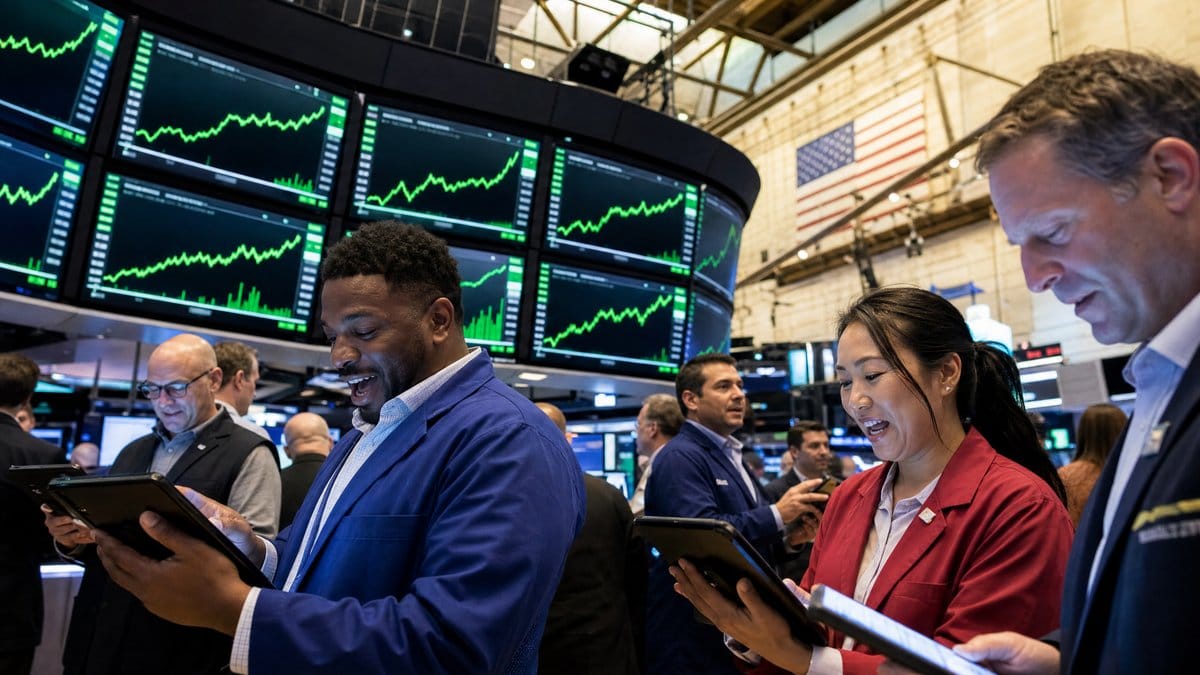
Wall Street shook off Tuesday's inflation-driven pullback with a vengeance on Wednesday, as a massive rally in technology and semiconductor stocks pushed the S&P 500 and Nasdaq Composite to fresh record highs. The surge came despite a concerning wholesale inflation report and a historic changing of the guard at the Federal Reserve, creating a complex but ultimately bullish environment for retirement investors.
Tech and Chips Lead the Charge
The tech-heavy Nasdaq Composite surged 1.2% to close at a record 26,402.34, marking its 13th record close of 2026. The S&P 500 gained 0.58% to finish at 7,444.25, its 17th record close of the year. The Dow Jones Industrial Average, however, slipped a minor 0.14%.
The rally was fueled by the “Magnificent Seven” and semiconductor giants. Nvidia (NVDA) gained 2.3%, crossing the historic $5.5 trillion market capitalization threshold for the first time. Alphabet (GOOGL) led the mega-caps with a 4% jump, while chipmakers Micron (MU) and Qualcomm (QCOM) rebounded sharply from Tuesday's losses.
The tech optimism was further bolstered by the arrival of President Donald Trump in Beijing for a two-day summit with Chinese leader Xi Jinping. Trump's entourage notably includes Tesla CEO Elon Musk, Nvidia CEO Jensen Huang, and the heads of Micron and Qualcomm, raising hopes for favorable trade agreements and an easing of tensions over AI semiconductor legislation.

Inflation Echoes and a New Era at the Fed
While the stock market celebrated, the bond market and economic data flashed warning signs. The April Producer Price Index (PPI) jumped 1.4% month-over-month—nearly triple economists' expectations and the largest monthly increase in four years. The surge was largely driven by energy supply disruptions stemming from the ongoing conflict in Iran and the closure of the Strait of Hormuz.
Because wholesale prices are a leading indicator of consumer inflation, the hot PPI report suggests that the “sticky” inflation seen in Tuesday's CPI data may persist. Consequently, the 10-year Treasury yield climbed to near 4.48%, its highest level since last July.
Against this inflationary backdrop, the Senate voted 54-45 on Wednesday to confirm Kevin Warsh as the next Chair of the Federal Reserve. Warsh, who will replace Jerome Powell when his term expires on Friday, has signaled a desire for “regime change” at the central bank, advocating for less forward guidance and a narrower scope of activities. His confirmation introduces a new variable of unpredictability into the Fed's future rate decisions.
Investment Implications for Retirees
The convergence of record-breaking tech valuations, rising wholesale inflation, and a new Federal Reserve Chair requires a strategic approach for retirement portfolios:
| Strategy | Rationale |
|---|---|
| Maintain Tech Exposure, but Rebalance | The AI boom continues to drive market gains, but with Nvidia crossing $5.5 trillion, ensure your portfolio isn't overly concentrated in a single sector. |
| Prepare for Fed Unpredictability | Incoming Chair Kevin Warsh favors less “forward guidance.” Investors should be prepared for more sudden market reactions to Fed policy shifts. |
| Hedge Against Inflation | With PPI hitting a 4-year high and oil remaining above $100, maintaining exposure to energy or inflation-protected assets remains prudent. |
While the headline index numbers are cause for celebration, the underlying currents of inflation and monetary policy shifts demand careful navigation. Staying diversified and maintaining a long-term perspective will be crucial in the months ahead.
Disclaimer: This article is for informational purposes only and should not be considered financial advice. Market conditions can change rapidly, and past performance does not guarantee future results. Always conduct your own research and consider consulting with a qualified financial advisor before making investment decisions.