



Nvidia Corporation (NVDA) has undeniably established itself as the cornerstone of the artificial intelligence revolution. Over the past three years, the company has transformed from a leading graphics processing unit (GPU) manufacturer for gaming into the indispensable hardware provider for the global AI infrastructure buildout. CEO Jensen Huang recently described this era as “the buildout of AI factories, the largest infrastructure expansion in human history,” and the company's financial performance provides compelling evidence to support this claim. Nvidia's comprehensive ecosystem, which includes not only industry-standard GPUs like the Hopper H100 and the Blackwell B200 but also networking products such as InfiniBand and a robust software stack like CUDA, creates a formidable competitive moat that makes it challenging for hyperscalers to switch to alternative solutions.
Despite these exceptional fundamentals, Nvidia's stock performance in 2026 has presented a stark contrast to its previous trajectory. While the broader VanEck Semiconductor ETF (SMH) surged over 75% year-to-date by mid-year, Nvidia shares remained relatively flat, gaining just over 6%. This divergence has left many investors questioning whether the AI spending boom is losing momentum or if this pause represents a compelling entry point for long-term investors seeking exposure to the undisputed leader in AI hardware.
Record Earnings Overshadowed by Market Jitters
Nvidia's financial execution remains flawless. In its fiscal first quarter of 2027 (ended April 2026), the company delivered staggering results that shattered expectations. Total revenue skyrocketed 85% year-over-year to $81.6 billion. The crucial Data Center segment, which now accounts for 92% of total sales, surged 92% to $75.2 billion, driven by the rapid adoption of its AI systems and robust networking demand. Furthermore, non-GAAP earnings per share jumped an impressive 140% to $1.87. The company's profitability metrics are equally remarkable, boasting non-GAAP gross margins around 75%, reflecting immense pricing power and operational efficiency.
Looking ahead, management provided robust guidance for the fiscal second quarter of 2027, projecting revenue of approximately $91 billion. Notably, this guidance assumes zero Data Center compute revenue from China due to ongoing export restrictions, highlighting the immense strength of demand from the rest of the world. The company also generated massive cash flows, returning nearly $19.5 billion to shareholders through buybacks and dividends in the first quarter alone. However, concerns regarding the sustainability of multi-billion dollar AI investments by major cloud providers, coupled with a high-volatility beta that amplifies market rotations, have kept the stock price constrained despite the underlying fundamental strength.
Investment implications: The disconnect between Nvidia's accelerating financial performance and its stagnant stock price suggests a potential mispricing. For investors with a long-term horizon, the current consolidation phase may offer an attractive opportunity to accumulate shares before the market fully prices in the next wave of earnings growth.
Financial Analysis: A Valuation Anomaly
Perhaps the most compelling aspect of Nvidia's current investment thesis is its valuation. Due to the combination of a flat stock price and rapidly upward-revised earnings estimates, Nvidia's valuation multiples have compressed significantly. As of early July 2026, the stock trades at approximately 22 times forward earnings. To put this in perspective, Nvidia is currently trading at a lower forward price-to-earnings multiple than consumer staples giant Coca-Cola, which trades at roughly 26 times forward earnings despite projecting only 4% to 5% organic revenue growth.
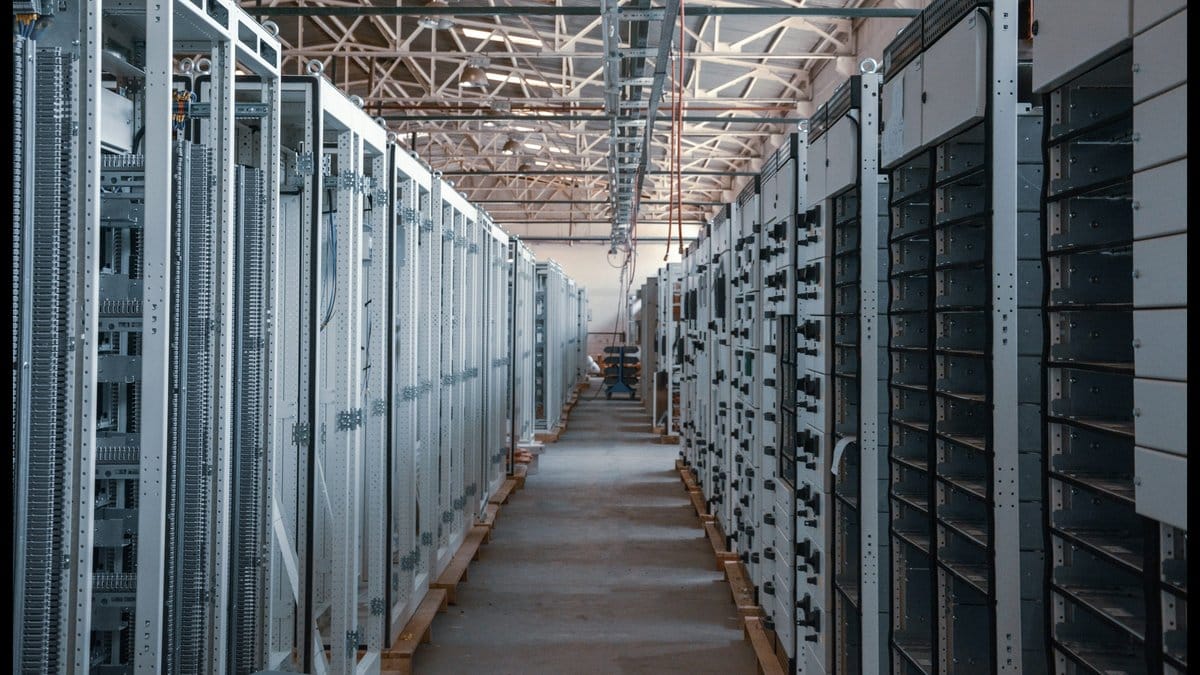
Furthermore, Nvidia trades at a discount to several semiconductor peers, including Marvell Technology and STMicroelectronics, despite delivering vastly superior growth, stronger profitability, and possessing a more dominant market position. Wall Street analysts remain overwhelmingly bullish, with consensus estimates projecting continued revenue and earnings expansion through fiscal 2028. The Zacks Consensus Estimate points to fiscal-2028 EPS of approximately $12.76, up from $11.11 just 90 days prior, while fiscal-2027 EPS has been revised upward to $8.97. This valuation anomaly indicates that the market is currently pricing in a significant deceleration in AI spending that has not yet materialized in the company's order book or forward guidance.
Investment implications: The current forward P/E multiple of approximately 22x is historically cheap for a company growing revenue at 85% with 75% gross margins. This valuation provides a substantial margin of safety and significant room for multiple expansion if the company continues to execute on its product roadmap and maintain its market dominance. A return to a 30x forward multiple — still modest for Nvidia's growth profile — would imply a stock price well above $250.
Catalysts for the Next Leg Up
Several key catalysts could propel Nvidia's stock higher in the second half of 2026. The most significant near-term driver is the successful rollout of the Blackwell architecture, which promises substantial performance and efficiency improvements over the Hopper generation. Strong customer adoption of Blackwell 300 systems is already underway, with Data Center revenues growing 21% sequentially in Q1 FY2027 alone. Additionally, the introduction of the Vera Rubin platform, designed specifically for agentic AI and reasoning models, will further solidify Nvidia's technological leadership in the next wave of AI deployment.
Beyond data center hardware, Nvidia is aggressively expanding into new verticals. The company's push into robotics and physical AI, evidenced by Project GR00T and expanded hiring in embodied intelligence across major global markets, opens up entirely new total addressable markets. Furthermore, the emerging trend of “sovereign AI,” where nations invest in domestic AI infrastructure, presents another massive growth vector. Recent partnerships, such as the deployment of Nvidia Nemotron models in air-gapped U.S. government systems via Palantir, demonstrate the viability of this strategy. The four major AI hyperscalers are projected to spend approximately $650 billion on data center capital expenditures in 2026, with Nvidia projecting this figure could approach $1 trillion by 2027.
Investment implications: Investors should closely monitor the Blackwell rollout cadence and early commentary on Vera Rubin adoption. Successful execution on these next-generation platforms will likely serve as the primary catalyst to break the stock out of its current trading range and drive the next phase of capital appreciation. Wall Street's consensus price target stands at approximately $301, representing roughly 50% upside from current levels near $198.
Risks and Outlook
While the bull case for Nvidia is robust, investors must acknowledge the inherent risks. The most prominent threat remains geopolitical tensions and the potential for further tightening of U.S. export controls on advanced AI chips to China. Although current guidance already excludes Chinese data center revenue, any further escalation could disrupt global supply chains or significantly impact broader market sentiment toward the semiconductor sector. The company absorbed an estimated $4.6 billion China revenue hole in its most recent quarter, demonstrating both the magnitude of this risk and its ability to offset it with demand from other regions.
Competition is also intensifying. Rivals like AMD are accelerating their data center offerings, with AMD's data center revenue growing 57% year-over-year. Major hyperscalers continue to invest heavily in developing custom, in-house AI silicon (ASICs) to reduce their reliance on Nvidia's expensive hardware. Finally, the entire thesis relies on the continued willingness of major technology companies to allocate unprecedented capital expenditures toward AI infrastructure. If the anticipated return on investment from these AI deployments fails to materialize, hyperscalers could abruptly curtail spending, leading to a sharp contraction in Nvidia's revenue growth and valuation multiple. Despite these risks, the fundamental case for Nvidia remains compelling for investors who can tolerate volatility and maintain a multi-year investment horizon.
Disclaimer: This analysis is for informational and educational purposes only and should not be considered financial advice. Individual stock investments carry significant risks including company-specific and market risks. Always conduct your own research and consult with a qualified financial advisor before making investment decisions.