



U.S. equities entered September on a cautious note as a renewed oil shock and rising bond yields put pressure on risk appetite. The latest completed U.S. session on August 31 left the Dow Jones Industrial Average down 0.70%, while the S&P 500 declined 0.33%, the Nasdaq Composite lost 0.12%, and the Russell 2000 fell 0.54%. The market’s immediate concern is that higher energy costs could extend inflation pressure just as investors reassess the Federal Reserve’s likely September decision.[1]

Market Overview
The Dow Jones Industrial Average fell 374.09 points to 53,185.90, the S&P 500 lost 25.62 points to 7,686.14, and the Nasdaq Composite slipped 31.53 points to 26,370.89. The Russell 2000 closed at 2,956.45, down 15.92 points. The pattern was defensive rather than indiscriminate: energy stocks advanced as crude climbed, while most other major sectors weakened. Declining issues outnumbered advancers on both the New York Stock Exchange and Nasdaq, underscoring that the late-session pressure extended beyond the headline indices.[1][4]
| Index | August 31 Close | Daily Change |
|---|---|---|
| S&P 500 | 7,686.14 | -0.33% |
| Dow Jones Industrial Average | 53,185.90 | -0.70% |
| Nasdaq Composite | 26,370.89 | -0.12% |
| Russell 2000 | 2,956.45 | -0.54% |
Energy was the exception, rising 2.1% in the S&P 500 sector lineup as crude climbed. Industrials and utilities each fell 1.2%, illustrating the pressure that higher oil and long-term yields can place on cyclical and rate-sensitive groups. Despite Monday’s weakness, August remained constructive: the S&P 500 gained 2.6%, the Nasdaq rose 3.9%, and the Dow advanced 1.3%, its fifth consecutive monthly gain.[3][2]
Sentiment is balanced between resilient earnings and a less forgiving macro backdrop. AI spending supports technology leadership, but investors are testing whether elevated valuations can absorb a higher discount rate. Tolerance for an inflation surprise or further yield spike has narrowed.
Top Market Movers
Oil shock lifts energy shares
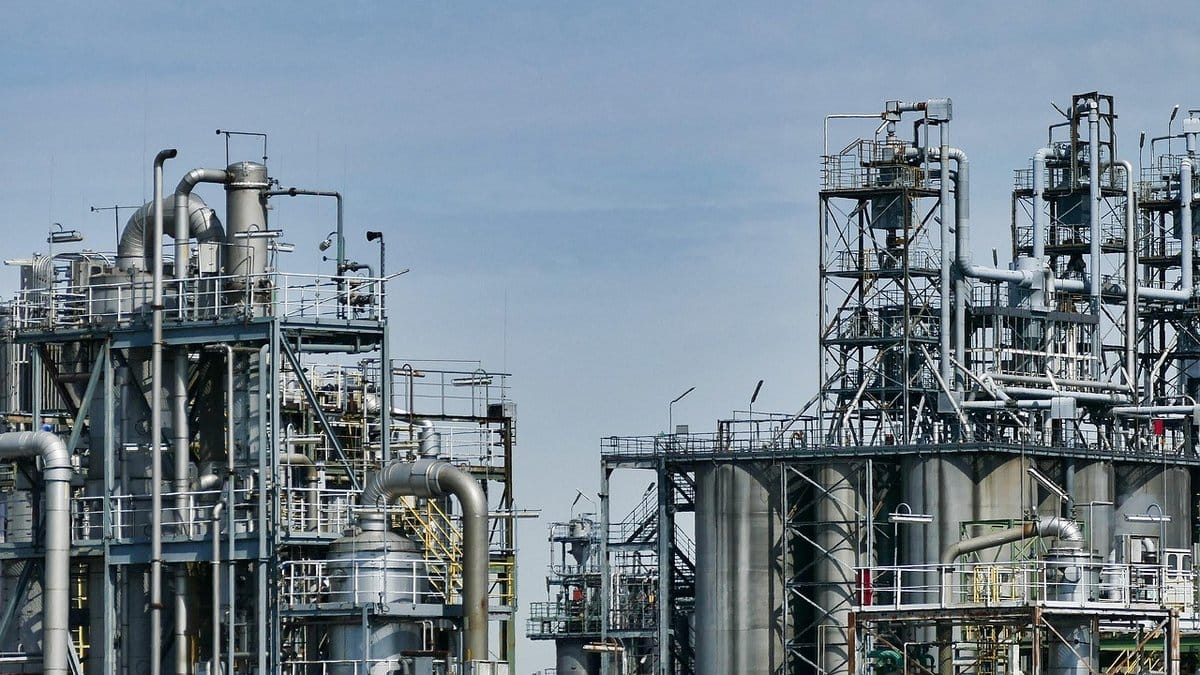
Brent crude traded at $91.52 per barrel early Tuesday, up 1.14%, while West Texas Intermediate gained 1.46% to $87.01. Renewed U.S.-Iran hostilities and concern about Strait of Hormuz shipping drove the move. Halliburton and Valero each rose 1.9%, while energy led the S&P 500.[1][2] Investment implications: Energy producers and refiners can benefit from sustained higher crude, but a prolonged shock also raises costs for transport, consumer, and industrial businesses.
Yields pressure rate-sensitive equities
The U.S. 10-year Treasury yield reached 4.784% early Tuesday, its highest level since early 2025; Japan’s 10-year yield moved above 3% for the first time since 1996. Utilities lagged, while PG&E fell 20.1% amid California wildfire-liability concerns.[1][2] Investment implications: Higher long-term yields can compress valuation multiples and raise financing costs, making balance-sheet sensitivity more important than sector labels.
AI leadership remains selective
The Nasdaq’s 0.12% decline was modest relative to the Dow’s drop, and it still gained 3.9% in August. CrowdStrike, Tesla, and SanDisk each rose 5% or more, while South Korean semiconductor exports climbed 209% year over year in August, signaling persistent AI-infrastructure demand.[2][3] Investment implications: AI remains an earnings-growth support, but leadership is becoming more company-specific as investors distinguish proven demand visibility from thematic exposure.
GameStop avoids additional dilution
GameStop shares gained 2.9% after the company said it would use cash on hand to fund roughly 27% of a previously announced $1.4 billion debt exchange rather than issue new shares for that portion.[1] Investment implications: Capital-structure decisions can move individual stocks sharply even in a risk-off tape, particularly where investors are focused on dilution, liquidity, and debt-management outcomes.
Economic Data & Fed Watch
The rates backdrop is central to equity-market direction. Reuters reported that markets were pricing more than a 65% probability of a 25-basis-point September Fed increase after Chair Kevin Warsh’s Jackson Hole remarks were read as hawkish. Higher oil can revive inflation concern and keep Treasury yields elevated.[1] Investment implications: Without softer inflation, weaker activity, or clearer policy restraint, duration-sensitive assets may remain volatile.
Tuesday brings July JOLTS openings and August ISM manufacturing, followed by services data Wednesday. Friday’s jobs report is the week’s main macro catalyst. Reuters’ poll expected 58,000 payroll gains and 4.1% unemployment; CNBC cited a 53,000-job Dow Jones estimate. Payrolls, wages, and unemployment relative to rate expectations will matter more than the small forecast gap.[5][2]
The dollar did not receive its usual full boost from higher U.S. yields because borrowing costs rose globally. Reuters placed the euro at $1.1619 and the yen at 159.76 per dollar. That cross-market move matters because it signals that the challenge is not solely U.S. monetary policy; global inflation, fiscal borrowing needs, and Japanese rate expectations are all influencing long-duration assets.[3]
International Markets
Asian markets were mixed as higher oil prices and yields weighed on risk appetite. Japan’s Nikkei 225 closed 0.15% lower, Australia’s S&P/ASX 200 fell 0.10%, and China’s CSI 300 declined 0.30%, while South Korea’s Kospi rose 0.23%. The Hang Seng fell 0.46%, and Shein declined 9% in its debut. China’s private PMI of 51.5 contrasted with the 49.8 official reading, highlighting uneven regional growth.[2]
Europe opened slightly lower, with the Stoxx 600 down 0.07%, as investors weighed the same mix of energy, rates, and policy uncertainty. Japan’s bond-market move drew particular attention because a 3% 10-year yield marks a significant departure from the ultra-low-rate environment that had long anchored global funding conditions. For U.S. investors, the international message is that rising yields and energy-risk premiums are broadening beyond domestic markets rather than remaining isolated U.S. factors.[2][3]
Looking Ahead
JOLTS and ISM manufacturing will provide the first labor-demand and industrial read for the week. Wednesday brings services data, while Friday’s employment report is the decisive macro event. Weaker hiring with contained wages could ease rate anxiety; stronger labor data could reinforce expectations for restrictive policy.[5]
Earnings will also remain relevant even late in the reporting season. Broadcom’s Wednesday report is the major AI-infrastructure test, with Dell Technologies and Palo Alto Networks also scheduled to report during the week. Investors will focus on demand visibility, capital-spending commentary, and whether management guidance supports the earnings assumptions that have helped sustain technology leadership.[5]
Finally, watch Brent crude, the U.S. 10-year yield, and Strait of Hormuz developments. Stabilizing oil and yields could help the rally regain footing; another supply disruption or yield break higher would test rate-sensitive and high-multiple equities.[2][3]
Sources
- Reuters: Wall Street closes lower as oil prices jump, indexes notch monthly gains
- CNBC: Stock futures are little changed after Wall Street closes out winning August
- Reuters: Bond selloff deepens as rising energy prices stoke inflation fears
- Yahoo Finance: Russell 2000 historical market data
- Reuters: Jobs report and Broadcom results pose next hurdles for stock market rally
Disclaimer: This analysis is for informational and educational purposes only and should not be considered financial advice. Market conditions can change rapidly, and past performance does not guarantee future results. Always conduct your own research and consult with a qualified financial advisor before making investment decisions.