



Market context: This pre-market report was prepared before the U.S. cash open on Wednesday, September 16. U.S. index figures refer to Tuesday’s close; futures and Asian-market quotations reflect early Wednesday conditions and can change before trading begins.
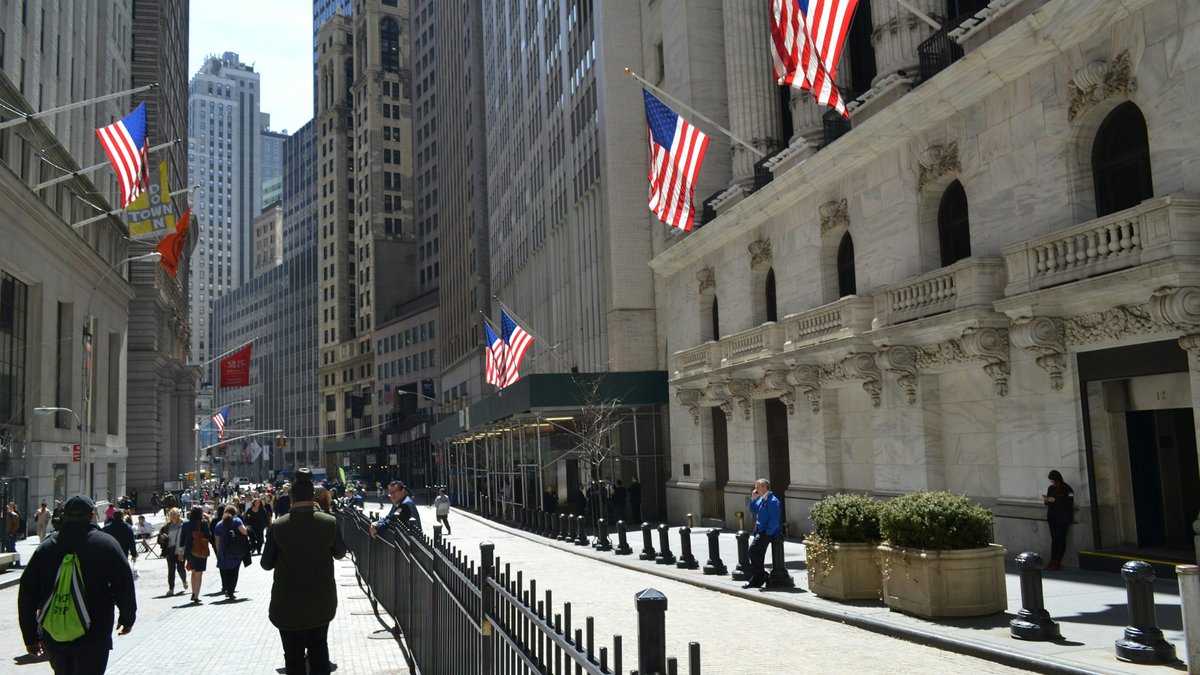
Market Overview
Wall Street enters the Federal Reserve decision day under a distinctly more defensive tone. On Tuesday, the S&P 500 fell 0.45% to 7,585.73, the Dow Jones Industrial Average lost 0.63% to 52,093.11, and the Nasdaq Composite dropped 0.78% to 25,981.57. The Russell 2000 declined 0.76% to 2,870.29, confirming that the pressure extended beyond the largest technology names. It was the second consecutive down session for the broad U.S. market as investors reassessed the cost of capital against a hotter inflation backdrop and elevated energy prices.
The central theme is a bond market demanding more compensation for inflation. The 10-year Treasury yield briefly moved above 5% Tuesday, its highest intraday level since 2007, before settling near that threshold. Higher discount rates help explain the Nasdaq’s relative weakness. S&P 500 futures were up about 0.2% early Wednesday, a tentative stabilization rather than a reversal.
Energy was the clearest pocket of macro support as supply risks kept crude above $100 per barrel. Rate-sensitive assets faced renewed scrutiny, while technology also navigated a fresh debate over the pace and safety of artificial-intelligence development. Oil and Treasury yields are likely to matter at least as much as company-specific news.
Top Market Movers
Treasury yields pressure equity valuations
The 10-year Treasury yield tested 5% for the first time in three years as investors positioned for the Fed and assessed oil above $100. Tuesday’s 0.45% S&P 500 decline and 0.78% Nasdaq retreat tracked that repricing.
Investment implications: A sustained move above 5% raises the hurdle rate across equities. Emphasize earnings durability rather than treating lower prices alone as value.
Oil remains a live inflation risk
Brent crude rose 2.9% Tuesday before easing 0.6% in Asian trading to $108.13 a barrel. WTI traded near $105 as markets weighed disruptions around Saudi Arabia’s Red Sea export hub and the shuttered East-West pipeline.
Investment implications: Energy producers may retain a cash-flow tailwind, but higher fuel costs can squeeze consumers and transport businesses. Crude also feeds directly into rate expectations.
Digital assets absorb a policy setback
Bitcoin fell roughly 4% Tuesday to a session low just above $75,000 after the Senate failed to advance cryptocurrency legislation. It was near $75,822 early in Asia, while ether slipped 0.2% to $2,402.
Investment implications: Regulatory timing remains material for crypto-linked equities and tokens. Position sizing should reflect the potential for abrupt policy-driven volatility.
AI optimism meets a more cautious debate
Technology sentiment was mixed. Bank of America lifted its 2030 semiconductor-market estimate to $3.2 trillion, implying 18% annual growth, while investors also absorbed concerns about AI development’s pace.
Investment implications: The AI investment cycle can coexist with sharp dispersion. Focus on order visibility, pricing power, and funding capacity rather than the sector as a single trade.
Economic Data & Fed Watch
The Federal Open Market Committee concludes its September 15–16 meeting today, with a statement, updated projections, and Chair Kevin Warsh’s press conference expected to set the immediate tone. Reuters reported an implied 93% probability of a 25-basis-point increase, which would lift the target range to 3.75%–4.00%. Core consumer prices rose 0.3% in August, a pace inconsistent with a smooth return to the Fed’s 2% objective.
Oil above $100 has compounded the policy problem. The 10-year yield stood near 4.99% early Wednesday after its brief move through 5%, while the dollar index eased 0.1% to 99.601 after nearing a two-week high.
Before the Fed, the Census Bureau’s August advance retail-sales and import-price reports are due at 8:30 a.m. Eastern; business inventories follow at 10:00 a.m. The retail release will test consumer resilience.
Investment implications: The projections and press-conference language may matter more than the decision itself. A hike paired with limited guidance could preserve volatility in bonds, the dollar, and growth stocks. Investors will watch whether projections indicate another increase later this year.

International Markets
Asian trading steadied after four consecutive days of declines. MSCI’s broadest Asia-Pacific index excluding Japan gained 0.5%, while South Korean and Taiwanese shares led the recovery. Japan’s Nikkei 225 rose 0.3%. The bounce came as the global bond selloff paused and crude prices retreated modestly, providing some relief after a difficult overnight U.S. session.
The improvement remains cautious. European investors will assess the U.S. decision against firmer inflation and elevated bond yields. Higher U.S. rates can tighten global conditions, pressure leveraged borrowers, and alter currency flows, particularly in emerging markets.
The dollar index’s 0.1% decline to 99.601 offered a small reprieve for non-dollar assets, but a hawkish Fed could quickly reverse it. Currency effects and regional sensitivity to energy imports remain central.
Looking Ahead
Today’s calendar is concentrated: retail sales and import prices arrive at 8:30 a.m. Eastern; business inventories are due at 10:00 a.m.; the Fed statement and projections arrive at 2:00 p.m.; and the Chair’s press conference follows. The sequence can create several repricings in one session.
Corporate earnings are a secondary catalyst, with scheduled reports concentrated in smaller companies rather than the largest index weights. Higher funding costs and fuel prices could still prompt revisions to margins, investment, and 2027 growth assumptions.
Monitor the 10-year yield around 5%, oil after Brent’s move above $108, and whether the dollar resumes its advance. Contained moves could support a relief rally; renewed climbs in yields or crude would pressure richly valued, rate-sensitive equities. Volatility may be amplified as hedges are adjusted around the statement. Watch volume and market breadth to distinguish a genuine rotation from a short-covering bounce.
Sources: Market data and market-news context from Reuters and Yahoo Finance; index closing data from Yahoo Finance; Federal Reserve meeting schedule from the Federal Reserve; retail-sales timing from the U.S. Census Bureau. Data reviewed September 16, 2026 before the U.S. cash-market open.
Disclaimer: This analysis is for informational and educational purposes only and should not be considered financial advice. Market conditions can change rapidly, and past performance does not guarantee future results. Always conduct your own research and consult with a qualified financial advisor before making investment decisions.