



Economic Crossroads: Navigating Inflation and Growth Signals
The global economy stands at a pivotal juncture, characterized by a complex interplay of moderating inflation, a resilient but cooling labor market, and slowing but still positive growth. Recent data presents a mixed but cautiously optimistic picture, suggesting that the aggressive monetary tightening cycles of the past two years are successfully taming price pressures without triggering a sharp recession. However, the path forward remains delicate. Central banks, particularly the Federal Reserve, are navigating the narrow channel between curbing inflation and sustaining economic expansion. The latest indicators from the Bureau of Labor Statistics and the Bureau of Economic Analysis reveal an economy in transition. While the headline inflation numbers have shown significant improvement, underlying price pressures persist, and the labor market, though still robust, is showing signs of normalization. This environment demands a nuanced understanding from investors and policymakers alike, as the decisions made in the coming months will likely determine the economic trajectory for the remainder of the year. The focus remains on achieving a soft landing, a scenario where inflation returns to target without a significant spike in unemployment or a prolonged economic downturn.
Inflation and Federal Reserve Policy: A Delicate Balancing Act
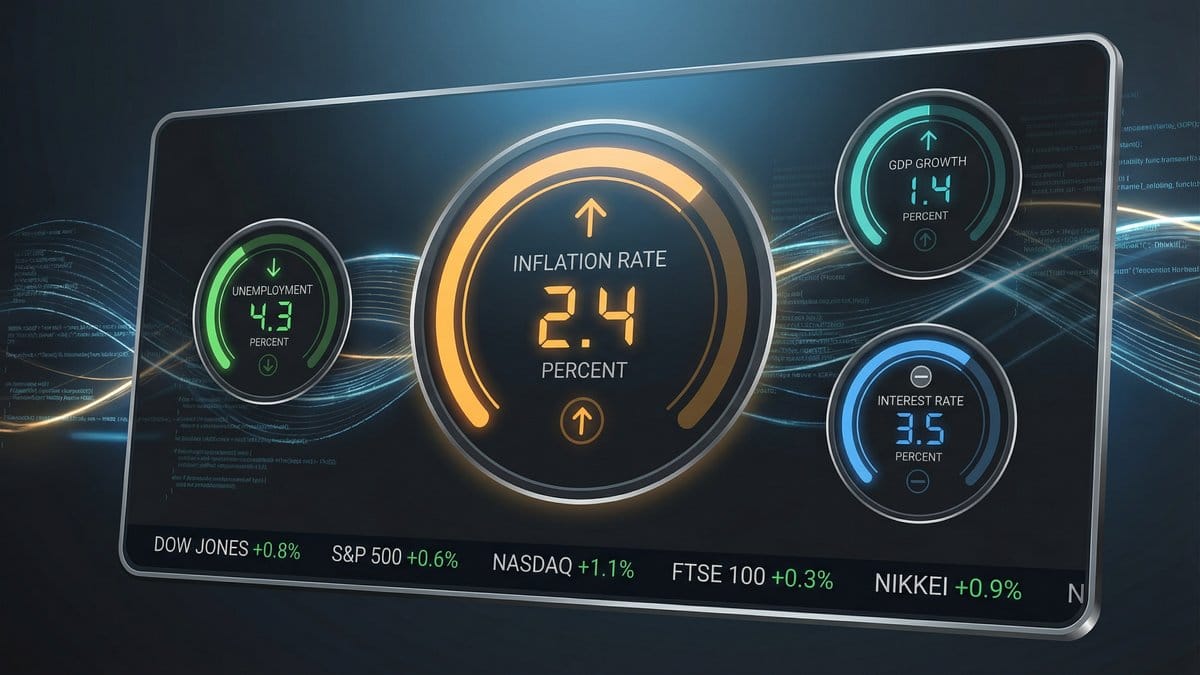
Inflationary pressures have continued to ease, providing the Federal Reserve with more flexibility in its policy decisions. The latest Consumer Price Index (CPI) for January 2026 registered a 2.4% year-over-year increase, a welcome moderation from previous highs. Core CPI, which excludes volatile food and energy prices, came in at 2.5%, indicating that underlying inflation is also trending in the right direction. Similarly, the Personal Consumption Expenditures (PCE) price index, the Fed's preferred inflation gauge, showed a 2.9% annual increase in December 2025, with Core PCE at 3.0%. On the producer side, the Producer Price Index (PPI) for final demand rose 3.0% over the last 12 months, suggesting that wholesale price pressures are also contained. In response to this data, the Federal Open Market Committee (FOMC) has maintained the federal funds rate at a target range of 3.5% to 3.75%. While the central bank has paused its rate-hiking campaign, officials remain cautious, emphasizing that their decisions will remain data-dependent. The market is now pricing in potential rate cuts later in the year, but the timing and magnitude will hinge on incoming data confirming a sustained downtrend in inflation toward the 2% target.
Investment implications: The current environment of moderating inflation and a steady Fed policy stance is generally positive for both equities and fixed income. A pause in rate hikes reduces the discount rate on future corporate earnings, which can support stock valuations. For bond investors, stable rates can lead to less volatility and potential price appreciation, particularly if the Fed signals a move toward easing. However, sectors sensitive to interest rates, such as technology and real estate, may see the most significant benefit. Investors should monitor upcoming inflation reports and Fed communications closely for any shifts in outlook that could alter market expectations.
Labor Market Shows Resilience Amid Cooling
The U.S. labor market continues to demonstrate remarkable resilience, though signs of a gradual cooling are becoming more apparent. The January 2026 jobs report revealed the addition of 130,000 nonfarm payrolls, a solid figure that points to continued hiring demand. The unemployment rate ticked down to 4.3%, remaining near historic lows and indicating a tight labor market. This sustained strength in employment has been a key pillar supporting consumer spending and overall economic activity. However, the pace of job growth has moderated from the torrid pace seen in the post-pandemic recovery, suggesting a move toward a more sustainable equilibrium. Wage growth, while still elevated, has also shown signs of deceleration, which is a positive development for the inflation outlook as it reduces the risk of a wage-price spiral. The data from the Bureau of Labor Statistics suggests that the labor market is rebalancing, with labor supply and demand coming into closer alignment. This normalization is a crucial component of the Fed's strategy to achieve a soft landing.
Investment implications: A strong but cooling labor market is a favorable backdrop for investors. It suggests that the economy is robust enough to support corporate earnings growth, but not so hot as to force the Fed into a more aggressive tightening stance. Industries that rely on consumer discretionary spending may benefit from the continued strength in employment. For the broader market, a stable labor market reduces the probability of a deep recession, providing a floor for equity prices. Investors should watch for any significant weakening in the jobs data, as a sharp rise in unemployment could signal a more pronounced economic downturn and prompt a flight to safety assets.
GDP Growth Moderates While Consumer Spending Holds Firm
The latest report on Gross Domestic Product (GDP) from the Bureau of Economic Analysis showed the U.S. economy expanded at a 1.4% annualized rate in the fourth quarter of 2025. While this represents a slowdown from the previous quarter, it still indicates positive growth and defies earlier predictions of a recession. The details of the report were encouraging, with consumer spending remaining a primary driver of the expansion. This resilience in consumption is a testament to the strong labor market and healthy household balance sheets. Business investment also contributed positively to growth, suggesting that companies are still confident in the economic outlook. The moderation in the headline GDP figure was partly due to a decrease in government spending and a slight drag from net exports. Overall, the GDP data paints a picture of an economy that is slowing to a more sustainable pace of growth, which is consistent with the Federal Reserve's objectives. The ability of the consumer to continue spending will be a key factor to watch in the coming quarters.
Investment implications: Moderate GDP growth, supported by strong consumer spending, creates a stable environment for corporate earnings. This is particularly beneficial for companies in the consumer staples and services sectors. The slowdown in the headline growth rate may temper expectations for a rapid acceleration in stock prices, but it also reduces the risk of the economy overheating and forcing the Fed's hand. Investors may want to focus on companies with strong balance sheets and consistent cash flow, as they are better positioned to navigate a period of slower growth. A focus on quality and value may be a prudent strategy in this environment.
Market Implications and Outlook: Cautious Optimism Prevails
The confluence of moderating inflation, a resilient labor market, and steady growth has fostered a sense of cautious optimism in financial markets. Asset prices have responded positively to the increasing likelihood of a soft landing. Equity markets have been supported by the prospect of an end to the Fed's tightening cycle and the avoidance of a severe recession. Bond yields have stabilized as inflation expectations have become more anchored. The current economic data suggests that the path of least resistance for markets may be higher, but risks remain. A sudden re-acceleration in inflation or a sharp deterioration in the labor market could quickly change the narrative and lead to a market downturn. Geopolitical risks also continue to loom in the background. Looking ahead, investors will be keenly focused on the Federal Reserve's communications for any hints about the future path of monetary policy. The market's outlook will largely depend on the central bank's ability to successfully navigate the final leg of its inflation fight without derailing the economic expansion. A data-dependent approach remains crucial for both policymakers and investors.
Disclaimer: This analysis is for informational and educational purposes only and should not be considered financial advice. Economic forecasts are subject to significant uncertainty and actual results may differ materially. Always conduct your own research and consult with a qualified financial advisor before making investment decisions.