



Market Overview
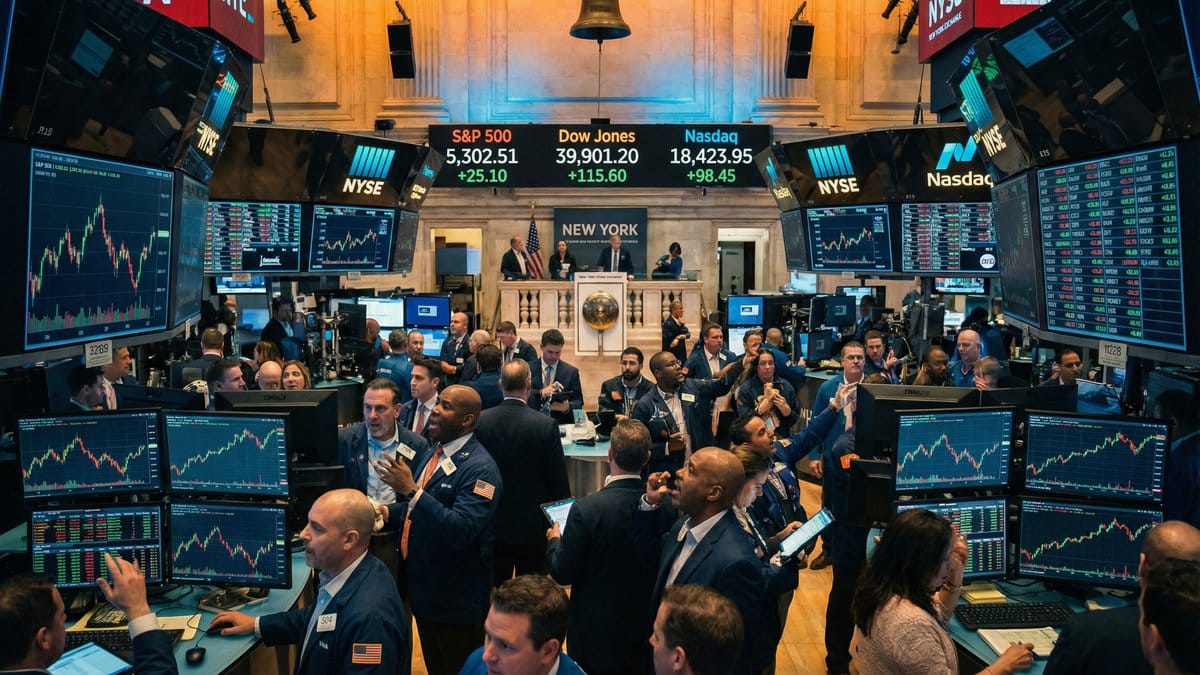
U.S. equity markets staged a dramatic reversal on Monday, March 9, 2026, erasing steep morning losses to close solidly higher after President Donald Trump signaled that the conflict with Iran could be nearing resolution. The session was defined by extraordinary volatility in crude oil markets, which briefly surged above $119 per barrel before pulling back sharply — the biggest single-day oil price swing since the pandemic era. The late-session recovery demonstrated the market's sensitivity to geopolitical headlines and underscored the fragile nature of the current rally.
| Index | Closing Level | Change | % Change |
|---|---|---|---|
| S&P 500 | 6,795.99 | +55.93 | +0.83% |
| Dow Jones Industrial Average | 47,740.80 | +239.25 | +0.50% |
| Nasdaq Composite | ~21,450 | +1.38% | +1.38% |
| Russell 2000 | ~2,180 | -0.60% | -0.60% |
The recovery was broad-based across most major sectors, though the session's defensive undertone was evident. Technology and communication services led the rebound, while financials, consumer discretionary, and materials lagged. The Cboe Volatility Index (VIX) closed at 25.50, still elevated and well above the 20-level threshold that signals heightened investor anxiety. The Dow had been down nearly 900 points at its session low before the dramatic reversal, illustrating the degree to which a single presidential statement can move markets in the current geopolitical environment.
Small-cap stocks, as measured by the Russell 2000, underperformed their large-cap counterparts, declining approximately 0.6% as investors gravitated toward the perceived safety and liquidity of mega-cap names. The energy sector was a notable outlier, with oil-related equities whipsawing alongside crude prices throughout the session. Nine of the eleven S&P 500 sectors ultimately closed higher, with only financials and consumer discretionary ending in negative territory.
Top Market Movers
1. Oil Markets: Historic Volatility Dominates the Session
West Texas Intermediate crude oil futures surged above $119 per barrel overnight — their highest level in nearly four years — before reversing sharply lower to close around $85, down approximately 6% on the day. The extraordinary swing was triggered by a combination of factors: G7 finance ministers announced they could release oil from strategic petroleum reserves to offset Middle East supply disruptions, and President Trump subsequently told CBS News that ships were moving through the Strait of Hormuz and that the Iran conflict was “very complete, pretty much.” Brent crude, the global benchmark, followed a similar trajectory, briefly approaching $120 before retreating. Oil prices have surged approximately 40% since the U.S. and Israel launched military strikes against Iran on February 28, 2026, effectively halting tanker traffic through the Strait of Hormuz — a critical chokepoint through which roughly one-fifth of the world's oil and liquefied natural gas transits.
Investment implications: The extreme oil price volatility creates both risk and opportunity. Energy sector equities remain highly sensitive to geopolitical headlines, and investors should expect continued sharp intraday swings. Airlines, cruise operators, and other fuel-intensive industries face near-term earnings pressure, though Monday's session showed these names can recover rapidly on de-escalation signals. A sustained oil price above $100 per barrel would likely weigh on consumer spending and corporate margins broadly.
2. Hims & Hers Health (HIMS): +44% on Novo Nordisk Partnership
Shares of Hims & Hers Health (HIMS) surged 44% — one of the largest single-day gains for a major healthcare stock in recent memory — after the telehealth company announced a landmark distribution agreement with Novo Nordisk (NVO). Under the deal, Hims & Hers will sell Novo Nordisk's branded weight-loss drugs Ozempic and Wegovy directly through its platform, with availability expected later this month. Notably, Novo Nordisk simultaneously agreed to dismiss its pending lawsuit against Hims & Hers, which had accused the company of selling compounded copycat versions of its weight-loss medications. U.S.-listed shares of Novo Nordisk gained 3% on the news. The deal represents a significant strategic pivot for Hims & Hers, which had previously been competing directly with Novo Nordisk in the rapidly growing GLP-1 weight-loss drug market.
Investment implications: The Hims-Novo Nordisk partnership signals a broader shift in how GLP-1 drugs may be distributed, potentially expanding the addressable market for both companies. Investors should monitor whether similar distribution arrangements emerge with other telehealth platforms, which could reshape the competitive landscape for obesity drug access. Compounding pharmacy stocks that relied on copycat GLP-1 formulations face increased regulatory and competitive headwinds.
3. Live Nation Entertainment (LYV): +6% on DOJ Settlement
Live Nation Entertainment (LYV) shares jumped nearly 6% after the company reached a settlement with the U.S. Department of Justice that will not require it to divest its Ticketmaster subsidiary. The settlement resolves a 2024 antitrust lawsuit in which the DOJ had accused Live Nation of monopolizing the concert ticketing and promotion market. Bloomberg reported that settlement discussions had intensified since a trial commenced on March 2, and that a final agreement could be announced imminently. Live Nation shares entered the session up approximately 10% year-to-date, and the resolution of this significant legal overhang removes a major uncertainty that had weighed on the stock for nearly two years.
Investment implications: The DOJ settlement is a meaningful positive catalyst for Live Nation, eliminating the existential risk of a forced Ticketmaster divestiture. With this legal cloud lifted, investors can refocus on the company's underlying business fundamentals, including its dominant position in live entertainment and ticketing. The resolution may also signal a broader shift in the current administration's approach to antitrust enforcement in the entertainment sector.
4. S&P 500 Index Reconstitution: Coherent, Vertiv, EchoStar, Lumentum Added
S&P Dow Jones Indices announced that Coherent (COHR), Vertiv (VRT), EchoStar (SATS), and Lumentum (LITE) will join the S&P 500 before markets open on March 23, replacing Match Group (MTCH), Molina Healthcare (MOH), Lamb Weston Holdings (LW), and Paycom Software (PAYC), which will move to the S&P SmallCap 600. Vertiv, EchoStar, and Lumentum each gained approximately 3% on the news, while Coherent slipped about 0.5%, having already rallied sharply the prior week on news of a $2 billion Nvidia investment. The four departing companies fell between 3% and 5% on the announcement.
Investment implications: Index inclusion events typically generate sustained buying pressure from passive index funds and ETFs that must replicate the benchmark. Investors may consider positioning ahead of the March 23 effective date. The inclusion of AI-infrastructure names like Vertiv and Lumentum reflects the continued dominance of the AI investment theme within the S&P 500's composition.

Economic Data & Fed Watch
The macroeconomic backdrop grew considerably more complex in the days leading into this week's session. The February nonfarm payrolls report, released on Friday, March 6, delivered a significant negative surprise: the U.S. economy shed 92,000 jobs during the month, compared with economist expectations for a gain of approximately 150,000 and following a revised January gain of 126,000. The unemployment rate ticked up to 4.4% from 4.3% in January, its highest level since late 2021. The report was broadly weak, with job losses spread across nearly all major sectors. The New York Federal Reserve's latest Survey of Consumer Expectations, released Monday, showed that the expected quit rate — a measure of worker confidence in the labor market — fell to 15.9%, its lowest level in over a decade, as workers clung to existing positions amid slowing hiring.
The combination of a weakening labor market and surging energy prices has reignited fears of stagflation — the economically toxic combination of high inflation and slow growth that characterized the 1970s. Chicago Fed President Austan Goolsbee stated that an oil-price shock coupled with a sustained rise in the unemployment rate would create “exactly the kind of stagflationary environment that's as uncomfortable as any that faces a central bank.” Bank of America Global Economists warned that oil prices persistently above $100 per barrel could take more than 60 basis points off GDP growth. The Federal Reserve, which held its benchmark federal funds rate steady at 3.50%–3.75% at its January 28 meeting, is now widely expected to remain on hold at its upcoming March meeting, with investors increasingly pricing in a potential rate cut no earlier than June 2026.
Treasury markets reflected the conflicting signals. The 10-year Treasury yield spiked as high as 4.21% during Monday's session — its highest level in several weeks — before retreating to close at 4.10%, down from Friday's 4.13% close. The 2-year Treasury yield similarly spiked to 3.63% before settling near 3.53%. The U.S. Dollar Index closed 0.1% lower at 98.86. Looking ahead, Wednesday's Consumer Price Index (CPI) report for February will be closely watched; forecasters expect headline CPI to show a 2.4% year-over-year increase. The report arrives just days before the Federal Reserve's March policy meeting and will be a critical data point for the rate outlook.
Investment implications: The stagflation risk scenario presents a particularly challenging environment for traditional asset allocation. Bonds offer limited protection if inflation rises, while equities face pressure from both slower growth and higher discount rates. Commodities, real assets, and inflation-protected securities (TIPS) may warrant increased portfolio weighting. Investors should closely monitor Wednesday's CPI release and any Federal Reserve commentary for signals on the policy path ahead.
International Markets
Global markets experienced significant divergence on Monday, with European and Asian markets bearing the brunt of the oil price shock before a partial recovery emerged in Asian trading on Tuesday. European equities closed sharply lower, with the pan-European STOXX 600 falling 0.6%, Germany's DAX declining 0.8%, and the FTSE 100 slipping 0.3%. The surge in oil prices toward $120 per barrel fed fresh inflation concerns across the eurozone, pushed bond yields higher, and revived speculation that the European Central Bank may need to maintain tighter monetary policy for longer. Rate-sensitive and cyclical names bore the brunt of the selling, with Schneider Electric falling 1.7% and UniCredit losing 1.6%. Roche slid 2.3% after disappointing results from a late-stage breast cancer trial.
Asian markets were hit hard on Monday but staged a significant rebound on Tuesday following Wall Street's late reversal and the sharp pullback in crude oil. Japan's Nikkei 225 rose 2.9% in Tuesday trading, South Korea's Kospi surged 5.4%, Hong Kong's Hang Seng gained 2.1%, and Australia's ASX 200 added 1.1%. In Seoul, Samsung Electronics rose 7.6% and SK Hynix jumped approximately 12.6% as semiconductor names led the regional rebound. In Hong Kong, Tencent gained about 5.8% and Alibaba added approximately 1.4% as risk appetite returned. Japan's Q4 2025 GDP was revised upward to 1.3% annualized growth, supported by stronger-than-expected corporate investment. China reported that exports surged nearly 22% year-over-year in the first two months of 2026, with the trade surplus reaching a record $214 billion for the period — a notable bright spot amid the broader global uncertainty.
In currency markets, the U.S. dollar retreated broadly as oil prices pulled back and risk sentiment improved. EUR/USD reached as high as 1.1646 in Asian trading on Tuesday after touching a low of 1.1507 on Monday. USD/JPY fell to near 157.70 from a Monday high of 158.90, as the yen firmed on safe-haven demand. Emerging market currencies including the Mexican peso (MXN) and South African rand (ZAR) rebounded alongside the improvement in risk sentiment.
Looking Ahead
The week ahead is packed with high-impact economic data and earnings reports that will further shape the market's assessment of the inflation and growth outlook. The most critical release will be Wednesday's Consumer Price Index report for February, which forecasters expect to show headline CPI rising 2.4% year-over-year — a reading that, if confirmed, would suggest inflation remained relatively contained before the recent oil price spike. However, given the dramatic surge in energy prices since late February, forward-looking inflation expectations have risen sharply, and any upside surprise in the CPI data could amplify stagflation concerns and pressure both equities and bonds.
On the earnings front, Oracle (ORCL) reports after the bell on Wednesday, with investors focused on the company's AI infrastructure backlog and cloud revenue growth trajectory. Adobe (ADBE) reports on Thursday, and its results will be closely watched for insights into enterprise software spending trends. Dollar General leads a string of retail earnings that will provide a ground-level view of consumer health amid rising fuel costs. Tesla's Chinese electric vehicle competitors — including BYD, NIO, and Li Auto — are also scheduled to report, offering a window into the competitive dynamics of the global EV market.
Beyond earnings and economic data, geopolitical developments in the Middle East will remain the dominant market driver. Any credible signs of de-escalation between the U.S., Israel, and Iran — or conversely, any further escalation — could trigger outsized market moves. The U.S. Treasury is scheduled to auction 3-year notes on Tuesday, and the results will provide insight into demand for government debt at current yield levels. The Federal Reserve's March meeting, scheduled for the week of March 17, looms as the next major policy catalyst, with markets pricing in a high probability that the Fed will hold rates steady while acknowledging the heightened uncertainty in the economic outlook.
Disclaimer: This analysis is for informational and educational purposes only and should not be considered financial advice. Market conditions can change rapidly, and past performance does not guarantee future results. Always conduct your own research and consult with a qualified financial advisor before making investment decisions.