



Energy Market Overview
The global energy landscape is currently navigating a period of intense volatility and structural shifts, driven by a complex interplay of geopolitical conflicts, supply constraints, and the ongoing transition toward renewable energy sources. As of early April 2026, energy markets have transitioned from the supply-driven softness seen earlier in the year to a highly reactive environment. The most prominent catalyst for this shift has been the escalating US-Israeli war on Iran, now entering its fifth week, which has significantly disrupted energy supply flows through the strategically vital Strait of Hormuz. This chokepoint normally handles approximately one-fifth of global oil trade during peacetime, and its restriction has removed millions of barrels per day from global supply, pushing energy prices to multi-year highs.
In stark contrast to the surging oil markets, North American natural gas prices have experienced a period of moderation. The Henry Hub prompt-month futures recently fell to a six-month low, reflecting easing winter demand and robust domestic production levels. However, the global liquefied natural gas (LNG) market tells a different story, having tightened considerably following disruptions at Qatar's Ras Laffan complex. Amidst these fossil fuel fluctuations, the renewable energy sector continues its relentless expansion. The International Renewable Energy Agency (IRENA) reported a near-700 gigawatt surge in global renewable capacity in 2025, underscoring a growing global imperative to strengthen energy security through domestic, clean energy sources in the face of international fossil fuel price volatility.
Oil Market Analysis
The crude oil market has experienced dramatic price escalations, with both major benchmarks reaching levels not seen in years. Brent crude, the global benchmark, recently surged past the $111 per barrel mark, climbing 7.8 percent to settle at $109.03 per barrel. Even more striking, the spot price for Brent crude for immediate physical delivery skyrocketed to $141.36, hitting its highest level since the 2008 financial crisis. Similarly, US West Texas Intermediate (WTI) crude futures recorded their largest absolute price rise since 2020, jumping over 11 percent to $111.54 per barrel. This massive rally, which saw oil prices jump over 80 percent in the first quarter of 2026, is primarily fueled by the severe geopolitical supply risks emanating from the Middle East.
The supply and demand dynamics are currently heavily skewed by the Strait of Hormuz disruptions. While non-OPEC production growth from countries like Brazil, Canada, and Guyana continues to add incremental barrels to the market, these additions are insufficient to offset the massive export constraints in the Gulf region. Furthermore, OPEC oil output plunged in March to its lowest level since the COVID-19 pandemic. Although OPEC and its allies (OPEC+) have agreed to resume increasing supplies in April, with a potential total supply increase of 1.78 million barrels per day for the year, much of this spare capacity resides in countries reliant on the Strait of Hormuz, limiting their ability to deliver these additional volumes to the global market. Consequently, analysts suggest that an oil market recovery will take months, even if the current conflict ends swiftly, making it highly unlikely that crude prices will drop below $80 a barrel at any point in 2026.
Investment implications: The sustained high oil prices present a highly favorable environment for upstream exploration and production companies, as well as integrated oil majors. Investors may find strong near-term returns in these equities, though they must remain vigilant regarding the inherent volatility tied to geopolitical headlines. The current backwardation in the forward curves indicates tight prompt market conditions, suggesting that companies with unhedged, near-term production will capture the most significant margin expansions.

Natural Gas & LNG
While global oil markets boil, the US domestic natural gas market has cooled significantly. Henry Hub prompt-month futures recently dropped to $2.82 per MMBtu, a six-month low, as the market exited the 2025-2026 winter heating season. This softening is attributed to mild late-season temperatures and record-high domestic dry natural gas production, which the Energy Information Administration (EIA) forecasts will average 118 billion cubic feet per day in 2026. Despite a recent modest decline in gas-directed drilling rigs, the total number remains substantially higher than year-ago levels, indicating that operators are maintaining strong production through drilling efficiency gains and associated gas from oil-focused operations.
Conversely, the global LNG market is experiencing significant tightening. A major disruption at Qatar's Ras Laffan complex has reduced global export capacity by an estimated 12 to 13 million tonnes per annum. Given that Qatar represents approximately 20 percent of global LNG supply, this reduction has placed upward pressure on international LNG benchmarks. While incremental US export additions, such as the commencement of production at Train 1 of the Golden Pass LNG facility, provide some short-term relief, they cannot fully offset the Qatari shortfall. This dynamic has created a bifurcated market: abundant, lower-priced supply in North America juxtaposed against a tight, premium-priced global LNG market.
Investment implications: The current environment strongly favors US-based LNG export infrastructure companies and natural gas producers with significant exposure to international pricing benchmarks. Companies capable of bridging the gap between cheap domestic gas and premium global markets are positioned for substantial margin capture. However, purely domestic, unhedged natural gas producers may face continued margin pressure until domestic demand or export capacity increases sufficiently to absorb the current production surplus.
Renewable Energy & Transition
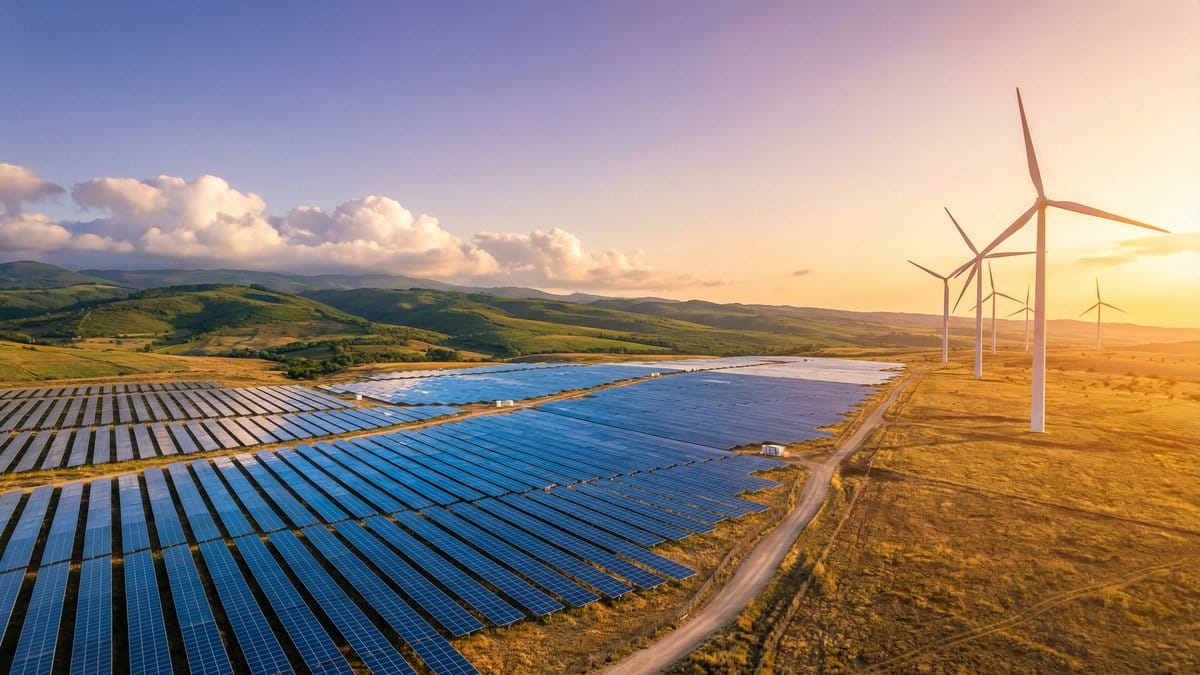
The renewable energy sector demonstrated remarkable resilience and growth over the past year, driven by both environmental mandates and an increasing focus on energy security. According to IRENA, global renewable power capacity reached 5,149 gigawatts in 2025, following a record addition of 692 gigawatts. This represents a 15.5 percent annual increase, with renewable energy dominating total capacity expansion at an 85.6 percent share. Solar energy led this surge, accounting for approximately 75 percent of the total capacity additions, followed by wind energy, which saw a 14 percent growth from the previous year. Together, solar and wind accounted for nearly 97 percent of all net renewable additions globally.
The geopolitical shocks in the fossil fuel markets are acting as a powerful catalyst for the energy transition. As nations grapple with supply insecurity and price volatility, the economic and strategic rationale for deploying homegrown, low-cost renewable energy has never been stronger. In the United States, solar and wind accounted for over 88 percent of new generating capacity added in 2025. Furthermore, the International Energy Agency projects that global electricity demand will rise by at least 40 percent in the coming decade, driven by electrification trends and the rapid growth of energy-intensive sectors like AI data centers, necessitating unprecedented investment in clean energy infrastructure.
Investment implications: The structural shift toward renewable energy offers compelling long-term investment opportunities, particularly in utility-scale solar and wind developers, as well as companies providing critical grid infrastructure and energy storage solutions. The current geopolitical climate has accelerated the timeline for energy independence initiatives, likely leading to sustained policy support and capital inflows into the clean energy sector. Investors should focus on companies with strong project pipelines and the ability to navigate supply chain complexities.
Energy Stocks & Outlook
The energy sector has emerged as a dominant force in the equity markets, significantly outperforming broader indices. The Energy Select Sector SPDR ETF (XLE) surged 34 percent in the first quarter of 2026 and is up nearly 40 percent year-to-date, driven by the massive rally in crude oil prices. This performance stands in sharp contrast to the broader S&P 500 index, highlighting the sector's role as a hedge against geopolitical instability and inflation.
The earnings outlook for the energy sector is exceptionally robust. Analysts expect the sector to see 7.6 percent earnings growth in the first quarter of 2026, a dramatic upward revision from the declines expected at the start of the year. For the full year 2026, earnings growth expectations have climbed to 16.3 percent. As major oil companies prepare to report their quarterly results, the combination of multi-year high commodity prices and disciplined capital allocation is expected to yield record free cash flows, supporting continued dividend growth and share repurchase programs.
Disclaimer: This analysis is for informational and educational purposes only and should not be considered financial advice. Energy sector investments carry significant commodity price volatility and geopolitical risks. Always conduct your own research and consult with a qualified financial advisor before making investment decisions.