



Thursday's session delivered a volatile but ultimately resilient performance as U.S. equities overcame sharp early losses to close with slim gains, marking the market's first winning week since the start of the Iran war. The session was dominated by President Trump's Wednesday night primetime address on the Iran conflict, Tesla's disappointing Q1 delivery figures, and persistently elevated oil prices that continued to weigh on consumer sentiment and global growth expectations.
Market Performance Summary
| Index | Close | Daily Change | Weekly Change | YTD Change |
|---|---|---|---|---|
| S&P 500 | 6,582.69 | +0.1% (+7.37 pts) | +3.4% | -3.8% |
| Dow Jones | 46,504.67 | -0.1% (-61.07 pts) | +3.0% | -3.2% |
| Nasdaq | 21,879.18 | +0.2% (+38.23 pts) | +4.4% | -5.9% |
| Russell 2000 | 2,530.04 | +0.7% (+17.67 pts) | +3.3% | +1.9% |
1. Trump's Iran War Address Fails to Calm Markets
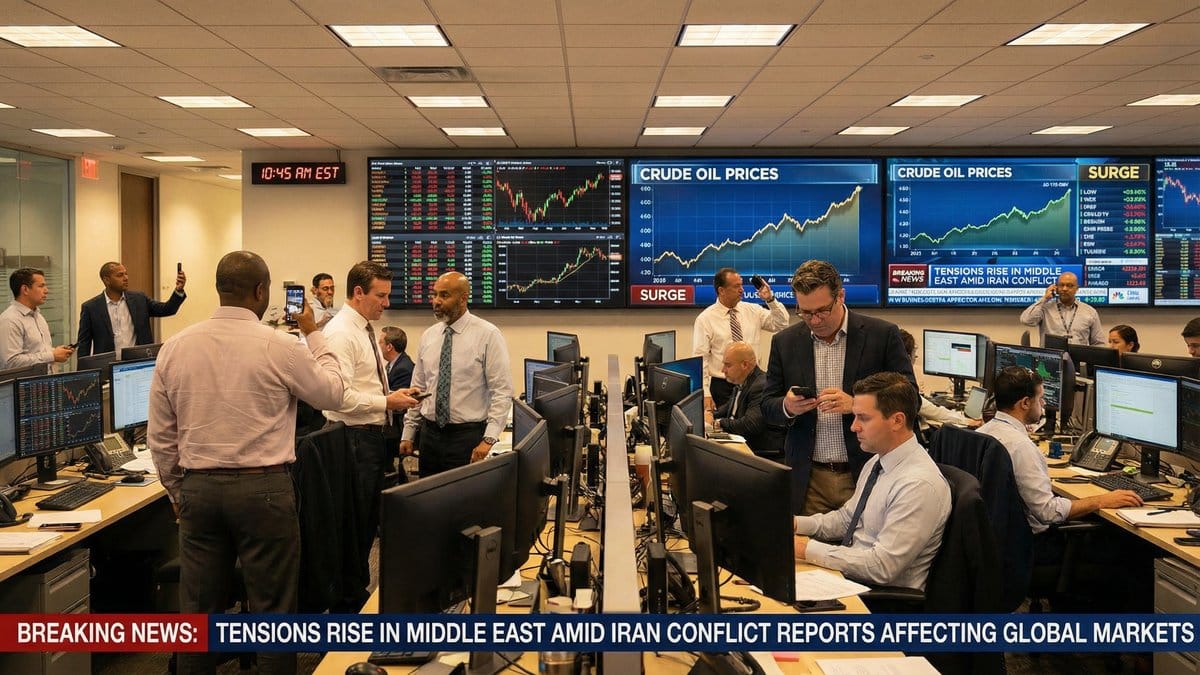
President Trump's Wednesday night primetime address on the Iran war was the dominant market driver of the session. While Trump declared that the U.S. has “essentially won” the conflict and promised it would “wrap up soon,” markets were unmoved by the optimistic rhetoric. Shortly after Trump concluded his remarks, Iran launched another missile attack against Israel, and Bahrain issued warnings for residents to seek shelter amid incoming Iranian strikes. Qatar also reported that a cruise missile from Iran struck a QatarEnergy LNG ship off its coast.
Trump's speech notably failed to provide a clear timetable for ending the conflict or a plan to reopen the Strait of Hormuz — the critical waterway Iran has blocked since the war began. Instead, Trump challenged oil-dependent nations to “build up some delayed courage” and take action themselves, a message that did little to reassure energy markets. Public support for the war has also eroded sharply, with a recent YouGov poll showing only 28% of respondents support the conflict, down from 76% of Republicans just weeks ago.
2. Tesla Q1 Deliveries Miss Estimates, Stock Falls Over 5%
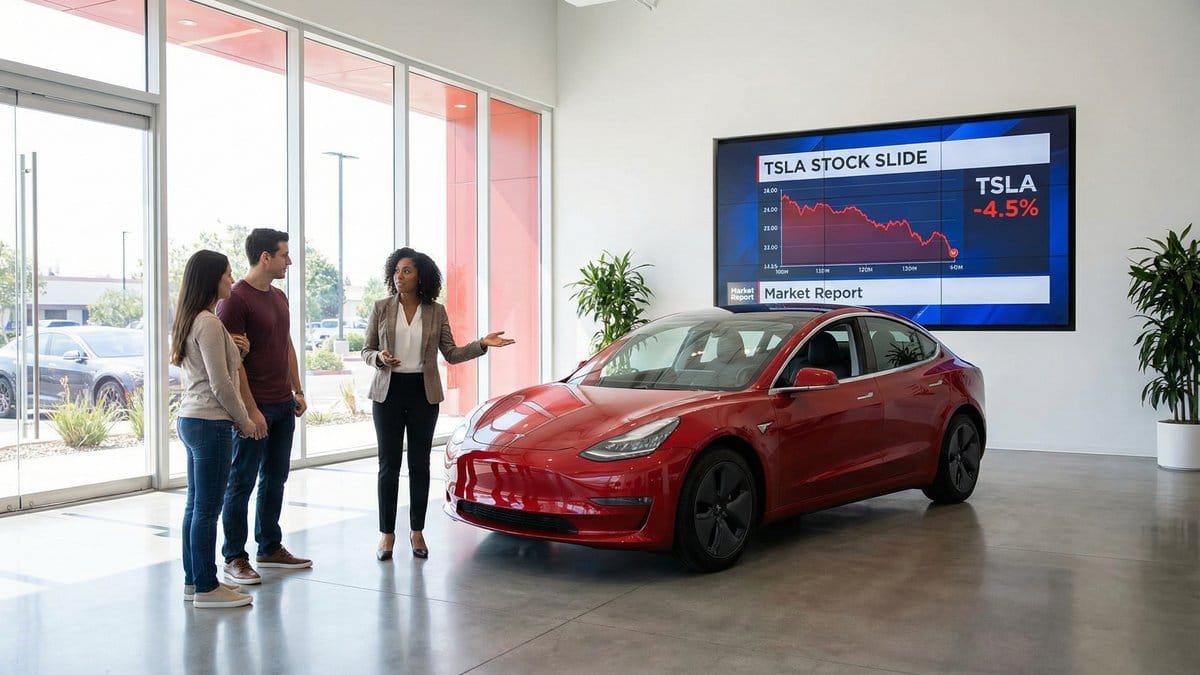
Tesla reported first-quarter 2026 deliveries of 358,023 vehicles, falling short of analyst estimates of approximately 365,000–369,000 units. The miss was the steepest delivery shortfall of the year for the EV maker, and shares fell more than 5% on the news — the stock's worst single-day decline of 2026. The company produced 408,386 vehicles in Q1, leaving a gap of over 50,000 units between production and deliveries, raising concerns about demand softness.
The delivery miss comes amid a challenging backdrop for Tesla: the expiration of federal EV tax credits, increasing competition from Chinese manufacturers, and the aging of key model lines. Tesla has now posted two consecutive years of declining deliveries after peaking at 1.81 million vehicles in 2023. Analysts noted that the production-delivery gap signals potential inventory buildup, which could pressure margins in coming quarters.
3. Oil Prices Surge Above $111 as Iran Conflict Deepens
U.S. crude oil prices rose to $111.54 per barrel on Thursday, extending gains following Trump's speech, which provided no clear path to resolving the Hormuz blockade. The IEA has characterized the current supply disruption as exceeding the severity of both the 1974 oil embargo and the 2022 Russian supply shock. Energy analysts warn that if the Strait of Hormuz remains closed, global fuel shortages could materialize within weeks, with cascading effects on transportation, manufacturing, and consumer prices.
The oil price surge is increasingly feeding through to consumer inflation, with gas prices at the pump rising sharply in recent weeks. The Federal Reserve, which held rates steady at its last meeting, faces a difficult balancing act as energy-driven inflation pressures mount while economic growth shows signs of slowing — a classic stagflationary dynamic.
4. Markets Post First Winning Week Since Iran War Began
Despite Thursday's mixed close, the major indexes logged their first winning week since the onset of the Iran war. The S&P 500 gained 3.4% for the week, the Nasdaq surged 4.4%, the Dow added 3.0%, and the Russell 2000 rose 3.3%. The weekly gains reflect a degree of stabilization after weeks of sharp selloffs, though analysts caution that the recovery remains fragile given ongoing geopolitical uncertainty and elevated oil prices.
Year-to-date, however, the picture remains challenging: the S&P 500 is down 3.8%, the Dow is off 3.2%, and the Nasdaq has shed 5.9% since January 1. Only the Russell 2000 remains in positive territory for the year, up 1.9%, suggesting that small-cap domestic companies are perceived as more insulated from international energy and geopolitical risks.
5. International Markets and Good Friday Closure
Asian and European markets declined on Thursday, with global equities broadly pressured by the Iran war overhang and oil price volatility. Investors are also noting that U.S. stock markets will be closed on Friday, April 3 for Good Friday, meaning Thursday's session was the last trading day of the week. The long weekend adds an element of uncertainty, as geopolitical developments over the holiday period could drive significant moves when markets reopen Monday.
Investment Implications
The current market environment demands a cautious, diversified approach. Energy sector exposure remains a key consideration as oil prices stay elevated, while consumer discretionary and transportation stocks face headwinds from rising fuel costs. Tesla's delivery miss underscores the challenges facing EV manufacturers in a higher-rate, subsidy-reduced environment. Investors should monitor developments in the Iran conflict closely over the long weekend, as any escalation or de-escalation could trigger sharp moves at Monday's open. Defensive positioning in sectors less exposed to energy costs and international supply chains may be prudent in the near term.
Disclaimer: This article is for informational purposes only and should not be considered financial advice. Market conditions can change rapidly, and past performance does not guarantee future results. Always conduct your own research and consider consulting with a qualified financial advisor before making investment decisions.