Wall Street enters June on a high note, with all three major indices closing May at record levels. The AI investment supercycle continues to dominate market psychology, driving outsized gains in technology and semiconductor stocks, while geopolitical uncertainty surrounding the US-Iran conflict keeps energy markets volatile and inflation elevated above the Federal Reserve's target.
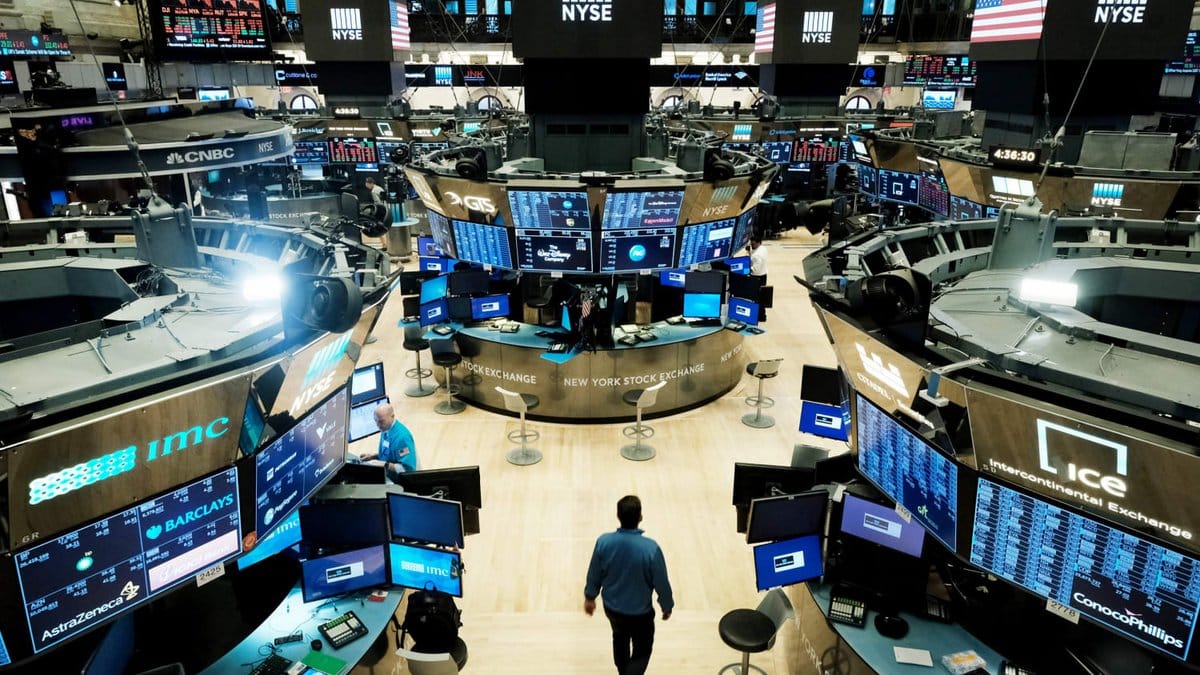
Market Overview
U.S. equity markets closed May with a powerful monthly rally, pushing all major benchmarks to fresh all-time highs. The S&P 500 settled at 7,580.06, gaining approximately 5% for the month and advancing 10.7% year-to-date. The Dow Jones Industrial Average closed at 51,032.46, up roughly 3% in May, while the Nasdaq Composite surged more than 8% during the month, outperforming peers as technology shares continued to lead. The Russell 2000 small-cap index also participated in the rally, with futures pointing to continued gains as June begins.
The CBOE Volatility Index (VIX) retreated to 15.32, declining 2.67% and signaling reduced near-term fear in the options market. Market breadth was healthy, with the information technology sector leading gains broadly. Energy was the notable laggard, as reports of potential US-Iran ceasefire negotiations pressured crude oil prices sharply lower during the month, with WTI crude logging its biggest monthly decline since April 2025, falling nearly 17% in May before rebounding to approximately $89 per barrel on Sunday.
As June opens, S&P 500 futures are up 0.3%, Nasdaq 100 futures are advancing 0.6%, and Dow futures are up 0.1%, suggesting a continuation of the bullish trend as investors position ahead of a key economic data week.
Top Market Movers
AI Semiconductor Stocks Extend Historic Run
Memory chipmaker Micron Technology (MU) surged 19.3% last week, pushing past a $1 trillion market capitalization milestone — a threshold South Korea's SK Hynix reached hours later. An unprecedented global buildout of AI data centers has created a severe supply shortage of high-bandwidth memory chips, squeezing prices sharply higher. Micron's ascent has been supported by multiple Wall Street firms issuing $1,000 price targets, reflecting extraordinary conviction in the AI-driven memory cycle.
Investment implications: The memory chip sector is experiencing a structural demand shift driven by AI infrastructure spending. Investors with exposure to Micron, SK Hynix, and Samsung Electronics may benefit from continued pricing power as data center operators compete for limited HBM supply. However, the rapid valuation expansion warrants attention to potential mean reversion if AI capital expenditure growth moderates.
Dell Technologies and Snowflake Post Explosive Earnings
Dell Technologies (DELL) shares soared 32.8% following an earnings beat fueled by a staggering 757% year-over-year surge in AI server revenue. Snowflake (SNOW) shares skyrocketed 36.5% after the cloud-native data platform reported results that exceeded expectations, boosted full-year guidance, and announced a $6 billion AI compute deal using Amazon's in-house chips. Snowflake noted that AI tools are driving a substantial shift in its revenue potential. Both companies have risen dramatically since March 30, with Dell up nearly 150% and Snowflake up over 60%.
Investment implications: The AI infrastructure buildout is creating a rising tide for companies across the hardware and software stack. Dell's server business and Snowflake's data platform are both beneficiaries of enterprise AI adoption. Investors should monitor whether these growth rates are sustainable as the initial wave of AI infrastructure spending matures into optimization and efficiency phases.
Hewlett Packard Enterprise Reports Q2 Earnings After Market Close
Hewlett Packard Enterprise (HPE) is reporting Q2 fiscal 2026 earnings after the market close today, with analysts expecting EPS of $0.53 (a 39.5% year-over-year increase) and revenue of approximately $9.78 billion (a 28% increase from the year-ago quarter). HPE entered the session near all-time highs, with extended trading on Friday showing shares at $44.32, up 2.92%. The company's AI server and hybrid cloud segments are expected to be key growth drivers, and HPE introduced a new CPU server with NVIDIA's Vera CPU purpose-built for agentic AI on the eve of the report.
Investment implications: HPE's results will serve as an important data point for the broader enterprise AI infrastructure theme. A beat and raise scenario could provide further validation of the AI capex cycle and lift the broader technology sector. Investors should watch management commentary on backlog, margins, and demand visibility for the second half of fiscal 2026.
Oil Rebounds on US-Iran Stalemate
Crude oil prices rebounded sharply on Sunday and Monday after pulling back late last week. West Texas Intermediate (WTI) rose 2.88% to approximately $89.88 per barrel, while Brent crude advanced 2.48% to $93.38. Iran's chief negotiator warned that Tehran would not trust Washington or agree to any deal unless its rights were fully secured, underscoring the gap between the two sides. Reports that President Trump sent back a tougher proposal further complicated negotiations. Despite the rebound, WTI logged a nearly 17% decline in May as ceasefire optimism had briefly dominated.
Investment implications: Oil's sharp two-way price action reflects the binary nature of the US-Iran negotiation outcome. Energy sector investors face elevated uncertainty, with Brent still up more than 25% since the war began in late February. A confirmed ceasefire and reopening of the Strait of Hormuz could push oil significantly lower, reducing inflation pressure. Conversely, a breakdown in talks could quickly rebuild the risk premium and reignite energy inflation concerns.
Economic Data & Fed Watch
The Federal Reserve's preferred inflation gauge, the Core Personal Consumption Expenditures (PCE) price index, rose 3.3% year-over-year in April, in line with estimates but still well above the Fed's 2% target. Headline PCE, which includes food and energy, accelerated to 3.8% year-over-year — its highest reading since May 2023 — driven primarily by surging gasoline prices amid the Iran conflict. The data reinforced the view that the Fed faces a difficult policy environment, with a growing chorus of officials not ruling out a rate hike if inflation becomes persistent.
The 10-year U.S. Treasury yield stood at approximately 4.45% as of May 28, reflecting the elevated inflation environment and reduced market confidence in near-term Fed rate cuts. Market pricing now assigns a 67% probability of no rate cuts in 2026, with only an 18% chance of a single 25-basis-point reduction. The U.S. dollar strengthened through May as resilient economic data and sticky inflation reduced confidence in near-term Fed easing, making the USD more attractive relative to currencies where central banks appear closer to cutting rates.
The S&P Global Flash Manufacturing PMI rose to 55.3 in May, the highest reading since May 2022, up from 54.5 in April, signaling robust expansion in the manufacturing sector. The ISM Manufacturing PMI for April held at 52.7, matching its highest level since August 2022.
Investment implications: The combination of sticky inflation, strong economic data, and a hawkish Fed posture suggests that the “higher for longer” interest rate environment will persist through at least the summer. Rate-sensitive sectors such as utilities, real estate investment trusts, and long-duration bonds may continue to face headwinds, while financials and value-oriented cyclicals could benefit from the sustained rate environment.

International Markets
Asian equity markets firmed broadly on Monday, driven by the AI investment boom that continues to dominate regional sentiment. Japan's Nikkei 225 rose 1.0% to 67,020.75, building on a nearly 5% gain last week to all-time highs, as semiconductor and AI-related stocks continued to attract capital. South Korea's KOSPI surged 4.0%, boosted by chipmakers including Samsung Electronics, which rose more than 9%, and SK Hynix, which gained over 2%. Taiwan's TWSE climbed nearly 6% last week, with Nvidia CEO Jensen Huang's keynote at the Computex trade show in Taipei expected to set a positive tone for the AI supply chain.
In Europe, the London FTSE 100 closed down 0.1% at 10,416.07, while EUROSTOXX 50 futures dipped 0.1% and DAX futures were flat. European markets face a more challenging backdrop, as the European Central Bank appears closer to easing than the Fed, which has weighed on the euro. The euro/dollar pair slipped to 1.1645 from $1.1663 on Friday. The pound/dollar edged down to 1.3455. The dollar/yen rose to 159.48, reflecting continued yen weakness as the Bank of Japan maintained its cautious policy stance. In China, the Shanghai Composite rose 0.4% to 4,084.46, though mainland markets lagged regional peers as caution over the domestic outlook tempered buying. China's official manufacturing PMI for May came in flat at 50.0 after two months of expansion.
Looking Ahead
The week of June 1–5 is packed with market-moving events. Monday brings Hewlett Packard Enterprise's Q2 earnings report after the close, along with U.S. and Canadian S&P Global Manufacturing PMI data. Tuesday features Dollar General earnings, which will provide insight into the ongoing consumer spending divergence between income cohorts. Wednesday is the most significant earnings day of the week, with Broadcom (AVGO) and CrowdStrike (CRWD) both reporting — two bellwether AI infrastructure and cybersecurity names whose results could significantly move the broader technology sector. Medtronic also reports Wednesday.
The week's most important economic release arrives on Friday with the U.S. nonfarm payrolls report for May. April's report showed payrolls edging up by only 115,000, and the May data will be closely scrutinized for signs of labor market resilience or deterioration. A strong jobs number could further reduce expectations for Fed rate cuts and push Treasury yields higher, while a weak print might revive rate-cut hopes. The U.S. unemployment rate and Canadian unemployment data are also due Friday.
Beyond the data calendar, investors will closely watch developments in the US-Iran negotiations for any breakthrough or breakdown that could dramatically reprice energy markets. Nvidia CEO Jensen Huang's keynote at Computex in Taipei on Monday is also a key event, with traders expecting Huang to outline new product developments and AI infrastructure demand signals that could further fuel the semiconductor rally. Oracle reports earnings on June 10, and Adobe follows on June 11, providing additional visibility into enterprise AI software adoption trends.
Disclaimer: This analysis is for informational and educational purposes only and should not be considered financial advice. Market conditions can change rapidly, and past performance does not guarantee future results. Always conduct your own research and consult with a qualified financial advisor before making investment decisions.