



U.S. equity markets suffered their worst session in over a year on Wednesday, July 29, 2026, as the Federal Reserve's decision to hold interest rates steady — paired with hawkish commentary from Chair Kevin Warsh and a surprise Iranian missile attack on U.S. forces in the Middle East — sent investors rushing for the exits. The Dow Jones Industrial Average recorded its steepest single-day point decline since April 2025, and the Nasdaq Composite extended its losing streak to six consecutive sessions. Futures markets, however, rebounded overnight as strong earnings from Microsoft and Fortinet offered a counterweight to the day's anxiety.
Market Overview
Wednesday's session was defined by a confluence of macro shocks that overwhelmed early resilience. The Dow Jones Industrial Average plunged 1,153.18 points, or 2.19%, closing at approximately 51,594 — its worst single-day performance since the tariff-driven sell-off of April 2025. The S&P 500 declined 1.52% to 7,316.15, falling back below the key short-term trading range of 7,425 to 7,550 and approaching the June support zone near 7,240 to 7,300. The Nasdaq Composite fell 1.74%, ending the session more than 10% off its intraday record high and marking its sixth straight day in negative territory. The Russell 2000 small-cap index also declined, reflecting broad-based risk aversion across market capitalizations.
Market sentiment shifted decisively bearish as the Federal Reserve's July FOMC decision, combined with geopolitical escalation in the Middle East, drove a flight to safety. The Industrials sector led declines among the S&P 500's eleven sectors, falling more than 2.2%, while semiconductor stocks extended a brutal multi-day rout. Energy was the notable exception, surging as oil prices spiked on Middle East tensions. The put-call ratio ended the session near 0.98, indicating elevated hedging activity consistent with neutral-to-bearish sentiment.
Top Market Movers
Oil Prices Surge on Iran Missile Attack: U.S. benchmark West Texas Intermediate crude futures jumped 7.4% to $85.10 per barrel, while global benchmark Brent crude surged 8.2% to $91 per barrel, after U.S. Central Command confirmed that Iran had launched multiple ballistic missiles in a surprise attack on American forces in the Middle East. President Trump vowed a forceful response, amplifying geopolitical risk premiums across energy markets. Brent briefly pulled back below $90 in Asian trading on Thursday as tanker traffic data showed continued flow through the region, but the situation remains highly fluid.
Investment implications: Energy sector ETFs and integrated oil majors stand to benefit from sustained elevated crude prices. However, investors should monitor escalation risk carefully, as a broader regional conflict could simultaneously weigh on global growth expectations and equity valuations.
Semiconductor Sector Rout Deepens: The iShares Semiconductor ETF (SOXX) closed down more than 5%, while the Roundhill Memory ETF (DRAM) fell over 6%, extending a multi-day collapse driven by concerns over AI spending sustainability and disappointing earnings from South Korean chipmakers. Micron Technology (MU) and Sandisk (SNDK) were among the S&P 500's worst performers, falling between 4% and 6%. SK Hynix shares declined 2.5% despite a record quarterly operating profit, as investors questioned the durability of AI-driven memory demand at current valuations.
Investment implications: The semiconductor sector's sharp correction may present a longer-term entry opportunity for patient investors, given that AI infrastructure spending remains structurally intact. However, near-term volatility is likely to persist until clarity emerges on the sustainability of AI capex cycles.
Microsoft Surges, Meta Stumbles in After-Hours Trading: After the closing bell, Microsoft (MSFT) jumped approximately 8-9% in extended trading after reporting fiscal Q4 revenue of $90.01 billion, beating estimates of $87.62 billion. Azure cloud revenue grew 43% at constant currency, surpassing the 40.2% StreetAccount estimate, and Azure annual revenue crossed $100 billion for the first time. In contrast, Meta Platforms (META) tumbled nearly 9% after posting EPS of $6.18, missing estimates by $1.04, and guiding Q3 revenue to $61–$64 billion — the low end of which fell short of the $63.15 billion consensus. Meta's free cash flow fell 91% year-over-year as AI infrastructure spending weighed heavily on margins.
Investment implications: Microsoft's results underscore the divergence between AI platforms that are monetizing their investments effectively versus those still in the heavy-spending phase. The contrast between MSFT and META may accelerate a rotation within the Magnificent Seven cohort toward companies demonstrating clearer AI return on investment.
Fortinet (FTNT) and GE HealthCare (GEHC) Outperform: Cybersecurity firm Fortinet soared more than 12% in after-hours trading on strong Q2 billings and a Q3 outlook that solidly topped Wall Street expectations. GE HealthCare Technologies jumped 12% during regular trading following a strong earnings report, while Lennox International (LII) led the S&P 500 lower with a 20% decline after disappointing results.
Investment implications: Fortinet's results reinforce the secular growth thesis for enterprise cybersecurity spending, which appears resilient even in a risk-off environment. GE HealthCare's strength highlights continued demand for medical imaging and healthcare technology infrastructure.
Economic Data & Fed Watch
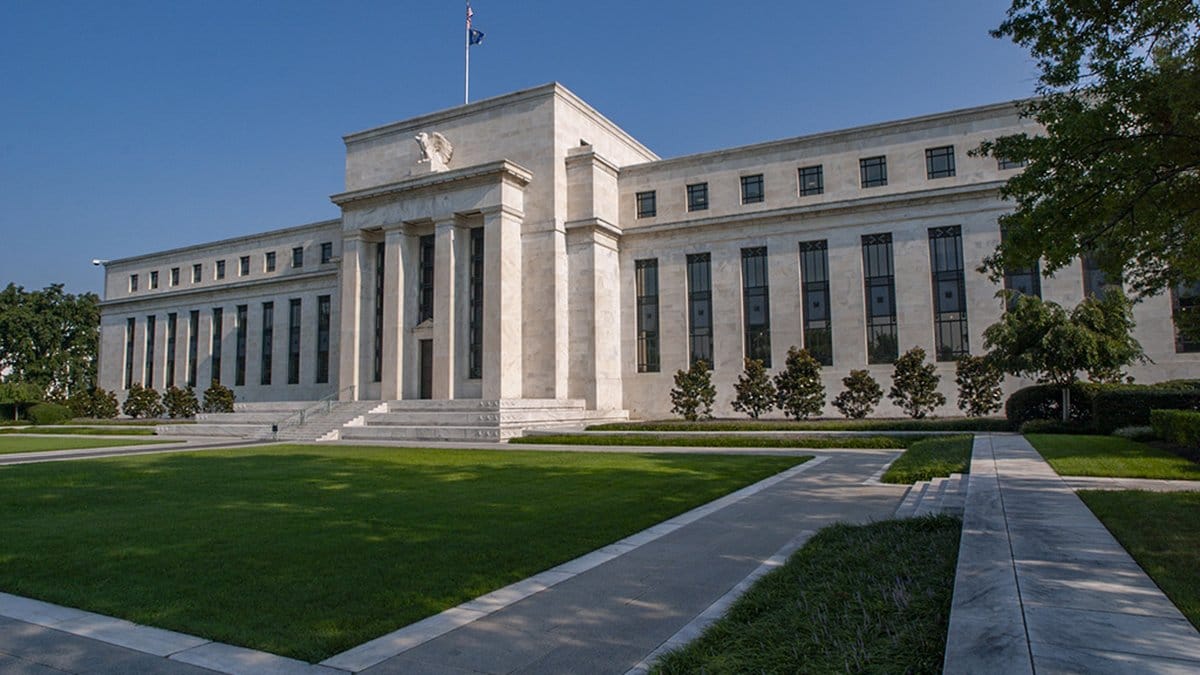
The Federal Open Market Committee voted 9-3 to hold the federal funds rate steady at 3.50%–3.75% at its July 28–29 meeting, in line with broad market expectations. However, the three dissents — from Cleveland Fed President Beth Hammack, Minneapolis Fed President Neel Kashkari, and Governor Christopher Waller — signaled a meaningful hawkish faction within the committee. Fed Chair Kevin Warsh declined to provide forward guidance, stating that the committee is in a “rigorous review” mode and will “not hesitate to act” if inflation does not return to the 2% target.
Bond markets reacted sharply to the hawkish undertones. The 30-year Treasury yield surged 10 basis points to above 5.2%, hitting its highest level since June 2007. The 10-year Treasury yield rose approximately 7 basis points to 4.677%, while the 2-year yield slid 4 basis points to 4.236%, steepening the yield curve. According to the CME FedWatch tool, traders are now pricing in approximately a 54% probability of a rate hike at the September FOMC meeting, down from 79% before the July decision, as the market digests the committee's internal divisions. The U.S. dollar index fell 0.5% to 100.90, while gold futures rose 0.8% to $4,070 per ounce.
Looking ahead to Thursday, July 30, markets will receive the advance estimate of Q2 2026 GDP and the June PCE price index — the Fed's preferred inflation gauge — both at 8:30 a.m. ET. Weekly initial jobless claims are also due. These data points will be critical in determining whether the Fed's hawkish dissenters gain further traction heading into the September meeting.
Investment implications: The Fed's “uncomfortable hold” — as characterized by Thornburg Investment Management — leaves markets in a state of elevated uncertainty. A GDP reading that surprises to the upside, or a PCE print above the 3.3% core consensus, could significantly increase the probability of a September rate hike and further pressure long-duration assets.
International Markets
Asian equity markets were broadly lower on Wednesday before staging a partial recovery in Thursday's session. Japan's Nikkei 225 slipped 0.25% on Wednesday but was poised to rise approximately 2% on Thursday, though it remained on track for a 3% weekly decline. South Korea's KOSPI rose 4% in choppy Thursday trading after suffering a historic rout earlier in the week — a decline that wiped more than $2 trillion from the country's equity market and prompted Finance Minister Koo Yun-cheol to apologize for the introduction of single-stock leveraged ETFs. Samsung Electronics provided some relief after reporting a record second-quarter operating profit, up 1,814% year-over-year on soaring AI chip demand, with revenue rising 130%.
The MSCI Asia-Pacific ex-Japan index rose over 1% in early Thursday trading, while Hong Kong's Hang Seng futures pointed to a higher open near 25,959. European futures were 0.3% higher in Asian hours. Nasdaq 100 futures climbed 1.2% overnight, suggesting a potential recovery open for U.S. markets on Thursday. Brent crude eased slightly below $90 per barrel in Asian trading after Wednesday's 7%+ spike, though geopolitical risk premiums remain elevated. The U.S. dollar remained on the defensive following the Fed's divided decision, with currency markets uncertain about the trajectory of U.S. monetary policy relative to the Bank of England, which is also scheduled to announce its rate decision on Thursday, July 30.
Looking Ahead
Thursday, July 30 brings a heavy slate of economic data and corporate earnings that could significantly reshape market expectations. The Bureau of Economic Analysis will release the advance estimate of Q2 2026 real GDP at 8:30 a.m. ET, alongside the June PCE price index — the Federal Reserve's preferred inflation measure. Consensus estimates call for headline PCE inflation at an annual rate of approximately 3.7%, with core PCE (excluding food and energy) expected at 3.3%. Weekly initial jobless claims are also due at the same time. Any significant deviation from these estimates will likely move Treasury yields and equity futures sharply.
On the earnings front, Bristol-Myers Squibb reports before the opening bell, while Amazon (AMZN) and Apple (AAPL) are set to report after the close — two of the most closely watched earnings releases of the season. Wall Street expects Amazon Q2 revenue of approximately $196.4 billion (up 17% year-over-year) and EPS of $1.82, with particular focus on AWS cloud growth. Apple consensus calls for EPS of $1.89 on revenue of $108.86 billion. Coinbase and Strategy also report Thursday afternoon, with crypto markets closely watching both. The Bank of England rate decision is due Thursday as well, adding another layer of global macro risk to an already event-dense day.
Beyond Thursday, the monthly Bitcoin and Ether options expiry on Deribit settles Friday, July 31, ahead of the July jobs report on August 7 and July CPI on August 12. The density of policy and data catalysts over the next two weeks makes this one of the most consequential periods for markets in the second half of 2026.
Disclaimer: This analysis is for informational and educational purposes only and should not be considered financial advice. Market conditions can change rapidly, and past performance does not guarantee future results. Always conduct your own research and consult with a qualified financial advisor before making investment decisions.