



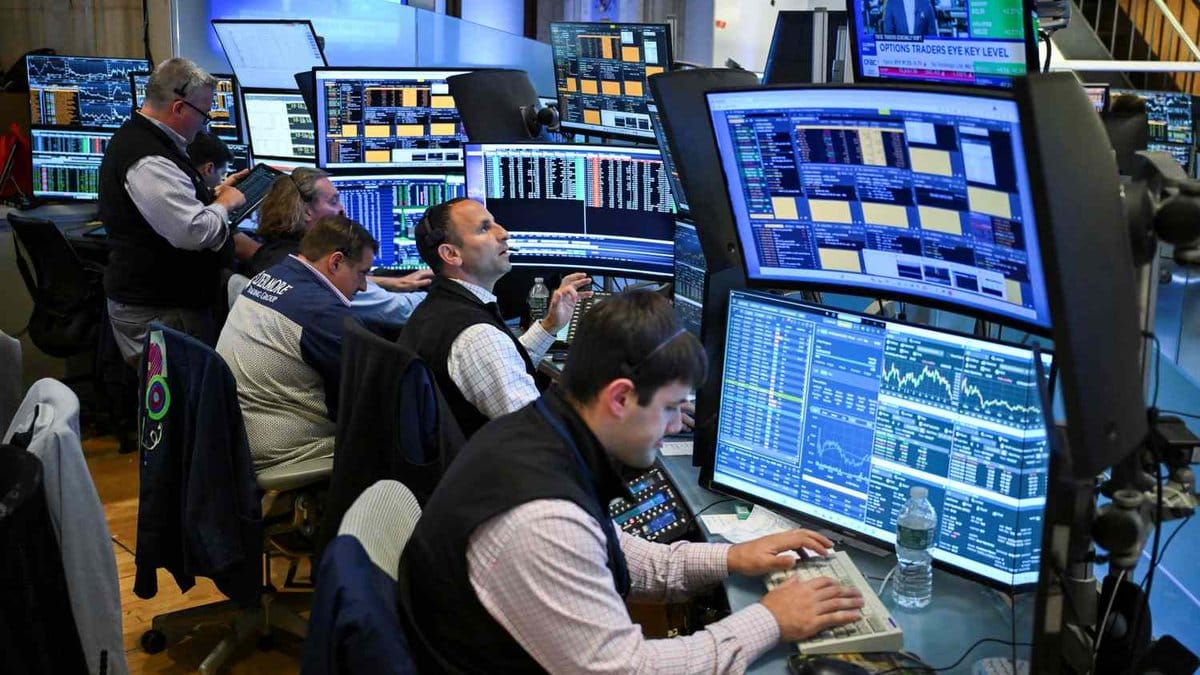
U.S. equity markets delivered a split verdict on Tuesday, July 28, 2026, as a powerful rotation from technology into traditional sectors drove the Dow Jones Industrial Average sharply higher while semiconductor stocks dragged the Nasdaq Composite into the red. With the Federal Reserve's pivotal rate decision due Wednesday afternoon and a slate of mega-cap earnings — Microsoft, Meta, Apple, and Amazon — dominating the week's agenda, investors are navigating one of the most consequential stretches of the year. The session underscored a market in transition, where the AI-driven momentum trade that defined the first half of 2026 is being stress-tested against rising valuations, geopolitical oil shocks, and an unpredictable new Fed chair.
Market Overview
The major U.S. indexes closed in divergent fashion on Tuesday. The Dow Jones Industrial Average surged 537.24 points, or +1.03%, to close at 52,747.32, marking its third consecutive winning session. The S&P 500 added a modest +0.21%, settling at 7,428.78, as gains in defensive and cyclical sectors offset continued weakness in technology. The Nasdaq Composite edged lower by -0.22% to close at 24,876.91, weighed down by a fourth straight day of semiconductor selling. The Russell 2000 small-cap index eked out a gain of +0.20% to 2,953.80, reflecting cautious optimism in rate-sensitive smaller companies ahead of the Fed decision.
The overarching theme was a broad-based sector rotation that has been building for six to eight weeks. Defensive sectors — health care and consumer staples — hit fresh all-time highs, while the Technology Select Sector SPDR Fund (XLK) fell to its lowest level since May 7. The State Street Health Care Select Sector SPDR ETF (XLV) surged 2.7%, and the Financial Select Sector SPDR ETF (XLF) reached a record high. Falling oil prices, which dropped roughly 4–5% on easing Middle East tensions, provided additional support for consumer-facing sectors. However, renewed Iranian missile attacks in after-hours trading reversed some of those gains and injected fresh uncertainty into Wednesday's open.
Top Market Movers
Semiconductor Sector Rout Deepens
The VanEck Semiconductor ETF (SMH) fell more than 3% on Tuesday, extending its monthly loss to over 19% — on pace for its worst month since 2008. The iShares Semiconductor ETF (SOXX) tumbled nearly 5% intraday, now down more than 23% for July, which would mark its steepest monthly decline since 2021. Individual chip names bore the brunt: Micron Technology (MU) fell 8.8%, AMD dropped 8.1%, Intel (INTC) retreated 5.9%, and Sandisk (SNDK) plunged 14.2%, now off 50% from its June all-time high of $2,335 — though still up more than 360% year-to-date. The sell-off was compounded by the strong IPO of China's CXMT, raising competitive concerns in the memory chip market.
Investment implications: The semiconductor rout reflects a fundamental reassessment of AI-driven capital expenditure returns. Investors are questioning whether the $700 billion in hyperscaler capex projected for 2026 will translate into sustainable earnings growth. Selective exposure to chip equipment makers with diversified revenue streams may offer more resilience than pure-play memory names at current valuations.
Earnings Movers: Dow Leaders and Laggards
Strong corporate earnings provided the Dow's fuel. Sherwin-Williams (SHW) surged +8% after a better-than-expected Q2 beat, while Coca-Cola (KO) jumped +5% on a top-and-bottom-line beat plus a hike to its full-year outlook. Boeing (BA) gained +4.5%. On the downside, Corning (GLW) plummeted -16% — its worst single-day decline since October 2002 — after Q3 revenue guidance came in below consensus despite a Q2 earnings beat. UPS fell -6.5% on disappointing results. Apple (AAPL) briefly touched a $5 trillion market cap for the first time, closing up approximately +1% at $340.08 ahead of its Thursday earnings report.
Investment implications: The divergence between Dow gainers and Nasdaq laggards illustrates the market's preference for companies with tangible earnings beats and visible pricing power. Consumer staples and industrials with strong guidance are attracting rotation capital. Apple's $5 trillion milestone, achieved with comparatively modest capex spending, highlights investor appetite for the “anti-capex” trade within mega-cap tech.
Oil Price Volatility and Energy Sector Impact
West Texas Intermediate (WTI) crude futures fell approximately 4.3% to $79.26 per barrel during Tuesday's session as U.S.-Iran diplomatic discussions over the Strait of Hormuz provided temporary relief. Brent crude shed 4.8% to $84.09. However, after markets closed, Iran launched ballistic missiles at U.S. forces, causing WTI to spike more than 3% back above $82 in after-hours trading. Brent futures jumped over 3% to $87.19 in Asian trading Wednesday. U.S. gasoline prices have returned above $4 per gallon nationally.
Investment implications: The oil price whipsaw underscores the fragility of any Middle East ceasefire narrative. Energy sector stocks — including Woodside, Santos, and Inpex — are expected to follow crude higher. Investors with inflation-sensitive portfolios should monitor the Strait of Hormuz situation closely, as sustained disruption could reignite the inflationary pressures that have already pushed the 10-year Treasury yield toward 4.72% this month.
Economic Data & Fed Watch
The Federal Reserve's two-day FOMC meeting concluded Wednesday, July 29, with markets in an unusually high state of uncertainty. Under Fed Chair Kevin Warsh — who took the helm in May and deliberately pulled back from the forward guidance practices of his predecessors — traders were pricing in a 31–33% probability of a 25-basis-point rate hike, with the majority still expecting the Fed to hold the benchmark federal funds rate at its current target range of 3.50%–3.75%. The CME FedWatch tool showed a 75% probability of at least one hike by September, up from 64% a week earlier.
The economic backdrop is mixed. Consumer confidence slipped to 90.8 in July, below the Dow Jones consensus of 92.0 and down from June's 92.2, as consumers remained concerned about inflation and labor market conditions. The U.S. goods trade deficit narrowed to $101.5 billion in June from $105.9 billion in May, a positive sign for Q2 GDP. The S&P CoreLogic Case-Shiller 20-City Home Price Index rose 1.6% year-over-year in May, the fastest pace since August 2025. Inflation remains elevated at approximately 3.5%, well above the Fed's 2% target, while the unemployment rate stands at 4.2%.
The 10-year Treasury yield closed at 4.604%, down 4–5 basis points on the session, after hitting a high of nearly 4.72% earlier in the month amid Iran-driven inflation fears. The U.S. Dollar Index (DXY) traded at approximately 101.44, near a one-month high, as markets awaited the Fed's decision. Gold futures declined 1.2% to $4,025 per ounce, with spot gold near $4,024 ahead of the rate decision.
Investment implications: The Fed's decision Wednesday is a binary risk event. A hold would likely provide relief to rate-sensitive equities and bonds, while a surprise hike could trigger a sharp repricing across asset classes. The renewed oil spike from Iranian missile attacks may tip the balance toward a more hawkish outcome. Investors should consider reducing duration risk in fixed-income portfolios and maintaining hedges against a potential rate surprise.
International Markets
Asian equity markets extended their selloff on Wednesday, with the AI-driven chip rout spreading across the region. South Korea's KOSPI sank over 11% to its lowest level since early April, following a more than 10% decline on Tuesday — a historic two-day collapse driven by the SK Hynix earnings miss. SK Hynix reported a remarkable 557% surge in quarterly operating profit, but the result fell short of lofty market expectations, sending shares down 9%. Taiwan's TAIEX fell 5%, while Japan's Nikkei 225 slid 2.6%, compounded by a 7.1-magnitude earthquake in Kyushu. The MSCI Asia-Pacific ex-Japan index dropped 2.45%. Hong Kong's Hang Seng bucked the trend, rising 1.4%, supported by strong July outperformance.
European markets fared better on Tuesday. The Euro STOXX 50 rose 0.2% and the broader STOXX 600 gained 0.4%, lifted by strong earnings from Unilever (+8.5% on a guidance hike), Mercedes-Benz (+2.9%), and Safran (+3%). However, ASML dropped 3% amid reports of new Chinese competition in chip equipment, and Barclays fell 5.6% after its balance sheet release. Nasdaq futures were down 0.7% in Asian hours, signaling a cautious open for U.S. markets Wednesday. The EUR/USD held at 1.1390, while GBP/USD was steady at 1.3292. The USD/JPY traded at 163.80, with the yen remaining under structural pressure.
Looking Ahead
Wednesday, July 29 is the most consequential single day of the week. The Federal Reserve rate decision is due at 2:00 PM ET, followed by Fed Chair Kevin Warsh's press conference — the first major test of his no-guidance communication style. After the close, Microsoft (MSFT) and Meta Platforms (META) both report earnings, with analysts projecting Microsoft EPS of $4.24 on revenue of approximately $87.6 billion and Meta's results expected to reflect its $125–$145 billion full-year capex commitment to AI infrastructure. Both companies enter earnings with roughly 95% historical beat rates, but guidance language on AI spending returns will be the critical variable.
On Thursday, July 30, the Bureau of Economic Analysis releases its advance Q2 GDP estimate, with economists forecasting annualized growth of approximately 1.8%, down from 2.1% in Q1. Much of the remaining growth is expected to be attributable to data center construction and hyperscaler AI spending. Also Thursday, Apple (AAPL) and Amazon (AMZN) report after the close, with Amazon's AWS growth trajectory and AI infrastructure commentary expected to be the primary market catalyst. Apple options pricing implies a move of up to 5% in either direction following results.
Friday brings ExxonMobil, Chevron, Moderna, and AbbVie earnings, alongside the next round of energy sector commentary on oil supply dynamics. The following week's calendar features the July Non-Farm Payrolls report on Friday, August 7, which will be a critical data point for the September Fed meeting. Investors should also monitor any developments in the U.S.-Iran Strait of Hormuz situation, as further escalation could rapidly reprice energy, inflation expectations, and rate probabilities simultaneously.
Disclaimer: This analysis is for informational and educational purposes only and should not be considered financial advice. Market conditions can change rapidly, and past performance does not guarantee future results. Always conduct your own research and consult with a qualified financial advisor before making investment decisions.