Earnings Season Overview: Tech Leads a Resilient Quarter
The first-quarter earnings season has closed with remarkable strength, defying earlier market concerns about slowing economic growth. With nearly all S&P 500 companies having reported, the blended year-over-year earnings growth rate reached an impressive 28.6%, marking the highest growth pace since the fourth quarter of 2021. The results showcase a resilient corporate environment, particularly among large-cap companies that have successfully navigated persistent inflation and shifting interest rate expectations.
A staggering 85% of S&P 500 companies beat consensus earnings estimates, a rate that sits comfortably above both the five-year and ten-year historical averages. Furthermore, the magnitude of these earnings surprises was substantial, coming in at 16.7% above estimates—the widest margin seen since early 2021. The technology sector was the undisputed engine of this growth, delivering a blended growth rate of 54.3%, heavily driven by massive capital expenditures in artificial intelligence infrastructure. However, the market reaction has been mixed, as elevated valuations mean that even exceptional results are sometimes met with “sell the news” responses.
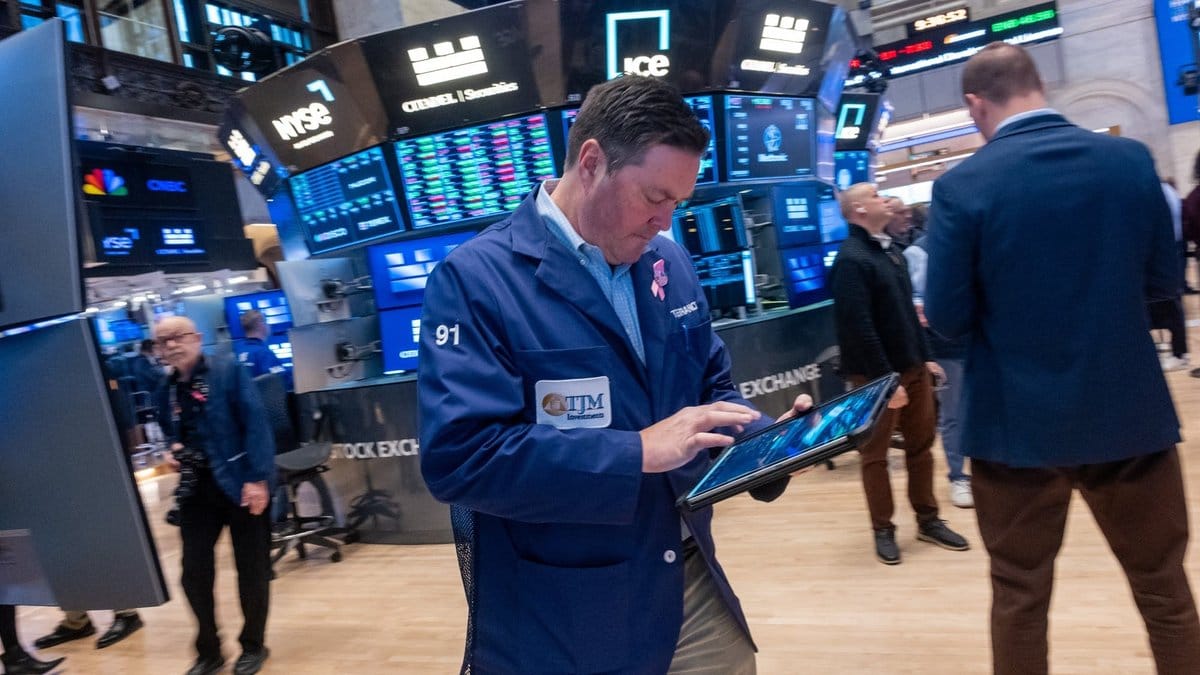
Spotlight Earnings Analysis
Oracle Corporation (ORCL)
Oracle delivered a standout fiscal fourth-quarter performance, reporting record total revenues of $19.2 billion, a 21% increase year-over-year. The company's cloud transition is accelerating rapidly, with total cloud revenues surging 47% to $9.9 billion. Most notably, Cloud Infrastructure (IaaS) revenue skyrocketed 93% to $5.8 billion. Oracle also reported an adjusted earnings per share of $2.03, beating the $1.96 consensus estimate. The company's remaining performance obligations (RPO) jumped 363% to $638 billion, largely driven by massive AI contracts where customers prepay for GPU capacity. Despite the strong numbers, the stock initially dropped as the company announced plans to raise an additional $20 billion in equity and debt to fund its aggressive data center buildout.
Investment implications: Oracle is firmly establishing itself as a premier AI hyperscaler. While the massive capital expenditure requirements ($70 billion projected for FY2027) may cause short-term volatility, the company's surging RPO and critical role in AI infrastructure provide a strong long-term growth narrative for patient investors.
Adobe Inc. (ADBE)
Adobe reported record fiscal second-quarter revenue of $6.62 billion, representing 13% year-over-year growth and beating analyst expectations. The company posted non-GAAP earnings per share of $5.96, extending its streak of EPS beats to five consecutive quarters. The core driver of Adobe's success was the accelerating monetization of its generative AI tools. AI-first annualized recurring revenue (ARR) tripled year-over-year to exceed $500 million, proving that Adobe's customer base is actively adopting and paying for new AI features. Following the strong results, Adobe raised its full-year FY2026 revenue target to a range of $26.50 billion to $26.60 billion.
Investment implications: Adobe's results alleviate concerns that AI might disrupt its core creative business. Instead, the company is successfully monetizing AI as an add-on, making it a compelling play for investors seeking profitable, cash-generating software companies with clear AI tailwinds.
CrowdStrike Holdings (CRWD)
CrowdStrike posted its best quarter ever, with Q1 FY2027 revenue growing 26% to $1.39 billion and free cash flow hitting a record $468.5 million. The cybersecurity giant saw net new ARR reach $255.8 million, up 32% year-over-year. The company highlighted a “Mythos moment”—a surge in enterprise urgency to secure AI deployments—which drove rapid adoption of its new AI Detection and Response (AIDR) product. Despite beating on all guided metrics, raising its full-year outlook, and announcing a 4-for-1 stock split, the stock experienced a post-earnings selloff, reflecting the extremely high expectations baked into its premium valuation multiple.
Investment implications: CrowdStrike remains a best-in-class cybersecurity platform, and its early leadership in AI security opens a massive new addressable market. However, trading at over 130x forward earnings, the stock requires flawless execution, and investors should be prepared to use pullbacks as potential entry points.

Sector Earnings Themes
The defining theme of the Q1 2026 earnings season has been the relentless spending on artificial intelligence infrastructure. The Information Technology and Financials sectors led the way in mentioning “AI” during earnings calls, but the impact is moving from buzzwords to actual capital expenditures. Hyperscalers continue to spend aggressively, with aggregate 2026 capex estimated near $725 billion. This has created a bifurcated market where companies supplying AI hardware, data center infrastructure, and power solutions are seeing explosive growth, while other sectors face a more cautious consumer environment.
Investment implications: The AI infrastructure buildout is a multi-year secular trend. Investors should look beyond the obvious semiconductor names to secondary beneficiaries, including data center REITs, power management companies, and software firms successfully monetizing AI features. However, caution is warranted regarding market breadth, as the outperformance remains heavily concentrated in mega-cap tech stocks.
Upcoming Earnings to Watch
As the Q1 earnings season wraps up, attention turns to a lighter but still important calendar for the week of June 15-19. Key reports to watch include Dave & Buster's Entertainment (PLAY) on Monday, which will provide insights into consumer discretionary spending and out-of-home entertainment trends. On Tuesday, La-Z-Boy (LZB) will offer a pulse on the housing market and big-ticket consumer purchases.
The highlight of the week will be Wednesday, featuring reports from Jabil (JBL), a key electronics manufacturing services company that is heavily involved in the AI hardware supply chain. Jabil's management recently raised its full-year guidance for AI-related revenue, and investors will be listening closely for updates on data center demand. Additionally, Kroger (KR) reports on Thursday, providing a critical look at food inflation and consumer grocery shopping habits in the face of elevated prices.
Disclaimer: This analysis is for informational and educational purposes only and should not be considered financial advice. Earnings reports can cause significant stock price volatility, and past results do not guarantee future performance. Always conduct your own research and consult with a qualified financial advisor before making investment decisions.