



Market Overview
U.S. equity markets delivered a powerful rally on Monday, June 15, 2026, as a landmark ceasefire agreement between the United States and Iran sent shockwaves of optimism through global financial markets. The announcement, made by President Donald Trump late Sunday via Truth Social, confirmed that the two nations had reached an interim peace deal that would reopen the strategically vital Strait of Hormuz — a waterway through which approximately one-fifth of the world's oil and liquefied natural gas flows — as early as Friday, June 20.
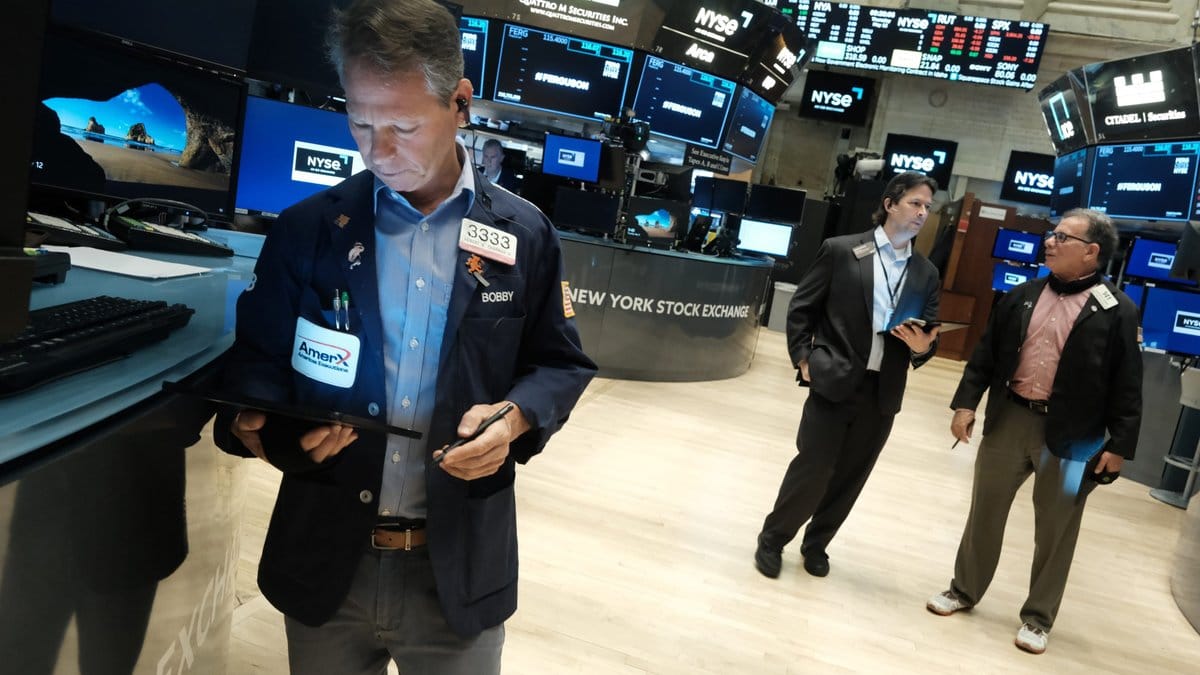
The S&P 500 surged +1.65% to close at 7,554.29, its third consecutive session of gains and its highest close since June 4. The Dow Jones Industrial Average climbed +0.92%, or 468.77 points, to set a fresh all-time record close — its 16th record of the year. The Nasdaq Composite led all major indexes with a gain of +3.07%, powered by a surge in mega-cap technology and semiconductor names. The Russell 2000 small-cap index also participated in the rally, reflecting broad-based risk appetite across the market.
Seven of the eleven S&P 500 GICS sectors finished the session in positive territory. Information Technology led all sectors with a gain of +3.39%, followed by Communication Services (+2.42%) and Consumer Discretionary (+1.91%). On the downside, the Energy sector was the worst performer, shedding -3.58% as crude oil prices plummeted on expectations of renewed supply from the Persian Gulf. The CBOE Volatility Index (VIX) fell 9.1% to close at 17.68, signaling a meaningful reduction in near-term market anxiety.
Top Market Movers
SpaceX (SPCX) Extends Historic IPO Gains
SpaceX shares surged an additional +19.6% on Monday, extending Friday's blockbuster debut — the largest IPO in history — for a cumulative two-day gain of approximately +38% since listing. The Elon Musk-led aerospace and satellite company, which operates the Starlink broadband network, has captured enormous investor enthusiasm as a pure-play on both commercial space and AI-driven connectivity infrastructure. The company's valuation has risen from roughly $137 billion in early 2023 to approximately $1.77 trillion at current prices, making Musk the world's first trillionaire. The Philadelphia Semiconductor Index (SOX) surged +5.4% to a record high alongside the broader tech rally.
Investment implications: SpaceX's continued post-IPO momentum suggests sustained institutional demand for high-growth, technology-driven assets. Investors may consider exposure to the broader space economy and AI infrastructure theme, while monitoring lock-up expiration timelines and post-IPO volatility.
Nvidia (NVDA) Reclaims $5 Trillion Valuation
Nvidia shares climbed as much as +3.5% on Monday, firmly reasserting the AI chipmaker's position above the $5 trillion market capitalization threshold. The rally was amplified by news that a jumbo debt offering from Nvidia drew approximately $85 billion in orders from investors, as the company sought to raise at least $20 billion in a bond sale. The easing of energy-driven inflation fears — courtesy of the US-Iran deal — also reignited the AI trade, as markets interpreted the development as reducing the probability of a more hawkish Federal Reserve stance.
Investment implications: Nvidia remains the bellwether for AI infrastructure investment. The oversubscribed bond offering underscores deep institutional confidence in the company's long-term earnings trajectory. Investors should monitor the Fed's upcoming dot plot for signals on how the Iran deal may alter the rate path.
Fox Corporation Acquires Roku in $22 Billion Deal
Fox Corporation (FOX/FOXA) announced it would acquire streaming platform Roku (ROKU) in a cash-and-stock transaction valued at $22 billion, or $160 per share ($96 in cash and approximately 0.97 Fox Class A shares per Roku share). Fox shares tumbled -15% on the news — a typical acquirer discount — while Roku shares edged down approximately -1%, pulling back from a 20% premarket surge as investors assessed deal execution risk. The combination would merge Fox's sports, news, and entertainment content (including Tubi) with Roku's connected TV platform and first-party audience data.
Investment implications: The deal signals accelerating consolidation in the streaming and connected-TV space. Fox is betting that combining premium content with Roku's distribution platform can compete with Netflix and Amazon Prime Video. Investors in media and streaming should watch for regulatory scrutiny and integration timelines.
Oil Prices Plunge on Hormuz Reopening Prospects
Brent crude futures fell approximately -4.7% to just above $83 per barrel — a three-month low — while West Texas Intermediate (WTI) declined more than -5% but held above $80. The sharp decline reflects market optimism that the Strait of Hormuz, which has been effectively closed to commercial traffic since the escalation of the US-Israel-Iran conflict, will reopen by Friday. However, analysts caution that a return to normal energy flows could take months, given an estimated backlog of 500 vessels waiting to transit the strait and the need to clear Iranian naval mines.
Investment implications: Lower oil prices are a net positive for consumer spending, airline margins, and transportation stocks, while pressuring upstream energy producers. Investors should note that the US Strategic Petroleum Reserve has fallen to its lowest level since 1983 (approximately 340 million barrels), limiting the government's buffer against future supply shocks.

Economic Data & Fed Watch
The Federal Reserve's June 16–17 policy meeting — the first chaired by new Fed Chair Kevin Warsh — is the dominant macro event of the week. Markets are pricing in a 98%+ probability that the Fed holds rates unchanged at the current target range, per CME FedWatch data. However, all eyes are on Warsh's debut press conference on Wednesday for signals about the central bank's forward guidance and its reaction function to recent inflation data.
The backdrop is challenging: headline CPI inflation breached 4.2% in May — the highest level since 2023 — driven largely by energy prices, while core inflation (excluding food and energy) rose approximately 3%. Producer prices surged 6.5%. The US-Iran deal, if it holds, could meaningfully reduce energy-driven inflation pressure in coming months, potentially giving the Fed room to avoid the rate hikes that some market participants had begun to price in. On the economic data front, the Empire State Manufacturing Index fell sharply to 5.7 in June from 19.6, well below expectations, while US industrial production rose only 0.1% in May versus a 0.3% forecast. The NAHB Housing Market Index slipped to 35 from 37, reflecting continued weakness in homebuilder sentiment.
Treasury yields declined modestly as the Iran deal led traders to dial back rate-hike expectations. The 10-year Treasury yield fell approximately 1.5 basis points to 4.467%, while the 2-year yield eased to around 4.09%. The US Dollar Index (DXY) weakened broadly, with the Bloomberg Dollar Spot Index falling 0.3% as risk sentiment improved. EURUSD rose 0.3% to 1.1597, while commodity currencies including the Australian dollar and New Zealand dollar also gained. Gold surged as much as +3.6% to nearly $4,370 per ounce, reflecting both safe-haven demand and reduced rate-hike expectations.
Investment implications: The Fed meeting on Wednesday is the week's critical catalyst. A dovish Warsh press conference — especially if he signals that the Iran deal reduces the inflation risk premium — could extend the equity rally and push yields lower. Investors should position for potential volatility around the Wednesday afternoon announcement and dot plot release.
International Markets
Global markets broadly surged on Monday in response to the US-Iran ceasefire announcement. In Europe, the pan-European Stoxx 600 rose +0.2% to 634.44, briefly touching a record intraday high before fading. The German DAX outperformed with a gain of +1.1% to 24,894.01, led by Deutsche Bank (+4.3%) and cyclical sectors including autos, construction, and travel. The FTSE 100 underperformed, falling -0.4% to 10,430.62, dragged lower by Shell (-4.4%) and BAE Systems (-4.7%) as energy and defense stocks sold off on the peace deal news. The French CAC 40 gained +0.4% to 8,384.01.
In Asia, Monday's session was a standout, with Japan's Nikkei 225 surging +5% to a record high of 69,317.50, led by a broad rally in technology and electronics. South Korea's KOSPI soared +5.2% to 8,545.98, with SK Hynix gaining +6.4%. The MSCI Asia Pacific Index climbed as much as 3.2%, on track for its biggest two-day rally since March 2022. On Tuesday morning (June 16), Asian markets traded more cautiously: the Nikkei was essentially flat, the Hang Seng Index fell approximately -1% to around 24,494 on weak Chinese retail data and losses in internet and technology shares, while the KOSPI extended Monday's gains by a further +1.8% to 8,696. The Shanghai Composite was little changed near 4,096.
In currency markets, the US dollar weakened broadly as risk sentiment improved. USDJPY remained elevated above 160 despite a brief dip, reflecting persistent structural yen weakness ahead of the Bank of Japan's Tuesday rate decision. The BOJ is widely expected to raise its benchmark rate. The Australian dollar gained +0.4% to 0.7075 against the greenback.
Looking Ahead
The week ahead is packed with high-impact catalysts that could determine whether the current rally has further legs. The most significant event is the Federal Reserve's rate decision on Wednesday, June 18, which will also include updated economic projections (the dot plot) and Chair Kevin Warsh's inaugural press conference. Markets will scrutinize every word for clues about whether the Fed views the US-Iran deal as a game-changer for the inflation outlook and whether rate hikes remain on the table for later in 2026.
On the economic data calendar, Tuesday brings May housing starts and building permits, along with export and import price indexes — data points that will inform the inflation debate. Investors will also watch for any further details on the US-Iran interim agreement, including the formal signing ceremony scheduled for Friday in Switzerland. The text of the memorandum of understanding has not yet been publicly released, and uncertainty about its terms is keeping energy traders and shipowners cautious about resuming Hormuz transits.
On the corporate front, the Fox-Roku merger will face initial regulatory scrutiny, and SpaceX's continued post-IPO trading will be closely monitored for signs of stabilization or further momentum. The Bank of Japan's rate decision on Tuesday and the Reserve Bank of Australia's decision on the same day could move currency and bond markets. Notably, US markets will be closed on Friday, June 20, in observance of the Juneteenth federal holiday, as will markets in China, Hong Kong, and Taiwan for the Dragon Boat Festival. Investors should be mindful of reduced liquidity heading into the long weekend, particularly given the scheduled Hormuz reopening on that same day.
The FIFA World Cup, now underway in the United States, is also generating economic tailwinds, with Bank of America estimating a potential $41 billion boost to global GDP from the tournament — a factor that may support consumer discretionary and fintech names in coming weeks.
Disclaimer: This analysis is for informational and educational purposes only and should not be considered financial advice. Market conditions can change rapidly, and past performance does not guarantee future results. Always conduct your own research and consult with a qualified financial advisor before making investment decisions.