



U.S. equity markets closed in a mixed fashion on Tuesday, June 17, 2026, as investors weighed the continued optimism surrounding a tentative U.S.-Iran peace agreement against a rotation out of high-flying technology and artificial intelligence stocks. The session underscored the complexity of the current market environment, where geopolitical relief and sector-specific headwinds are pulling in opposite directions.
Market Overview
The major U.S. indices diverged sharply on Tuesday, reflecting a classic rotation dynamic rather than broad-based selling. The Dow Jones Industrial Average rose approximately 0.7% to close at 52,024.70, marking its second consecutive record close and extending its 2026 year-to-date gain to roughly 8.5%. The blue-chip index benefited from strength in energy, industrials, and consumer staples — sectors that stand to gain from lower oil prices and a potential end to Middle East hostilities.
In contrast, the S&P 500 slipped 0.5% to close at 7,517.40, pulling back to approximately 1.3% below its all-time record set earlier in June. The index remains within striking distance of new highs, and market analysts broadly characterized the session as a healthy consolidation rather than a trend reversal. The Nasdaq Composite bore the brunt of the technology selloff, declining 1.2% to 26,376.34, as semiconductor and AI-infrastructure names faced profit-taking after their explosive recovery from the war-driven lows of late May.
The Russell 2000 small-cap index outperformed its large-cap peers, reflecting the positive impact of lower energy costs on smaller domestic businesses and continued optimism about the economic outlook. Energy stocks were broadly lower as oil prices declined, while financials, healthcare, and consumer discretionary sectors posted modest gains. Market breadth was nearly even, with advancing and declining issues roughly balanced on the NYSE.
Top Market Movers
SpaceX Surpasses Amazon's Market Capitalization: The most dramatic story of the session was SpaceX's continued ascent. Shares of Elon Musk's rocket and space exploration company surged an additional 12.8% on Tuesday, capping a three-day winning streak since its U.S. stock market debut. The rally has propelled SpaceX past Amazon to become the fifth-largest company in the world by market capitalization. The catalyst for Tuesday's gains was the company's announcement that it is moving forward with its acquisition of Cursor, a popular AI coding assistant, in a deal valued at $60 billion. SpaceX's rapid rise reflects both investor enthusiasm for its commercial launch business and growing confidence in its AI and technology ambitions.
Investment implications: SpaceX's acquisition of Cursor signals a deepening convergence between the space and AI sectors. Investors should monitor how this deal affects competitive dynamics in the AI coding tools market, where established players such as Microsoft GitHub Copilot and Alphabet's offerings already hold significant market share.
Oil Prices Collapse Below $80 on U.S.-Iran Deal Optimism: Crude oil prices suffered their sharpest single-session decline in months, with Brent North Sea crude falling 5.1% to $78.96 per barrel and West Texas Intermediate (WTI) dropping 5.8% to $76.05 per barrel. The selloff accelerated after The Wall Street Journal reported that Washington could ease sanctions on Iranian crude as part of the peace framework, potentially allowing Tehran to immediately resume oil exports. Brent has now declined sharply from its $100-plus levels of a few weeks ago, though analysts caution that restoring full Strait of Hormuz operations could take weeks or months.
Investment implications: Lower oil prices represent a significant disinflationary tailwind for the broader economy, potentially giving the Federal Reserve more flexibility on interest rates. Energy sector stocks face near-term headwinds, while airlines, transportation companies, and consumer-facing businesses stand to benefit materially from reduced fuel costs.
Nvidia and Micron Lead AI Chip Selloff: Semiconductor stocks faced significant selling pressure, with Nvidia declining 1.7% and Micron Technology falling 3.5%, the two heaviest drags on the S&P 500. The pullback follows extraordinary gains in the AI chip sector over the past several weeks and reflects investor concerns that valuations may have outpaced near-term earnings fundamentals. Robinhood Markets also fell 1.6% after announcing layoffs of approximately 10% of its full-time workforce.
Investment implications: The rotation out of AI and semiconductor names may present a buying opportunity for long-term investors, though near-term volatility is likely to persist as markets digest the rapid repricing of these assets. Investors should monitor upcoming earnings guidance from major chip companies for clarity on demand trends.
Yum Brands and Dave & Buster's Diverge: In corporate news, Yum Brands climbed 2.2% after announcing the sale of its Pizza Hut chain for $2.7 billion to LongRange Capital, a private equity firm, with its mainland China locations going to Yum China Holdings. Meanwhile, Dave & Buster's Entertainment sank 5% after reporting a weaker-than-expected quarterly profit, highlighting the uneven recovery in consumer discretionary spending.
Investment implications: Yum Brands' strategic divestiture of Pizza Hut may unlock shareholder value by allowing the company to focus on its higher-growth Taco Bell and KFC brands. The Dave & Buster's miss serves as a reminder that consumer spending remains bifurcated, with premium experiences outperforming value-oriented entertainment venues.
Economic Data & Fed Watch
Tuesday's economic data calendar delivered a significant downside surprise in the housing sector. U.S. housing starts plunged 15.4% in May to a seasonally adjusted annual rate of 1.177 million units, well below the consensus estimate of 1.43 million and the lowest reading in several months. Single-family housing starts fell 1.9% to an eight-month low, while building permits declined 0.7% to 1.413 million. The sharp drop reflects the continued impact of elevated mortgage rates — themselves a consequence of the war-driven inflation surge — on residential construction activity.
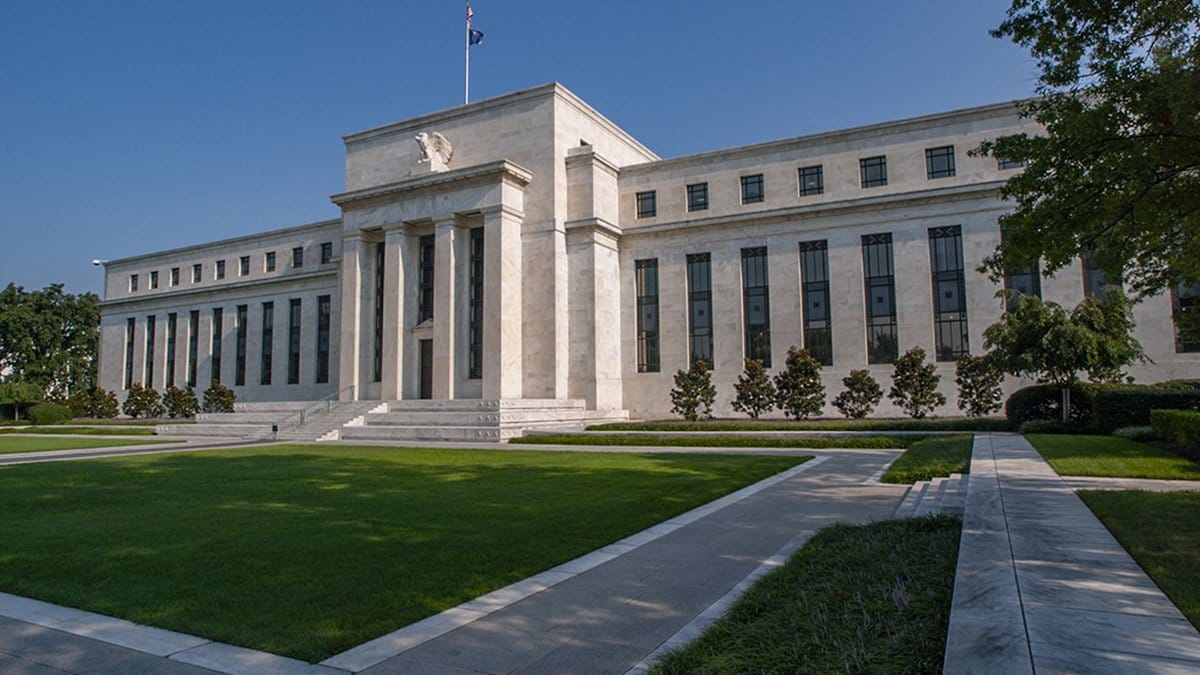
All eyes are now on the Federal Reserve's June 17 policy decision, scheduled for announcement at 2:00 PM ET. Markets are pricing a 97% probability of no change to the current target range of 3.50%–3.75%, according to CME FedWatch data. However, the meeting carries unusual significance as it marks the debut of new Fed Chair Kevin Warsh, who was nominated by President Trump and took the oath of office on May 22, 2026. Investors will scrutinize Warsh's first post-meeting press conference at 2:30 PM ET for signals on tone, forward guidance, and his interpretation of the inflation-versus-labor-market trade-off.
The updated dot plot — the Fed's quarterly Summary of Economic Projections — is the other critical element. The March 2026 median dot implied one additional cut, but with May CPI running at 4.2% year-over-year (core CPI at 2.9%) and energy prices up 23.5%, markets have increasingly priced in the possibility of a rate hike by year-end. The 10-year Treasury yield eased to 4.43% from 4.47% on Monday, while the dollar index was modestly lower.
Investment implications: The combination of a new Fed Chair's debut, an updated dot plot, and persistent above-target inflation creates a high-uncertainty environment for interest rate-sensitive assets. Investors in bonds, real estate, and growth equities should be prepared for potential volatility around the 2:00 PM and 2:30 PM ET announcements.
International Markets
Global markets presented a mixed picture on Tuesday. In Europe, major indices closed higher as investors responded positively to the declining oil prices and the prospect of a sustained peace dividend from the U.S.-Iran negotiations. London's FTSE 100 rose 0.6% to 10,494.21, while Paris's CAC 40 gained 0.8% to 8,447.27 and Frankfurt's DAX edged up marginally to 24,910.41. European analysts noted that several continental indices remain below their pre-war levels, suggesting further upside potential if the peace deal is formalized.
In Asia, the session was dominated by the Bank of Japan's decision to raise its benchmark interest rate by 25 basis points to 1.0% — its highest level since 1995. The move, which followed a similar rate increase by the European Central Bank last week, sent Tokyo's Nikkei 225 briefly above 70,000 for the first time in history before the index settled to a modest gain of 0.1% at 69,404.50. The yen was little changed following the announcement, trading at approximately 160.45 per dollar.
Elsewhere in Asia, Hong Kong's Hang Seng Index fell 1.4% to 24,493.95 and Shanghai's Composite slipped 0.1% to 4,091.89, reflecting lingering concerns about Chinese economic momentum. Seoul's Kospi outperformed with a 2.1% gain to 8,726.60, benefiting from the lower oil price environment. Currency markets saw the euro strengthen to $1.1608 and the British pound rise to $1.3427 against the dollar.
Looking Ahead
The most significant event of the week remains the Federal Reserve's rate decision and Chair Warsh's inaugural press conference on Wednesday, June 17. Markets will parse every word of the statement and the updated dot plot for signals on the path of interest rates through year-end. A hawkish surprise — such as the removal of any easing-bias language or a dot plot showing no cuts — could trigger a sharp repricing in equities and bonds.
Also on Wednesday, investors will watch for the Bank of England's policy decision, where the central bank is widely expected to hold rates steady, and the Swiss National Bank's rate announcement. These decisions, coming in the same week as the BOJ hike and the Fed meeting, represent one of the most consequential weeks for global monetary policy in 2026.
On the earnings front, notable reports scheduled for Wednesday include results from La-Z-Boy (LZB), Progressive Corporation (PGR), Jabil (JBL), and CarMax (KMX). CarMax's results will be closely watched as a barometer of consumer spending on big-ticket discretionary items. Later in the week, investors will also monitor any further developments in the U.S.-Iran peace negotiations, with the formal signing of the memorandum of understanding expected on Friday, June 19. A successful signing would likely provide a further boost to risk assets and extend the decline in oil prices.
Economic data releases for the remainder of the week include weekly jobless claims on Thursday and the Pending Home Sales Index on Wednesday, which will provide additional context on the health of the housing market following Tuesday's weak starts data.
Disclaimer: This analysis is for informational and educational purposes only and should not be considered financial advice. Market conditions can change rapidly, and past performance does not guarantee future results. Always conduct your own research and consult with a qualified financial advisor before making investment decisions.