



Market Overview
The U.S. stock market experienced a mixed session on Wednesday, August 5, 2026, as investors weighed strong corporate earnings against shifting geopolitical dynamics. The Dow Jones Industrial Average extended its winning streak to five sessions, climbing 0.5% to reach a new all-time high. However, the broader market faced headwinds, with the S&P 500 retreating 0.2% from its recent record and the tech-heavy Nasdaq Composite slipping 0.8%, snapping a four-day rally.
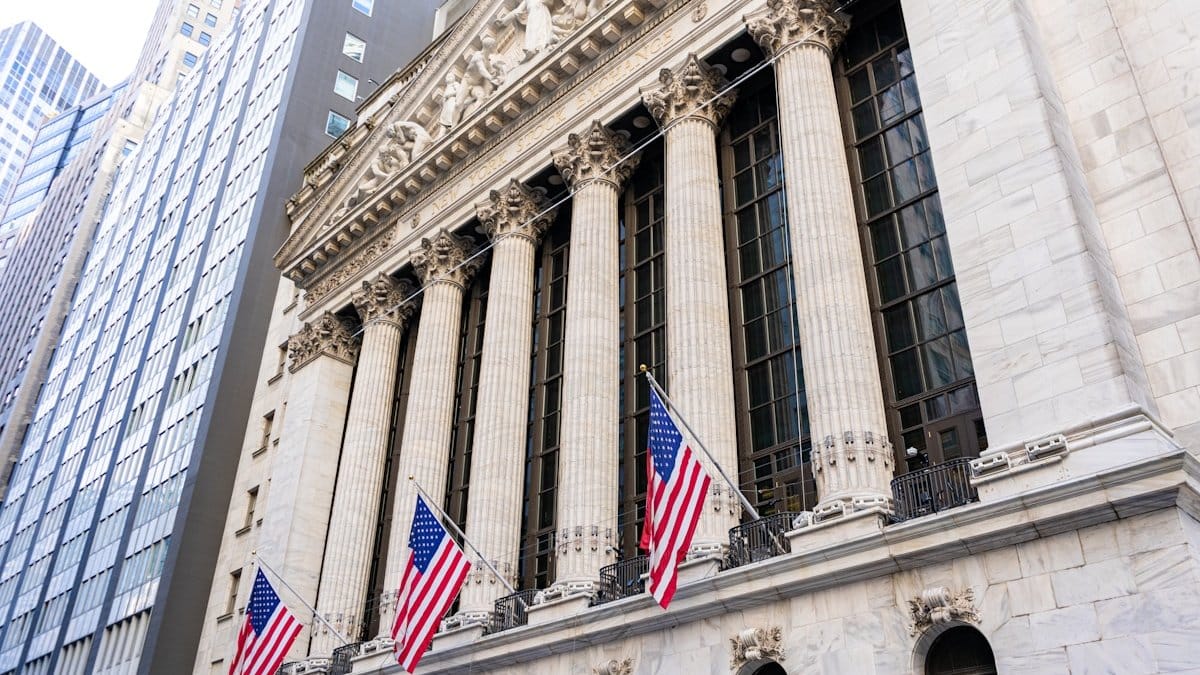
Market sentiment was heavily influenced by a rotation out of technology stocks following earnings reports from major industry players. Concurrently, energy markets and broader geopolitical concerns remained in focus amid reports of potential diplomatic progress regarding the Strait of Hormuz, leading to stabilized oil prices with Brent crude trading above $79 per barrel and WTI near $75.
| Index | Level | Change | % Change |
|---|---|---|---|
| S&P 500 | 7,723.55 | -12.97 | -0.17% |
| Dow Jones Industrial Average | Record High | +0.5% | +0.5% |
| Nasdaq Composite | 26,363.44 | -221.55 | -0.83% |
| 10-Year Treasury Yield | 4.63% | +1 bps | — |
| Gold (Spot) | $4,315/oz | +3.9% | +3.9% |
| WTI Crude Oil | $75.15/bbl | -0.8% | -0.8% |
Top Market Movers
The earnings season continued to drive significant individual stock movements, with results from several high-profile companies reshaping sector dynamics and investor sentiment across the technology, consumer discretionary, and healthcare spaces.
SpaceX (SPCX) — Down ~14%
Shares of the aerospace and satellite communications giant retreated nearly 14% in its first earnings report as a public company. Despite beating revenue and operating profit estimates — with quarterly revenue of $7.8 billion surpassing the $6.81 billion expected by analysts — investors expressed concern over the company's significant capital expenditures related to artificial intelligence infrastructure. CEO Elon Musk's announcement that SpaceX would “exclusively” use Nvidia chips added further complexity to the narrative, as the market questioned whether AI infrastructure spending would translate to near-term profitability. An additional overhang is the upcoming expiration of post-IPO lockups, which will significantly increase the number of shares available for trading.
Investment implications: The market's reaction underscores a growing scrutiny of AI-related capital expenditure. Investors are demanding clearer timelines for profitability from heavy AI investments, suggesting that even companies with strong fundamentals may face pressure if their AI spending narrative lacks a credible near-term return profile.
Advanced Micro Devices (AMD) — Down 6.5%
The chipmaker saw its stock drop 6.5% despite reporting results that topped analysts' estimates and providing a strong outlook, including record sales driven by growing AI demand. The decline reflects the exceptionally high expectations currently placed on semiconductor companies, where “excellent results” are insufficient when the market demands “exceptional” performance.
Investment implications: The semiconductor sector remains highly volatile, and even strong earnings beats may not be sufficient to sustain premium valuations if they fall short of elevated market expectations. Investors should carefully assess whether current valuations in the AI chip space already price in a best-case scenario.
Shopify (SHOP) — Up ~17%
The e-commerce platform's shares surged approximately 17% following what management described as a “monster quarter.” The company reported adjusted earnings of $0.42 per share on revenue of $3.58 billion, representing a 34% year-over-year increase, with Gross Merchandise Volume of $115.57 billion, up 32% year-over-year. Forward guidance for Q3 revenue growth at a “low-thirties percentage rate” also exceeded consensus expectations.
Investment implications: Strong consumer spending and robust e-commerce infrastructure demand continue to provide significant upside potential for platforms demonstrating scalable growth and profitability. Shopify's results suggest that AI-powered commerce tools are beginning to drive measurable revenue acceleration.
Booking Holdings (BKNG) — Up 6.5%
Shares advanced 6.5% after the online travel company exceeded quarterly profit, revenue, and gross bookings estimates, overcoming what the CEO termed “near-term volatility” related to Middle East conflicts. The company reported adjusted earnings of $2.54 per share on revenue of $7.35 billion, with gross bookings of $51.0 billion.
Investment implications: The travel sector demonstrates remarkable resilience, with strong domestic and intra-regional demand offsetting weakness in long-haul international travel. A potential resolution to the Strait of Hormuz situation could provide a significant additional tailwind for travel companies.
Economic Data & Fed Watch

The economic data landscape provided mixed signals regarding the health of the labor market. The ADP National Employment Report indicated that private companies added just 44,000 jobs in July, a significant slowdown from the revised 95,000 added in June and well below the 75,000 expected by economists. This represents the lowest level of private-sector job creation since the start of the year, with education and health services accounting for the bulk of new positions at 36,000.
On the monetary policy front, Federal Reserve Governor Lisa Cook delivered a speech at the 2026 Economic Luncheon in Anchorage, Alaska, emphasizing that inflation remains “stubbornly high” and has exceeded the central bank's 2% target for more than five years. The Personal Consumption Expenditures (PCE) price index rose 3.7% in the 12 months through June — nearly double the Fed's target — while core PCE, excluding food and energy, rose 3.3% over the same period. Cook stated she is “prepared to act by raising rates, if necessary” if inflation does not continue to cool, noting that she considers the risks to the inflation side of the dual mandate higher than the risks to employment. The 10-year Treasury yield edged up slightly to near 4.63%, while the U.S. dollar index slipped 0.2% to 99.71. CME FedWatch futures are currently pricing in a 54% probability of a rate hike at the September FOMC meeting.
Investment implications: The combination of slowing private-sector job growth and hawkish rhetoric from Fed officials complicates the interest rate outlook. Investors should remain prepared for a “higher for longer” interest rate environment, which may continue to pressure rate-sensitive sectors and growth stocks with extended valuations. The Friday nonfarm payrolls report will be pivotal in determining whether the Fed has sufficient justification to raise rates in September.
International Markets
Asian markets experienced a sharp reversal on Thursday following the previous day's tech-driven rally. MSCI's broadest index of Asia-Pacific shares outside Japan fell 1.39%, led by significant declines in the South Korean market, which slid 4.16%. Major semiconductor stocks in the region suffered substantial losses mirroring the pullback in U.S. tech shares: Samsung Electronics fell 6%, SK Hynix plunged nearly 10%, and Japan's Kioxia lost 8.2%. Japan's Nikkei 225 also closed lower by 0.94%, paring an earlier drop of as much as 2.05%.
In Europe, early futures pointed to a marginally higher open, with Euro Stoxx 50 futures up 0.18%, German DAX futures gaining 0.26%, and FTSE futures nudging 0.06% higher. The dollar held steady against the yen at 157.75, following last week's coordinated currency market intervention by Japan and the United States. The global market narrative continues to be shaped by the interplay between AI spending concerns and the potential for geopolitical stabilization in the Middle East. Spot gold rose 0.2% to $4,254.10 per ounce, advancing for a fourth consecutive session, while silver edged 0.38% lower to $61.84 per ounce.
Looking Ahead
The most significant near-term catalyst for markets is the U.S. nonfarm payrolls report scheduled for release on Friday, August 7. Economists polled by Reuters expect the report to show the addition of approximately 80,000 jobs in July, with the unemployment rate forecast to hold steady at 4.2%. Given the weaker-than-expected ADP private payrolls data and Fed Governor Cook's hawkish commentary, the stakes for this report are particularly high. A significantly weaker print could temper rate hike expectations, while a stronger-than-expected number could solidify the case for a September move.
The earnings calendar remains active in the days ahead, with several major companies expected to report results. Investors will be closely monitoring guidance from consumer-facing companies for signs of spending fatigue, as well as commentary from technology firms regarding AI capital expenditure plans and their expected returns. The ongoing U.S.-Iran diplomatic discussions regarding the Strait of Hormuz remain a critical wildcard for energy markets and global supply chains, with any breakthrough or breakdown capable of producing sharp moves in oil prices and related assets.
Disclaimer: This analysis is for informational and educational purposes only and should not be considered financial advice. Market conditions can change rapidly, and past performance does not guarantee future results. Always conduct your own research and consult with a qualified financial advisor before making investment decisions.