



Energy Market Overview
Oil is expensive, but the energy sector is not moving in lockstep. Brent futures settled at $105.92 a barrel on October 15, while West Texas Intermediate finished at $97.97. Brent slipped 0.13%, whereas WTI gained 3.03% after a substantial U.S. inventory draw. These are completed-session futures prices, not live October 16 quotes, according to Reuters.

Photo: Jakub Pabis / Pexels. Illustrative stock photograph.
U.S. natural gas presents a different picture. The latest verified EIA daily observation puts Henry Hub spot gas at $3.22 per million British thermal units on October 14. Domestic production and storage are cushioning prices even as liquefied natural gas exports expand. The spot observation and crude futures settlements have different timestamps and should not be treated as synchronized trading quotes.
The central tension is physical supply versus economic resilience. Shipping disruptions and tight diesel availability support oil, while high fuel costs threaten consumption. Renewables face a separate test: growing electricity demand creates opportunities, but financing and grid access determine whether projects become profitable assets.
Investors therefore need to distinguish producers, refiners, LNG infrastructure and electricity developers. Commodity strength alone does not guarantee rising share prices. This update uses information available early October 16; agency projections are forecasts, and the oil outlook remains sensitive to geopolitical developments.
Oil Market Analysis
The latest U.S. inventory report reinforced near-term tightness. Crude stocks fell 8.6 million barrels to 415.6 million in the week ended October 9, far exceeding the modest draw anticipated in Reuters’ survey. Distillate inventories also declined, although gasoline stocks increased. That combination suggests an uneven product market rather than universally strong fuel demand.
Supply recovery is real, but fragile. The IEA’s October Oil Market Report estimates global supply increased 2.5 million barrels per day in September to 102.3 million. OPEC+ contributed gains of 2.1 million barrels per day, led by Saudi Arabia. Renewed threats to infrastructure and tanker traffic could interrupt that recovery. Production capacity is not equivalent to safely delivered barrels.
Demand estimates remain a major uncertainty. The IEA forecasts a 2.6-million-barrel-per-day decline in global oil use during 2026 as constrained availability and high prices weaken consumption. Separately, Reuters reported that OPEC trimmed its demand-growth forecast for a sixth consecutive month. These outlooks are not interchangeable; investors should track actual shipments and inventories alongside competing projections.
Emergency supply offers relief, not a permanent solution. Reuters reported that IEA members agreed October 15 to accelerate releases of more than 20 million barrels of diesel and remaining previously pledged reserves. Sanctions discussions could also change tanker availability. Neither measure automatically repairs damaged infrastructure or eliminates freight costs.
Investment implications: Low-cost producers may benefit from elevated realized prices, while refiners’ results depend on feedstock costs and product margins. The EIA forecasts Brent spot averaging $105 in the fourth quarter but $84 in 2027. That projection was finalized October 1 and does not incorporate subsequent policy or security developments. Stress-test dividend coverage and capital spending at lower prices rather than extrapolating today’s conditions. Inventory rebuilding, safer shipping and weaker consumption would undermine a bullish case; renewed disruptions would increase upside price risk and operating uncertainty.
Natural Gas & LNG
Henry Hub’s $3.22 spot reading highlights the distinction between U.S. gas fundamentals and globally constrained oil markets. Domestic supply can remain abundant even when overseas buyers face transport disruptions. Near-term price drivers include temperature forecasts, storage injections, production volumes and the amount of gas flowing into export terminals.
The EIA’s October outlook forecasts U.S. LNG exports averaging 17.6 billion cubic feet per day in 2026 and 18.6 billion in 2027. However, it expects production growth to offset export demand sufficiently to keep inventories above average. Its Henry Hub forecast falls from a $3.48 annual average in 2026 to $3.16 in 2027. Those annual estimates are not winter price targets.
Weather remains the clearest short-term swing factor. Colder conditions would increase heating demand and withdrawals; mild weather would leave more gas in storage. Terminal outages can also reduce domestic demand even when international LNG prices are strong.
Investment implications: Distinguish gas producers from contracted liquefaction operators and pipeline businesses. Producers depend more directly on realized prices, hedges and regional discounts. Infrastructure investors should examine contract duration, counterparty quality and expansion costs. Stronger export volumes support a long-term demand case, but do not establish that every gas producer will earn attractive returns at prevailing prices.
Renewable Energy & Transition
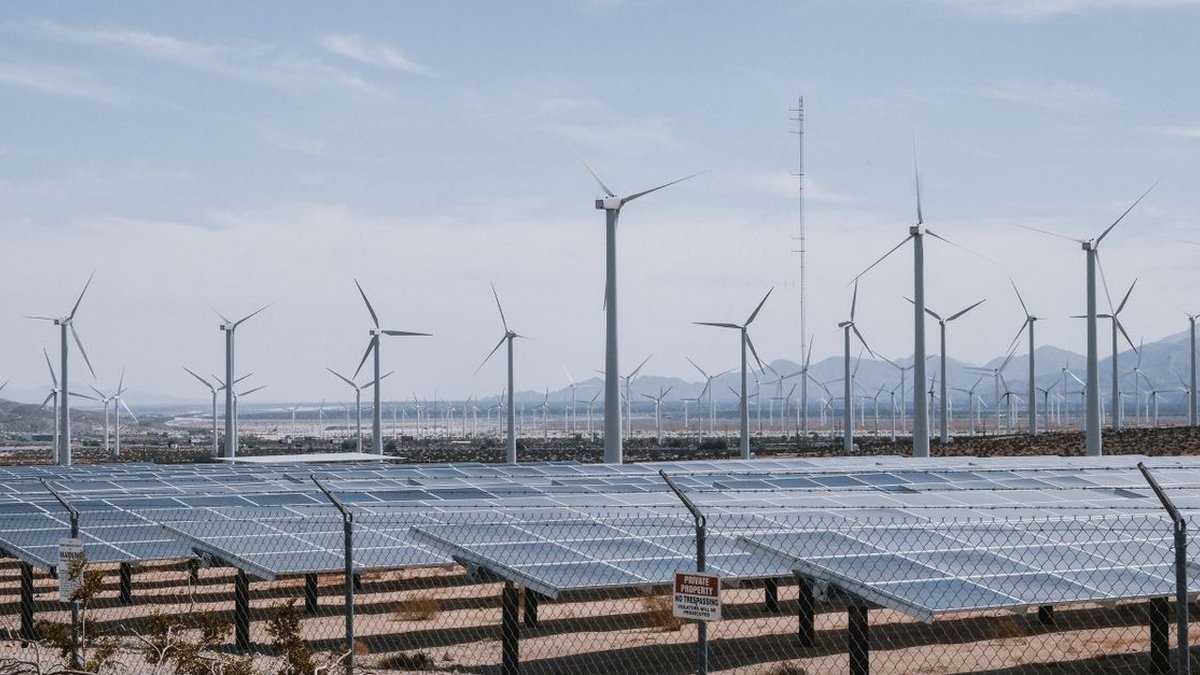
Photo: Kindel Media / Pexels. Illustrative stock photograph.
Renewable generation continues gaining ground even as fossil-fuel markets dominate headlines. The EIA projects solar’s share of U.S. electricity generation rising from 8% in 2026 to 9% in 2027. Wind increases from 11% to 12%. These are generation-share forecasts, not equipment sales growth or guaranteed shareholder returns.
For solar, the investment question is shifting from headline deployment to project economics. Grid connections, storage integration and dependable buyers matter because additional daytime output can face weaker realized power prices. Equipment manufacturers and project owners have different exposures: growing installations can coexist with pressure on manufacturing margins.
Wind development also requires disciplined underwriting. Project value depends on construction costs, operating reliability and contracted electricity prices. Larger pipelines of proposed projects are less informative than projects with permits, financing and credible completion schedules. Offshore and onshore assets should not be treated as identical risk profiles.
Investment implications: Favor analysis of funded backlogs and contracted cash flows over broad transition narratives. Check financing needs, policy dependence and exposure to supply-chain changes. Higher fossil-fuel costs may strengthen the case for diversified generation, but do not automatically improve renewable developers’ profits. Storage and transmission can enhance project usefulness; their capital costs still need to earn an adequate return.
Energy Stocks & Outlook
Major oil stocks illustrate why crude prices and equity returns can diverge. Exxon Mobil (NYSE: XOM) closed October 15 at $174.68, down 1.32% from the previous session. Chevron (NYSE: CVX) finished at $219.32, down 1.22%. Both nevertheless remained above their October 9 closes: Exxon by 3.40% and Chevron by 3.46%. These are price-only comparisons calculated from delayed historical daily data, excluding dividends.
The pullback despite WTI’s advance argues against treating energy shares as mechanical oil proxies. Earnings expectations, operating costs and valuation also matter. For integrated companies, investors should review upstream realizations alongside refining margins, capital discipline and shareholder distributions.
The outlook favors selectivity rather than a single sector-wide bet. Watch crude and distillate inventories, shipping reliability, winter gas demand and renewable project execution. A durable supply recovery would challenge scarcity-driven valuations; further disruptions would strengthen commodity prices while potentially increasing company-specific operating risks. Neither scenario removes the need for diversification.
Sources
Reporting and data: EIA, IEA, OPEC, Reuters and Bloomberg. Bloomberg’s early-session oil coverage provides context, not closing quotes. Stock history: Yahoo Finance.
Disclaimer: This analysis is for informational and educational purposes only and should not be considered financial advice. Energy sector investments carry significant commodity price volatility and geopolitical risks. Always conduct your own research and consult with a qualified financial advisor before making investment decisions.