



Market Overview
Wednesday, October 21, 2026, pre-market update: U.S. cash-market figures below refer to Tuesday’s completed session; Asian and European observations reflect Wednesday’s separately timed trading updates. The S&P 500 gained 21.84 points, or 0.28%, to 7,712.57. The Dow Jones Industrial Average climbed 529.85 points, or 1.02%, to 52,495.88, while the Nasdaq Composite slipped 6.07 points, or 0.02%, to 26,424.82. The Russell 2000 advanced approximately 1.7%, showing stronger participation beyond the largest technology companies.
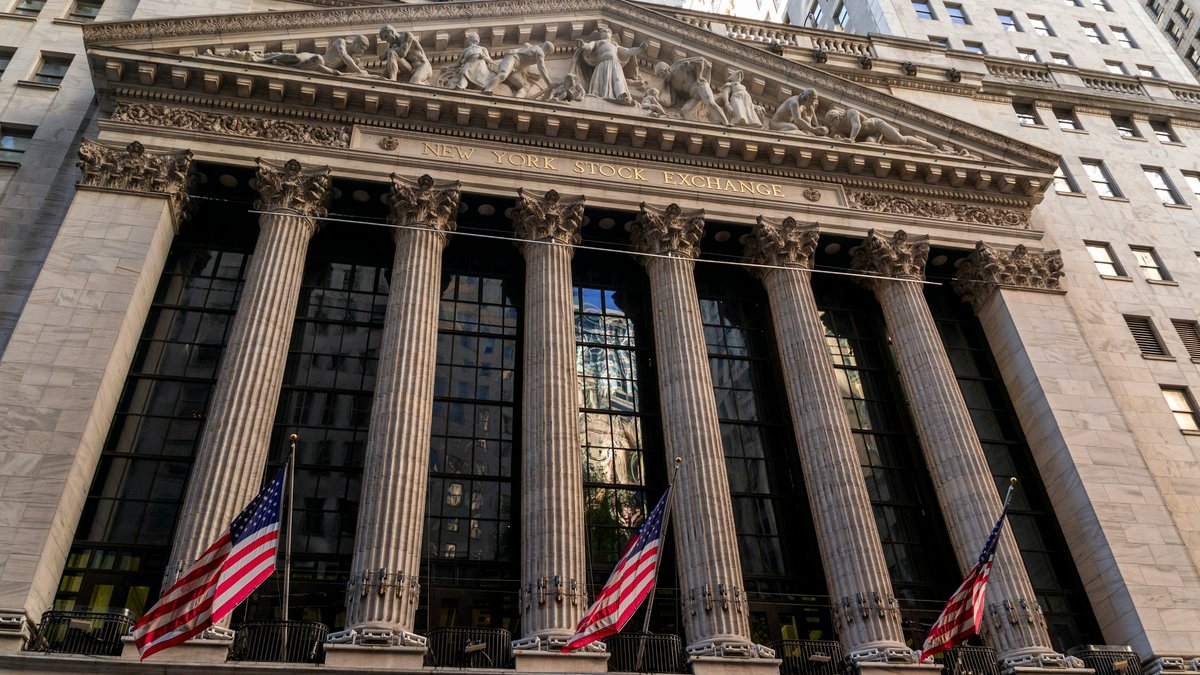
Photo: David Vives / Unsplash.
Healthcare reached a record sector high and supplied the biggest boost to the S&P 500. Financials gained 1%, real estate rose 1.7%, and utilities added 1.2%. Technology fell 0.3%, and communication services declined 0.9%. Value stocks gained 0.9%, compared with a 0.2% decline for growth, reinforcing the rotation rather than a uniformly bullish technology-led rebound.
Sentiment improved as earnings supported selected companies and oil eased during Tuesday’s session. However, uncertainty over artificial-intelligence spending and its financing remained prominent. Advancers outnumbered decliners roughly two to one on both major exchanges, although trading volume of 15.91 billion shares was below its 20-session average of 17.15 billion.
The breadth improvement is constructive, but one session does not establish a durable leadership change. CNBC’s 4 a.m. EDT Wednesday update showed S&P 500 futures up 0.25% and Nasdaq-100 futures up 0.75%, with Dow futures flat. Those indicative futures moves are not Wednesday closing returns.
Top Market Movers
3M: earnings and data-center demand
3M closed Tuesday at $171.37, up 5.78%, according to CNBC’s quote. The company raised its full-year adjusted earnings forecast to $9.10–$9.15 per share from $8.80–$8.95. Separately, its expanded Amazon relationship includes warrants for approximately 3.16 million shares. Most vesting depends on purchases of optical-connectivity and other data-center products, with a $6 billion purchasing threshold, rather than an immediate cash investment.
Investment implications: AI infrastructure can support industrial suppliers as well as software companies. Nevertheless, warrant dilution, purchasing milestones, and execution risk deserve attention alongside the stronger earnings outlook.
Netflix: guidance outweighs the earnings beat
Netflix fell nearly 6% to $64.66 in Tuesday’s after-hours trading, Reuters reported. Third-quarter revenue rose 11.8% to $12.87 billion, but fourth-quarter earnings guidance of $0.67 per share missed the $0.73 analyst average. Management also reduced its annual advertising forecast to approximately $2.7 billion from about $3 billion. The reaction illustrates how forward expectations can dominate an otherwise profitable quarter.
Investment implications: Streaming valuations remain sensitive to advertising execution and engagement. Extended-hours prices have thinner liquidity and may not predict Wednesday’s opening or closing price.
Oil: supply risk returns overnight
Brent crude climbed 1.1% to $110.00 a barrel in Wednesday’s Asian trade, reversing Tuesday’s softer tone as escalating Gulf conflict renewed supply-disruption fears. Tuesday’s equity rebound partly followed reports of possible diplomatic progress that the Wall Street Journal explicitly had not verified. Neither those reports nor the subsequent oil rise establish that a negotiated resolution is imminent.
Investment implications: Persistently expensive oil can pressure transport, consumer spending, and manufacturing margins while helping some producers. Energy exposure is not a simple hedge: company costs and broader economic demand still matter.
Economic Data & Fed Watch
Inflation remains the central constraint on monetary policy. The latest official U.S. consumer-price report, released October 14, showed September headline inflation of 0.6% month over month and 3.7% year over year. Core inflation, excluding food and energy, rose 0.3% monthly and 2.6% annually. Gasoline increased 9.1% in September and accounted for more than half the headline monthly rise, making the renewed oil shock especially relevant.
The Federal Reserve’s September 16 decision raised the federal-funds target by 25 basis points to 3.75%–4.00%, with a unanimous vote. Its next decision is due October 28. Reuters’ Wednesday dispatch quoted an approximately 83% market-implied probability of an unchanged rate from CME FedWatch. That pricing is conditional and can change; it is neither a Fed commitment nor a guaranteed outcome.
In Asian trading, the U.S. 10-year Treasury yield rose one basis point to 5.123%. For dated context, the latest official Treasury curve available in our research was October 19: the two-year yield was 4.77%. These observations are not simultaneous. The dollar was broadly steady against the yen at 158.165 yen per dollar in Reuters’ Wednesday report.
Investment implications: An anticipated pause does not remove inflation or refinancing risk. Elevated bond yields increase competition for equity income, while energy-driven price pressure can limit how much support investors should expect from future monetary easing.
International Markets
Wednesday’s Asian rebound was substantial but uneven. Japan’s Nikkei 225 closed 0.85% higher at 64,621.24, and South Korea’s Kospi gained 3.29% to 5,735.66, according to CNBC. Australia’s ASX 200 added 0.16% to 8,831.30, while Hong Kong’s Hang Seng was down about 0.9% late in trading. Reuters put the broader Asia-Pacific index excluding Japan up 1.1%.

Photo: Nicholas Cappello / Unsplash.
Europe’s early session was mixed rather than a settled global rally. CNBC’s Wednesday update showed the Stoxx 600 up 0.14% and the FTSE 100 down 0.18%. U.K. September inflation accelerated to 3.5% annually, above the Reuters poll’s 3.4% forecast, underscoring the international reach of the fuel-price shock.
AI-related earnings supported Asian technology shares, but Australian data-center operator NextDC’s forecast cuts demonstrated continuing execution risk. In emerging markets, Indonesia held its main policy rate while raising its deposit-facility rate and reducing reserve requirements. The divergent decisions show why currency, liquidity, and local policy conditions still matter alongside the common global energy catalyst.
Looking Ahead
Wednesday’s corporate calendar includes Meta Platforms, Tesla, IBM, and Southwest Airlines, according to CNBC; Meta is scheduled after the bell. AI spending, monetization, enterprise demand, and fuel-sensitive travel margins will be important themes. SpaceX–Tesla merger discussions add another catalyst, but special committees have not announced an agreed transaction. Investors should distinguish discussion, formal terms, and completion.
At 10 a.m. ET Wednesday, the BLS schedules third-quarter usual weekly earnings, and the New York Fed lists its Outlook-at-Risk update. Thursday brings weekly jobless claims at 8:30 a.m., followed by leading indicators at 10 a.m. Friday’s calendar includes flash manufacturing and services purchasing managers’ indexes at 9:45 a.m. and final University of Michigan consumer sentiment at 10 a.m. All times are Eastern.
Beyond individual surprises, watch whether stronger market breadth survives another round of earnings and oil headlines. Next week’s October 28 Fed decision and October 29 GDP and personal-consumption inflation reports will further test the balance between resilient activity and persistent price pressure. Release schedules can change, and pre-market gains can reverse rapidly once cash trading begins.
Sources
Reuters: Tuesday’s closing markets; CNBC: Wednesday’s live markets and earnings; CNBC: 3M closing quote; CNBC: 3M earnings outlook; Reuters: 3M–Amazon agreement; Reuters: Netflix results and guidance; Reuters: global markets, oil, yields, currencies, and Fed pricing; WSJ: earnings and diplomatic-report caveats; BLS: September CPI; Federal Reserve: September policy decision; U.S. Treasury: dated yield curve; BLS: release schedule; New York Fed: economic calendar; MarketWatch: forthcoming economic reports.
Disclaimer: This analysis is for informational and educational purposes only and should not be considered financial advice. Market conditions can change rapidly, and past performance does not guarantee future results. Always conduct your own research and consult with a qualified financial advisor before making investment decisions.