




Energy markets are closing October with a striking split between scarce, high-value transport fuels and a comparatively well-supplied U.S. natural-gas market. In Bloomberg’s latest market dashboard reading, December Brent traded at $115.99 a barrel, West Texas Intermediate at $101.75, and front-month NYMEX natural gas at $2.73 per MMBtu. That price map captures the central investment challenge: geopolitics and freight are keeping the oil complex volatile, while rising domestic gas supply is tempering a demand story driven by liquefied natural gas and electricity consumption.
Energy Market Overview
Crude has retained a substantial risk premium after attacks on Saudi energy infrastructure and continued insecurity around Middle East shipping routes. Reuters reported that Brent settled at $115.32 on October 28 and WTI at $102.78, with an unexpected 1.9-million-barrel U.S. crude inventory draw adding support. The International Energy Agency’s October report also described a fragile recovery in Gulf crude flows, alongside a 509-million-barrel decline in observed global oil inventories since late February.
The natural-gas market presents a different near-term signal. Prices below $3 per MMBtu reflect sizeable production growth and comfortable inventories, yet the longer-term demand case is strengthening. The U.S. Energy Information Administration expects U.S. LNG exports to average 17.6 Bcf/d this year, while power requirements from new data centers are expanding the domestic call on gas. Investors should therefore distinguish today’s benchmark price from the value of pipeline access, LNG exposure, refining capacity, and reliable electric infrastructure.
Oil Market Analysis
Oil’s supply picture remains defined by logistics as much as geology. The IEA estimated that global oil supply rebounded to 102.3 million barrels per day in September as Gulf producers restored volumes, but warned that renewed attacks on infrastructure and tanker traffic could interrupt that recovery. The agency expects global supply to average 101.4 million barrels per day in the second half of 2026, up from 96.4 million barrels per day in the second quarter, yet product availability has recovered more slowly than crude production.
That distinction matters. Middle East shipments of refined products and LPG remain far below pre-conflict levels, while Russian refinery disruptions have compounded the shortfall. The IEA reported that global diesel exports in September were about 700,000 barrels per day below a year earlier. Tight distillate stocks help explain why refinery margins have become such an important earnings lever even when headline crude prices swing sharply. EIA’s October outlook expects Brent to average $105 in the fourth quarter, but that forecast was completed before subsequent developments and should be treated as a baseline rather than a ceiling.
OPEC+ will remain central to the next phase. Reuters reported that the group was expected to hold December output targets steady, while production in several core members remained below target. The October OPEC Monthly Oil Market Report remains a key reference for monitoring supply, demand, and inventories, but traders will be watching physical exports and refinery operations more closely than announced targets. A credible de-escalation could compress the geopolitical premium quickly; further damage to processing or shipping capacity would have the opposite effect.
Investment implications: Integrated producers and refiners offer different exposures. Producers benefit from firmer realized crude prices, while companies with complex refining systems can capture strong diesel and jet-fuel margins. Balance-sheet quality, spare operational capacity, and geographic diversification matter more than a simple directional oil call in this environment.
Natural Gas & LNG
U.S. natural gas is balancing two powerful but opposing forces. On the supply side, EIA expects output to rise to 112.2 Bcf/d in 2026 from a record 107.6 Bcf/d last year, driven in part by associated gas from oil drilling in the Permian and output from the Haynesville. That growth, together with inventories above typical seasonal levels, helps explain the subdued front-month benchmark.
On the demand side, LNG terminals and electricity needs are reshaping the forward curve. Reuters reports U.S. gas demand is projected at 120.0 Bcf/d this year, versus 116.5 Bcf/d in 2025, with LNG exports rising 17%. The divergence between a $2.73 domestic benchmark and gas prices above $30 per MMBtu in Europe and Asia underscores the value of liquefaction capacity, transport contracts, and assured market access rather than unhedged commodity exposure alone.
Consolidation is reinforcing that theme. EQT’s planned $13 billion all-stock acquisition of Range Resources would create the country’s largest gas producer, with more than 9 Bcf/d of net output. The transaction highlights a sector seeking scale, lower unit costs, and routes to both Appalachian power demand and export markets.
Investment implications: Gas-focused equities may remain volatile while supply is ample, but companies with low-cost inventory, firm pipeline capacity, disciplined spending, and LNG-linked demand have more durable strategic advantages. Investors should also watch winter weather, storage trends, project start dates, and basis differentials.
Renewable Energy & Transition
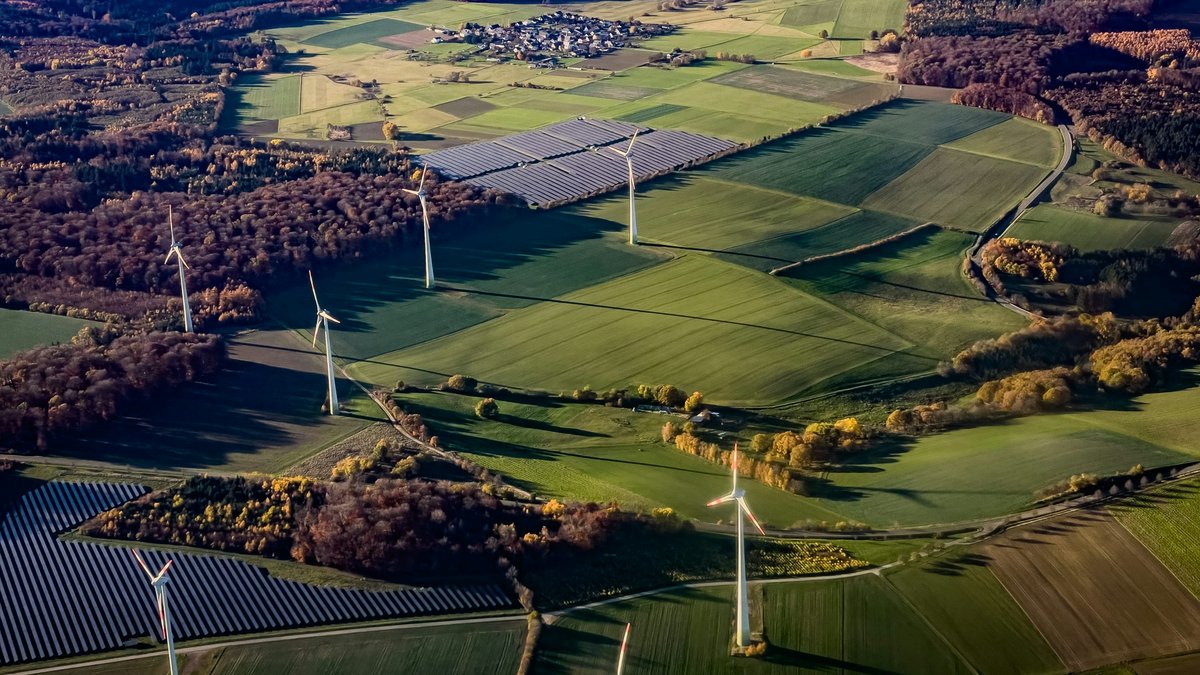
The transition story is no longer limited by the ability to build solar panels or wind turbines. It is increasingly constrained by whether grids can connect, transmit, and store the resulting electricity. Reuters reported that global clean-power capacity rose by a record 692 gigawatts in 2025 to 5,149 GW, but 2026 additions are expected to fall short of another record because transmission networks and trade barriers are holding back deployment. China’s curtailment of enough clean power to supply Mexico for a year in the first half illustrates the cost of grid congestion.
That creates a more selective opportunity set. Developers with interconnection rights, utilities that can earn regulated returns on transmission, and providers of storage, grid equipment, and power-management systems may have clearer revenue visibility than businesses dependent solely on module shipments. The EIA still expects wind and solar to lift their shares of U.S. electricity generation from 11% and 8% in 2026 to 12% and 9% in 2027, respectively, so the structural direction remains intact.
Investment implications: Focus on project pipelines that have secured land, grid access, and financing. Higher rates, import policies, and curtailment risk can weaken headline installation growth, but the need for dependable power for industry and data centers favors companies that solve the integration problem.
Energy Stocks & Outlook
Energy equities are being sorted by their cash-flow engines. ExxonMobil signaled that third-quarter downstream profit could receive a $4.5 billion lift from stronger refining margins versus the prior quarter, showing how tight fuels markets can offset uneven upstream price realizations. Major integrated names therefore retain leverage to both crude prices and refining spreads, although a rapid easing in Middle East risk would narrow the latter.
In gas, the EQT-Range transaction places consolidation and LNG-linked demand at the center of the equity narrative. Smaller producers without premium acreage, takeaway capacity, or balance-sheet flexibility may find the environment more challenging despite constructive long-run demand. Renewable shares, meanwhile, should be evaluated through grid readiness, contract quality, and financing costs rather than capacity headlines alone. The near-term outlook favors diversification across integrated oil, gas infrastructure, and selectively positioned transition businesses, with risk limits appropriate for unusually high commodity and geopolitical volatility.
Sources
U.S. Energy Information Administration, Short-Term Energy Outlook; International Energy Agency, Oil Market Report – October 2026; OPEC, Monthly Oil Market Report; Reuters energy reporting; Bloomberg Energy market data.
Disclaimer: This analysis is for informational and educational purposes only and should not be considered financial advice. Energy sector investments carry significant commodity price volatility and geopolitical risks. Always conduct your own research and consult with a qualified financial advisor before making investment decisions.