




1. China's Factory Activity Snaps Record Slump, Signals Economic Stabilization
China's manufacturing sector has shown signs of stabilization, with the official Purchasing Managers' Index (PMI) rising to 50.1 in December, marking the first expansion in eight months and ending the longest contractionary streak on record. The improvement was driven by increased new orders ahead of the Lunar New Year holidays and a rush by construction firms to complete projects before year-end. High-tech manufacturing led the recovery with a PMI of 52.5, up 2.4 percentage points from November. President Xi Jinping pledged to implement “more positive macroeconomic policies” to support growth in 2026.
**Why it matters for investors:** The rebound in China's manufacturing activity provides a positive signal for the global economy and could mark a turning point for the world's second-largest economy. This expansion suggests that domestic demand may be starting to recover, which could boost commodity prices and benefit emerging markets, commodity-exporting nations, and multinational corporations with significant exposure to China. However, economists caution that structural headwinds including the property sector downturn and industrial overcapacity remain significant challenges, and the improvement may prove short-lived without sustained policy support.
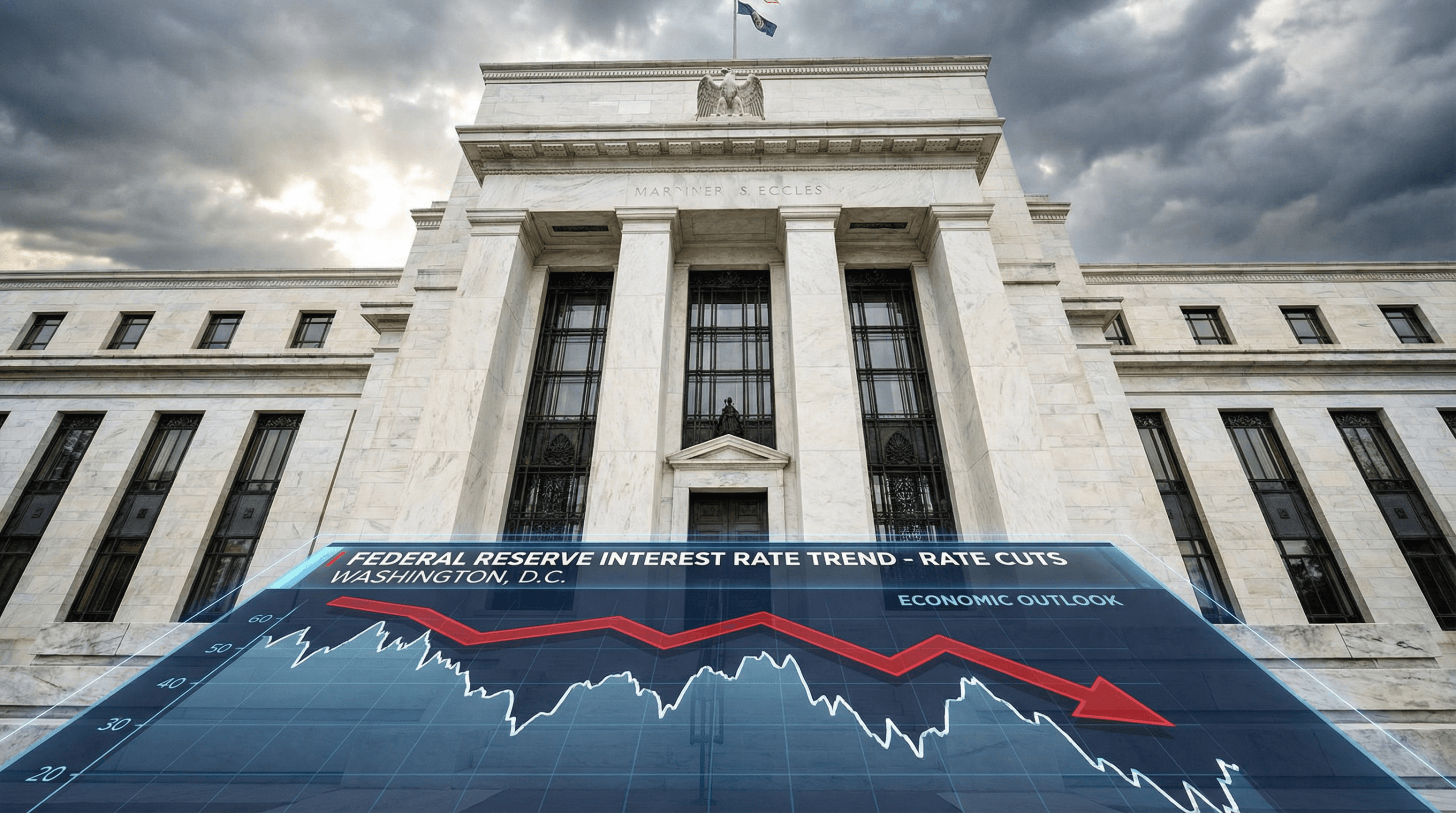
2. Economist Forecasts Three Aggressive Fed Rate Cuts in First Half of 2026
Mark Zandi, chief economist at Moody's Analytics, is predicting that the U.S. Federal Reserve will implement three quarter-point interest rate cuts in the first half of 2026, a significantly more aggressive pace than current market expectations of two cuts for the entire year or the Fed's own projection of just one reduction. Zandi's forecast is based on anticipated labor market weakness, persistent inflation uncertainty, and mounting political pressure on the central bank. With President Trump positioned to appoint more loyalists to the Federal Open Market Committee, including a new Fed chair in May when Jerome Powell's term expires, the independence of the central bank is expected to face increasing challenges.
**Why it matters for investors:** If Zandi's forecast proves accurate, the more rapid pace of monetary easing could provide a substantial tailwind for equity markets by lowering borrowing costs and increasing liquidity. Lower interest rates would likely put additional downward pressure on the U.S. dollar, benefiting American exporters and multinational corporations with significant overseas earnings. Bond investors should prepare for potential yield compression, while emerging market assets could become more attractive as capital flows shift away from dollar-denominated investments. The prospect of political interference in Fed decision-making adds an element of uncertainty that could increase market volatility.
3. U.S. Dollar Posts Worst Annual Performance Since 2017
The U.S. dollar has concluded 2025 with its worst annual performance since 2017, weakened by market expectations of significant Federal Reserve interest rate cuts in 2026. The greenback tumbled following tariff announcements earlier in the year and failed to mount a sustained recovery despite periodic rallies. The dollar's weakness reflects growing market conviction that the Fed will need to lower rates more aggressively than previously anticipated to support economic growth, reducing the interest rate differential that had made dollar-denominated assets attractive to international investors.
**Why it matters for investors:** A weaker dollar presents both opportunities and challenges for investors. U.S. multinational corporations will see their overseas earnings boosted when translated back into dollars, potentially lifting S&P 500 earnings. Commodity prices, which are typically denominated in dollars, tend to rise when the greenback weakens, benefiting commodity producers and resource-rich emerging markets. However, a declining dollar can also contribute to inflationary pressures through higher import costs, and international investors holding U.S. assets will see their returns diminished when converted to their local currencies. The dollar's trajectory will be a key factor in determining global capital flows and asset allocation decisions in 2026.
4. U.S. Stocks End Banner Year on Weak Note, Raising Questions About 2026 Momentum
Major U.S. stock indices stumbled into the end of 2025, with the S&P 500 posting four consecutive days of losses and closing the final trading session down, marking the absence of a traditional “Santa Claus rally.” Despite the weak finish, 2025 was a strong year for equities, with the S&P 500 gaining 16%, the Nasdaq Composite surging 20%, and the small-cap Russell 2000 rising 11%. All eleven sectors of the S&P 500 closed lower on the final trading day of the year, reflecting broad-based profit-taking and positioning ahead of 2026.
**Why it matters for investors:** The lack of a year-end rally and the consecutive daily losses suggest that investors may be taking a more cautious stance heading into 2026, despite the strong annual gains. This could indicate concerns about elevated valuations, uncertainty surrounding Federal Reserve policy, or potential economic headwinds. Historically, strong back-to-back years for the S&P 500 have sometimes been followed by more modest returns or increased volatility. Investors should monitor whether the early 2026 trading sessions show renewed buying interest or if the weakness persists, which could signal a shift in market sentiment and potentially warrant a reassessment of portfolio allocations and risk exposure.
5. Gold and Silver Prices Decline After CME Raises Margin Requirements
Precious metals prices retreated after the Chicago Mercantile Exchange (CME) raised margin requirements for gold and silver futures contracts for the second time in recent weeks. Gold, which had been trading near $4,341 per ounce, and silver both declined following the announcement. Higher margin requirements mean traders must post more collateral to maintain their positions, which can lead to forced selling and reduced speculative activity in the futures markets. The move comes after a strong rally in precious metals that saw gold reach record highs.
**Why it matters for investors:** The CME's decision to raise margin requirements typically occurs when volatility increases or when regulators want to cool speculative activity in overheated markets. While this may cause short-term price weakness in gold and silver, the underlying drivers of precious metals demand remain intact, including concerns about currency devaluation, geopolitical tensions, and expectations of lower real interest rates as the Fed cuts rates. Investors with long-term positions in precious metals should view any pullback as potentially presenting buying opportunities, while those using leverage should be aware of the increased capital requirements. The margin increase also serves as a reminder of the importance of proper position sizing and risk management in commodity markets.
—
**Disclaimer:** This market report is provided for informational purposes only and does not constitute investment advice, financial advice, trading advice, or any other type of advice. The information presented is based on publicly available sources and represents analysis and opinions that may not be suitable for all investors. Market conditions can change rapidly, and past performance is not indicative of future results. Investors should conduct their own research and consult with qualified financial advisors before making any investment decisions. The author and publisher assume no responsibility for any losses or damages resulting from the use of this information.