Wall Street closed July on a powerful note as Microsoft's blockbuster earnings revived confidence in AI investments, propelling the Nasdaq 2.78% higher and lifting the S&P 500 1.66%. The semiconductor sector surged 8.2% while the Fed held rates steady amid mixed economic data.
U.S. markets delivered a split verdict as the Dow surged 537 points on strong earnings while semiconductor stocks extended their historic rout. With the Fed rate decision due Wednesday and Microsoft, Meta, Apple, and Amazon all reporting this week, investors face one of the most pivotal stretches of 2026.
U.S. equity markets closed mixed on Thursday, July 23,...
Daily Market Report: January 10, 2026
1. US Stock Markets Surge to Record Highs on Jobs Data
U.S. stock markets concluded the first full trading week of 2026 with a powerful rally, as the S&P 500 and Dow Jones Industrial Average surged to new all-time highs. The S&P 500 gained 0.6% to close at 6,966.28, while the Dow rose 0.5% to 49,504.07. The Nasdaq Composite also posted a strong gain of 0.8%, capping a winning week for all three major indices. The rally was largely fueled by the December jobs report, which showed weaker-than-expected job growth but a decline in the unemployment rate to 4.4%, reinforcing investor expectations that the Federal Reserve will hold interest rates steady in its upcoming meeting.
Why it matters for investors: The market's enthusiastic response to a mixed jobs report signals strong underlying optimism. The data appears to have hit a sweet spot for investors: not strong enough to prompt the Fed to consider a near-term rate hike, yet not weak enough to signal an economic downturn. This “Goldilocks” scenario is boosting investor confidence, driving capital into equities and sustaining the market's upward momentum. However, investors should remain watchful for any shifts in Fed rhetoric or upcoming inflation data that could alter this outlook.
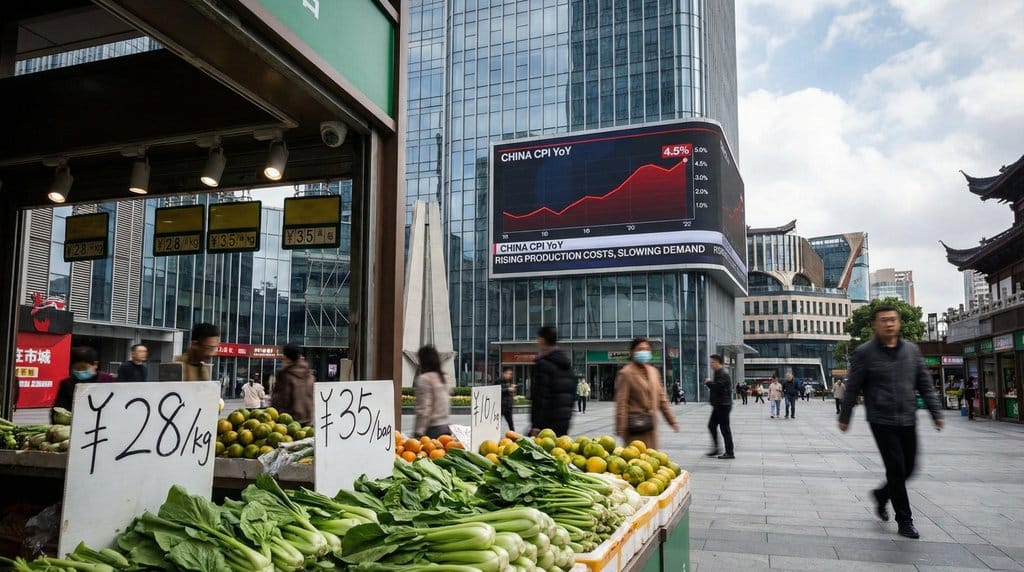
2. China's Inflation Rate Climbs to Near 3-Year High
China's annual inflation rate rose for the third consecutive month, reaching 0.8% in December 2025, its highest level since early 2023. The increase was primarily driven by a sharp rise in food costs, particularly fresh produce. While the figure was slightly below economists' forecasts of 0.9%, the persistent upward trend in consumer prices in the world's second-largest economy is drawing close attention from global markets. Core inflation, which excludes volatile food and energy prices, remained stable at 1.2%.
Why it matters for investors: Rising inflation in China could have a ripple effect across the global economy. It may pressure the People's Bank of China to adopt a more hawkish monetary policy, potentially slowing economic growth. For international investors, this could mean reduced demand for foreign goods and services, impacting companies with significant exposure to the Chinese market. Furthermore, if Chinese manufacturers pass on higher costs, it could contribute to inflationary pressures worldwide.
3. Geopolitical Tensions in Iran Drive Oil Prices Higher
Oil prices surged as escalating anti-government protests across Iran stoked fears of a potential supply disruption from the major Middle Eastern producer. West Texas Intermediate (WTI) crude rose over 2.3% to trade above $59 per barrel, while Brent crude climbed 2.2% to over $63 per barrel. The unrest, which has resulted in dozens of casualties and thousands of arrests, has created significant uncertainty in the energy markets. The situation is further complicated by the Iranian government's internet blackouts and defiant rhetoric against the protestors and the United States.
Why it matters for investors: The spike in oil prices highlights the market's sensitivity to geopolitical risk. A prolonged or intensified conflict in Iran could threaten a significant portion of global oil supply, leading to sustained higher energy prices. This would increase costs for businesses and consumers, potentially dampening economic growth and fueling inflation. Investors in the energy sector may see short-term gains, but the broader market could face headwinds from the economic impact of higher oil prices.
4. Trump Unveils Ambitious Plan for Venezuelan Oil Industry
President Trump announced a major initiative for U.S. oil companies to lead the rebuilding of Venezuela's collapsed oil industry, following a meeting with top energy executives. The plan involves an investment of “at least $100 billion” from companies like ExxonMobil and Chevron to restore Venezuela's production and export capacity. This development comes as the U.S. government takes a more direct role in the country's political and economic future, aiming to leverage its vast, untapped oil reserves of around 300 billion barrels.
Why it matters for investors: This ambitious plan, if successful, could dramatically reshape global energy markets by bringing a significant new supply of oil online. For investors, it presents both opportunities and risks. Energy companies involved could see substantial long-term growth, but the venture is fraught with geopolitical uncertainty and execution challenges. The potential influx of Venezuelan oil could also put downward pressure on long-term oil prices, impacting the profitability of the entire sector.
5. Bitcoin Consolidates Around $90,000 as Market Awaits Catalysts
Bitcoin is trading in a relatively tight range, hovering around the $90,000 mark as it concludes the first week of 2026. The leading cryptocurrency has shown stability after a volatile period that saw it hit a record high of nearly $126,000 in October 2025. Market participants appear to be in a holding pattern, awaiting fresh catalysts, with many analysts pointing to the current consolidation as a potential precursor to a significant price movement, reminiscent of a similar pattern in April 2025 that led to a major bull run.
Why it matters for investors: The consolidation phase in Bitcoin's price suggests a period of market equilibrium, where buying and selling pressures are balanced. This can be a sign of accumulation by long-term investors before the next major price trend emerges. However, the market remains sensitive to macroeconomic factors, including potential Federal Reserve actions and regulatory news. Investors in the crypto space are closely watching for a breakout from this consolidation range as an indicator of the market's next direction.
—
*Disclaimer: This report is for informational purposes only and does not constitute financial advice. Please consult with a qualified financial professional before making any investment decisions.*
Used to determine whether a user is included in an A / B or Multivariate test.
18 months
_ga
ID used to identify users
2 years
_gali
Used by Google Analytics to determine which links on a page are being clicked
30 seconds
_ga_
ID used to identify users
2 years
_gid
ID used to identify users for 24 hours after last activity
24 hours
_gat
Used to monitor number of Google Analytics server requests when using Google Tag Manager
1 minute
_gac_
Contains information related to marketing campaigns of the user. These are shared with Google AdWords / Google Ads when the Google Ads and Google Analytics accounts are linked together.
90 days
__utma
ID used to identify users and sessions
2 years after last activity
__utmt
Used to monitor number of Google Analytics server requests
10 minutes
__utmb
Used to distinguish new sessions and visits. This cookie is set when the GA.js javascript library is loaded and there is no existing __utmb cookie. The cookie is updated every time data is sent to the Google Analytics server.
30 minutes after last activity
__utmc
Used only with old Urchin versions of Google Analytics and not with GA.js. Was used to distinguish between new sessions and visits at the end of a session.
End of session (browser)
__utmz
Contains information about the traffic source or campaign that directed user to the website. The cookie is set when the GA.js javascript is loaded and updated when data is sent to the Google Anaytics server
6 months after last activity
__utmv
Contains custom information set by the web developer via the _setCustomVar method in Google Analytics. This cookie is updated every time new data is sent to the Google Analytics server.