



Market Overview
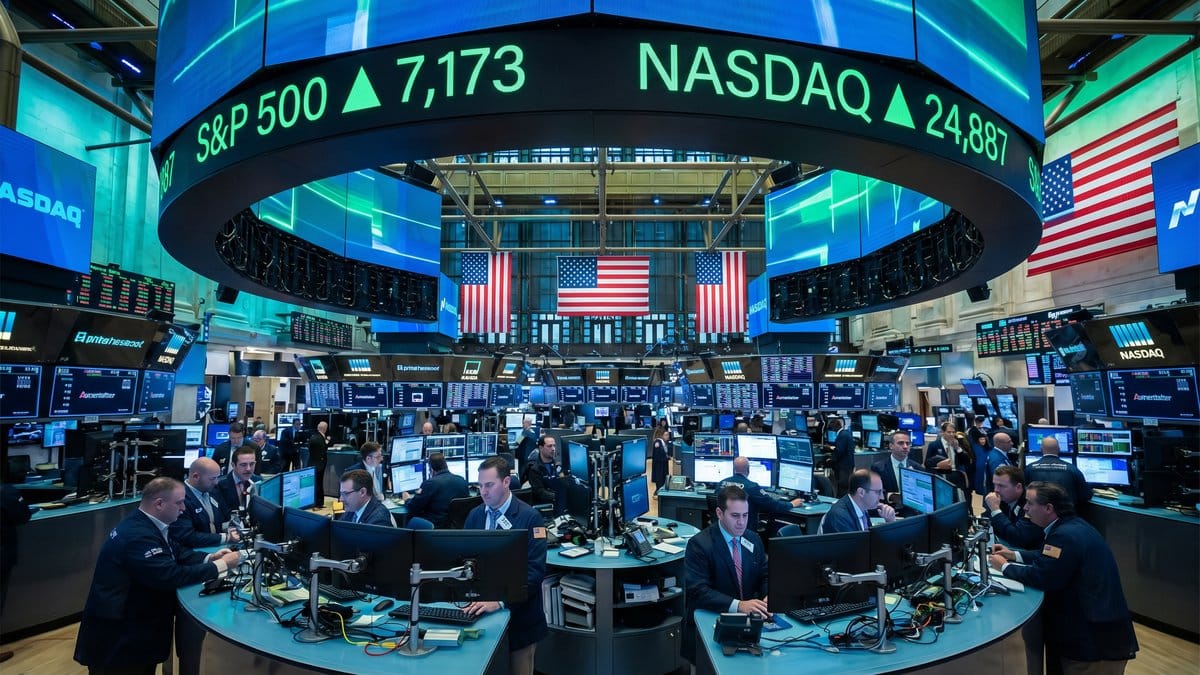
Major US indices closed mixed on Monday as investors positioned themselves ahead of this week's crucial Federal Open Market Committee (FOMC) decision. The S&P 500 and Nasdaq both touched fresh all-time highs during intraday trading before settling. The S&P 500 added 0.12% to close at 7,173.93, while the Nasdaq Composite gained 0.20% to reach 24,887.10. Conversely, the Dow Jones Industrial Average diverged from the broader market, declining by 0.13% to end 62.92 points lower at 49,167.79. The Russell 2000 also experienced a slight pullback as investors rotated out of small-cap stocks.
Overall market sentiment remains cautiously optimistic but highly dependent on upcoming earnings and central bank guidance. The market is currently in a consolidation phase following last week's rally, with the S&P 500 having surged more than 100% since entering bull market territory in October 2022. Notable sector performance included strength in technology and semiconductors, driven by continued AI enthusiasm, while consumer discretionary and energy sectors faced headwinds due to mixed earnings and geopolitical concerns.
Top Market Movers
Several significant market developments drove individual stock performances on Monday, highlighting distinct narratives across different sectors.
- Nvidia (NVDA): The semiconductor giant jumped 4.0%, extending its recent strength and pushing its market capitalization above the $5 trillion mark. This move underscores the continued premium pricing for AI leadership within the megacap complex.
- Fastly (FSLY): Shares closed up 8.59% at $25.80 as investors repositioned ahead of its Q1 earnings report scheduled for May 6. The company also announced a new partnership with Spain's LaLiga utilizing AI to detect illegal streams in real-time.
- Cleveland-Cliffs (CLF): The stock jumped 8.71% to $10.61, catching a tailwind from US-Iran peace plan discussions and optimism surrounding its expansion into rare-earth mining in Michigan and Minnesota.
- Domino's Pizza (DPZ): Shares fell 8.8% following disappointing first-quarter sales results, serving as a reminder that consumer discretionary spending remains under pressure.
Investment implications: The continued strength in AI-related stocks like Nvidia suggests that the technology sector remains a primary driver of market returns. However, the sharp decline in Domino's Pizza highlights the vulnerability of consumer-facing companies to shifting spending habits. Investors should maintain a balanced approach, focusing on companies with strong fundamentals and clear growth catalysts while remaining cautious of sectors sensitive to consumer weakness.
Economic Data & Fed Watch
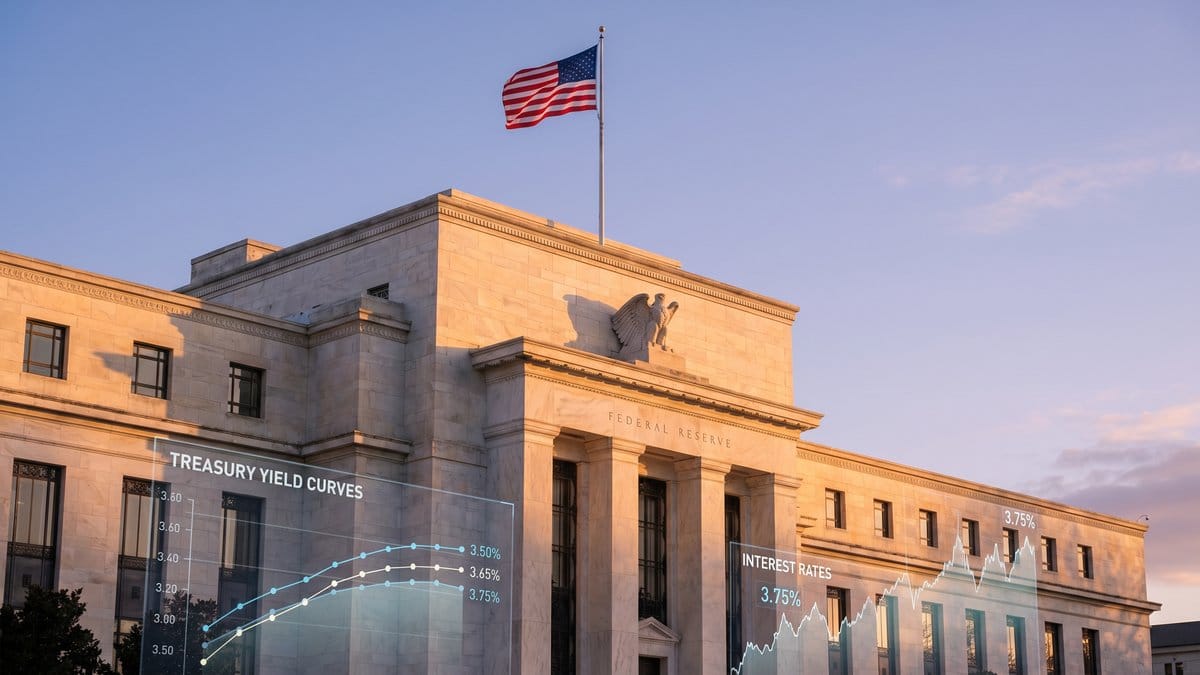
The Federal Reserve meeting beginning Tuesday remains the dominant focus for global equities. Markets overwhelmingly price in a hold on interest rates, expecting the Fed to maintain its current target range of 3.50%-3.75%. With no rate move anticipated, Chair Jerome Powell's press conference will serve as the decisive directional input for markets, particularly regarding the central bank's outlook on inflation and future policy adjustments.
Recent economic data has presented a mixed picture. While inflation rebounded to 3.3% year-on-year in March, core inflation fell slightly to 3.1%. The personal income and outlays report due this week is expected to show headline PCE inflation drifting up toward 4% on higher energy prices. In the bond market, US Treasuries traded in tight ranges, with the benchmark 10-year yield edging higher to close near 4.34%, reflecting the market's anticipation of a “higher for longer” interest rate environment.
Investment implications: The expectation of sustained higher interest rates continues to support yields on fixed-income investments, making them an attractive option for income-seeking investors. However, the persistence of inflation, particularly driven by energy costs, poses a risk to corporate margins and consumer spending. Investors should carefully monitor the Fed's commentary for any shifts in policy stance and adjust their portfolios to mitigate inflation risks.
International Markets
International markets displayed a mixed performance amid varying regional catalysts. In Asia, the Bank of Japan left its benchmark interest rate unchanged at 0.75% in a 6-3 split vote, adopting a more hawkish stance and raising its core inflation forecast to 2.8%. This decision propelled the Japanese yen higher against major currencies. The Nikkei 225 surged by 1.38% to 60,537.36, while the Hang Seng Index experienced a slight decline of 0.12%.
European shares edged lower as investors braced for a week packed with central bank meetings and corporate earnings. The Stoxx Europe 600 fell 0.3%, with the DAX losing 0.2% and the FTSE 100 dropping 0.6%. Higher oil prices, with Brent crude trading near $111 per barrel, and stalled US-Iran peace talks kept pressure on risk appetite across the continent. Currency movements saw the US dollar rise against most G10 currencies, supported by geopolitical concerns and higher crude prices.
Looking Ahead
The remainder of the week is heavily backloaded with critical events that will likely dictate market direction. The Q1 2026 earnings season hits its peak, with five of the “Magnificent Seven” companies—Alphabet, Microsoft, Amazon, Meta, and Apple—scheduled to report. Together, these companies account for roughly 44% of the S&P 500's market capitalization, making their results pivotal for broader market performance.
On the economic front, investors will closely analyze the US April Conference Board Consumer Confidence report and the Weekly ADP Employment Change. However, the primary catalyst remains the Federal Reserve's policy decision and Chair Powell's subsequent press conference. The combination of megacap earnings and central bank guidance will provide crucial insights into the health of the economy and the trajectory of corporate profits.
Disclaimer: This analysis is for informational and educational purposes only and should not be considered financial advice. Market conditions can change rapidly, and past performance does not guarantee future results. Always conduct your own research and consult with a qualified financial advisor before making investment decisions.
Sources: Reuters, Bloomberg, WSJ, CNBC, MarketWatch, Yahoo Finance
