



U.S. equity markets opened the final week of the first half of 2026 on a cautious note Monday, June 29, as investors digested the aftermath of last week's sharp technology-sector selloff and positioned ahead of a holiday-shortened trading week. The S&P 500 futures pointed to a modest recovery of approximately 0.6% at the open, buoyed by reports of a preliminary U.S.-Iran ceasefire agreement that eased near-term oil supply concerns. The benchmark index closed Friday at 7,354, down 0.1% on the session, capping a difficult week in which the MSCI All Country World Index shed 2.1%.
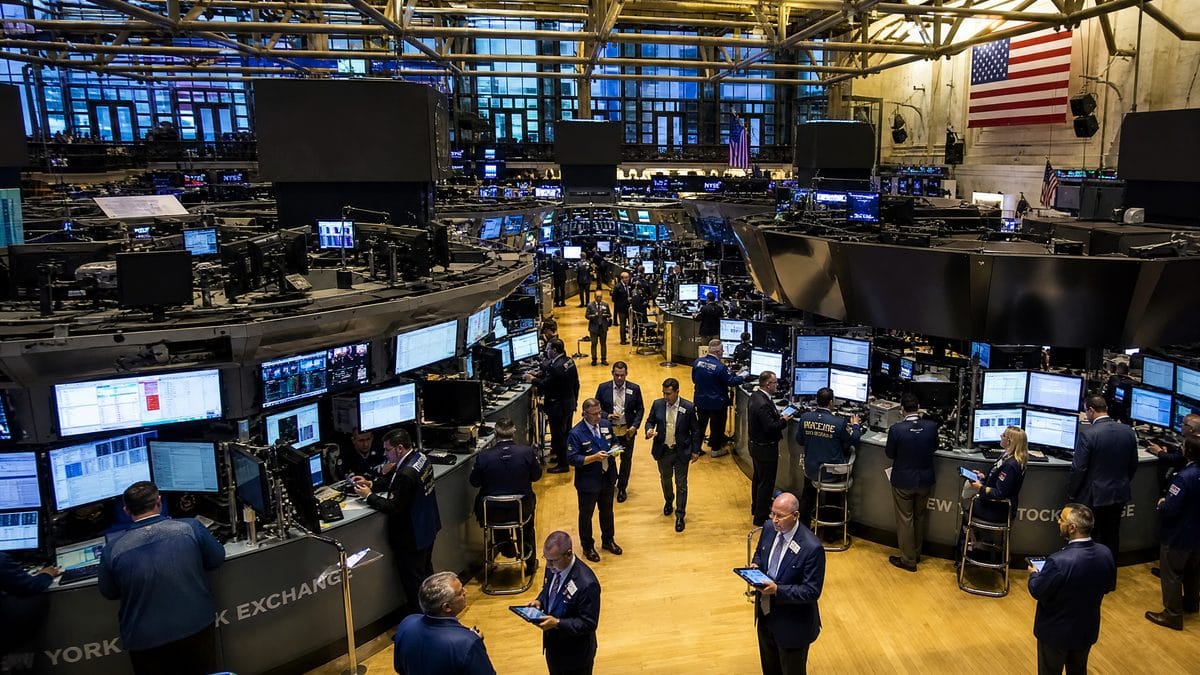
Market Overview
The final trading week of the first half arrives with markets at a crossroads. The S&P 500 closed Friday at 7,354.02, the Dow Jones Industrial Average at 51,876.11 (down 0.09%), and the Nasdaq Composite at 25,297.62 (down 0.24%). The Russell 2000 small-cap index bucked the trend, edging up 0.07% to 3,010.08 and closing near all-time highs — a notable divergence that suggests smaller companies may have already priced in a potential Federal Reserve rate hike.
The dominant theme entering this week is rotation out of mega-cap technology and AI-linked semiconductors and into defensive sectors. Healthcare (XLV) and utilities (XLU) led sector performance last week as capital sought shelter from the chip-sector turbulence. The CNN Fear & Greed Index dropped to 25 (Extreme Fear), a level that historically attracts contrarian buyers. The VIX settled at 18.41, reflecting elevated but not extreme anxiety. With U.S. markets closed Friday for Independence Day, this is a four-day trading week, which may amplify volatility around key data releases.
Wall Street is also marking the close of a memorable first half of 2026. Despite last week's pullback, the S&P 500 remains significantly higher year-to-date, driven by AI-related investment themes and strong corporate earnings. Wall Street analysts now project S&P 500 full-year earnings growth of approximately 25%, up from less than 16% at the start of the year.
Top Market Movers
Semiconductor Sector Rotation
The most significant market development of the past week was a sharp rotation out of semiconductor stocks. Micron Technology (MU) delivered a blockbuster fiscal Q3 2026 earnings report — EPS of $25.11 versus the $20.20 estimate, and revenue of $41.45 billion versus the $35.01 billion consensus — but the stock fell 6.7% on Friday as its post-earnings surge faded. Micron's record 84.9% gross margin, surpassing Nvidia's recently reported 75%, signaled that upstream memory profitability is creating downstream cost pressures across the tech supply chain. The Philadelphia Semiconductor Index (SMH) fell nearly 4% on the week.
Investment implications: The memory-cost squeeze is now flowing through to consumer-facing hardware. Investors should monitor whether the margin compression narrative broadens to other semiconductor names or whether Micron's premium margins prove sustainable as AI infrastructure buildout continues.
Apple Price Hikes Spark Selloff
Apple Inc. (AAPL) announced immediate price increases across its Mac and iPad product lines on June 25, citing skyrocketing memory chip costs. The MacBook Air (512GB) rose from $1,099 to $1,299, while the MacBook Pro (1TB) increased by $300. The announcement sent Apple shares down nearly 7% from their June high, dragging the broader Magnificent Seven cohort lower. However, Apple rose 3.1% on Friday as investors reassessed the pricing power implications. Notably, Apple has a 94% win rate for July over the past 15 years with an average return of +7%, and the stock faces a July 30 earnings catalyst.
Investment implications: Apple's ability to pass higher component costs directly to consumers underscores its pricing power, but the near-term demand impact on premium hardware remains uncertain. The July earnings report will be a critical test of whether consumers absorb the price increases or defer purchases.
Biotech Sector Quietly Surges
While technology dominated headlines, the S&P Biotech ETF (XBI) quietly gained nearly 15% in June. Key catalysts included an FDA unanimous vote recommending Moderna's (MRNA) flu vaccine — shares jumped 12.6% on Friday after Piper Sandler raised its price target — and AbbVie's (ABBV) announcement of a $10.9 billion acquisition of Apogee Therapeutics (APGE) to bolster its immunology pipeline. Nvidia's CEO also announced AI-powered drug discovery tools at the company's shareholder meeting, adding a technology tailwind to the sector.
Investment implications: The biotech rally represents a meaningful rotation opportunity. M&A activity and AI-driven drug discovery are structural catalysts that could sustain sector outperformance even if broader market volatility persists.
SpaceX (SPCX) Debt Sale Concerns
SpaceX (SPCX) shares tested below $150 for the first time after news of a $20 billion bond sale raised valuation concerns. The stock had previously surged on AI and space infrastructure enthusiasm, making it vulnerable to any negative sentiment shift. The debt issuance raised questions about capital allocation and leverage at the private space company.
Investment implications: High-valuation, pre-profitability names remain vulnerable in a rising-rate environment. The SpaceX selloff is a reminder that even high-conviction growth stories carry meaningful downside risk when sentiment shifts.

Economic Data & Fed Watch
The week's most consequential data release was the May Personal Consumption Expenditures (PCE) inflation report, published June 25. Headline PCE rose 4.1% year-over-year, matching expectations and accelerating from 3.8% in April. More critically, core PCE — the Federal Reserve's preferred inflation gauge — climbed to 3.4%, its highest level since October 2023, up from 3.3% in April. Month-over-month, core PCE rose 0.3%, above the prior month's 0.2% pace. Higher energy prices have driven headline inflation, but the broadening of core price pressures is what concerns Fed officials most.
The Federal Reserve held the federal funds rate steady at 3.50%–3.75% for a fourth consecutive meeting in June. However, nine of the 18 FOMC members penciled in at least one rate hike this year, with six seeing two hikes. Fed Chairman Kevin Warsh reiterated the central bank's commitment to returning inflation to 2%. Markets are now closely watching Warsh's appearance at the Sintra central banking conference this week for any softening of his hawkish stance. The 10-year Treasury yield closed Friday at 4.37%, its lowest since early May, while the 2-year yield fell to 4.07%. The U.S. Dollar Index (DXY) traded around 101.34.
Investment implications: The combination of sticky core inflation and a Fed that is openly discussing rate hikes represents a meaningful headwind for long-duration growth assets. The bond market's modest rally last week — yields falling despite hot inflation — suggests investors believe the Iran peace deal will reduce energy prices enough to bring headline PCE back down. That thesis will be tested by the June nonfarm payrolls report due later this week.
International Markets
Global equity markets broadly declined last week, with Asia taking the sharpest losses. Japan's Nikkei 225 fell 4.2% on Friday, while the Topix dropped 1.3%. South Korea's Kospi plunged 5.8% — circuit breakers were triggered — as SK Hynix fell 8.4% and Samsung Electronics dropped 5.3% on memory-demand concerns. The Hang Seng Index declined 1.8%, though Hong Kong's HK50 gained 2.11% on Monday, June 29, as the ceasefire news lifted sentiment. The Shanghai Composite (4,073.90) remained in a medium-term rising trend channel, supported by China's industrial profits rising 18.8% year-on-year in January–May 2026.
European markets also closed lower on Friday: the STOXX Europe 600 fell 0.7%, the DAX dropped 1.3%, the CAC 40 declined 0.6%, and the FTSE 100 slipped 0.2%. European chipmakers bore the brunt of the AI supply-chain concerns, with Infineon and STMicroelectronics each falling 4.5%. On the currency front, the euro traded near 1.1434 against the dollar intraday before pulling back, while the dollar index eased from its mid-week surge. Japan's retail sales climbed 5.3% year-on-year in May 2026, the fastest pace since November 2023, suggesting domestic demand remains resilient despite global headwinds.
Looking Ahead
This is a holiday-shortened week, with U.S. markets closed Friday, July 4 for Independence Day. The primary macro catalyst will be the June nonfarm payrolls report, expected to show approximately 145,000 jobs added with the unemployment rate holding at 4.3%. A strong jobs number would give the Fed additional cover to hike rates, while a soft reading could ease rate-hike expectations and provide relief for growth stocks. The ADP National Employment Report for June is scheduled for release on July 1 and will serve as an early read on labor market conditions.
On the earnings front, Nike (NKE) is the marquee report of the week, with results expected Tuesday. Investors will scrutinize Nike's commentary on consumer spending, inventory levels, and China demand. Constellation Brands also reports Tuesday, and General Mills is scheduled for Wednesday. Fed Chairman Warsh's remarks at the Sintra conference will be parsed for any shift in the central bank's rate trajectory. The BIS annual report, released Sunday, flagged AI-rally reversal, inflation, and fiscal stress as the three most pressing vulnerabilities to global financial stability — a sobering backdrop for the start of the second half of 2026.
- Tuesday, June 30: Nike (NKE) earnings; Constellation Brands earnings; S&P/Case-Shiller Home Price Index
- Wednesday, July 1: ADP National Employment Report (June); ISM Manufacturing PMI; Fed Chairman Warsh at Sintra
- Thursday, July 2: Weekly jobless claims; Factory orders
- Friday, July 4: U.S. markets closed — Independence Day holiday
- Following week: June nonfarm payrolls (July 3 release moved to Thursday, July 2)
Disclaimer: This analysis is for informational and educational purposes only and should not be considered financial advice. Market conditions can change rapidly, and past performance does not guarantee future results. Always conduct your own research and consult with a qualified financial advisor before making investment decisions.