



U.S. equity markets closed out the first half of 2026 on a strong note Monday, June 29, as technology stocks staged a powerful rebound following a bruising five-session losing streak. The Dow Jones Industrial Average crossed the 52,000 milestone for the first time in history, while the S&P 500 and Nasdaq Composite snapped their respective losing streaks in decisive fashion. Markets head into Tuesday's final session of the half-year period with investors focused on key economic data, a pivotal central bank forum in Portugal, and a packed earnings calendar that begins this week.
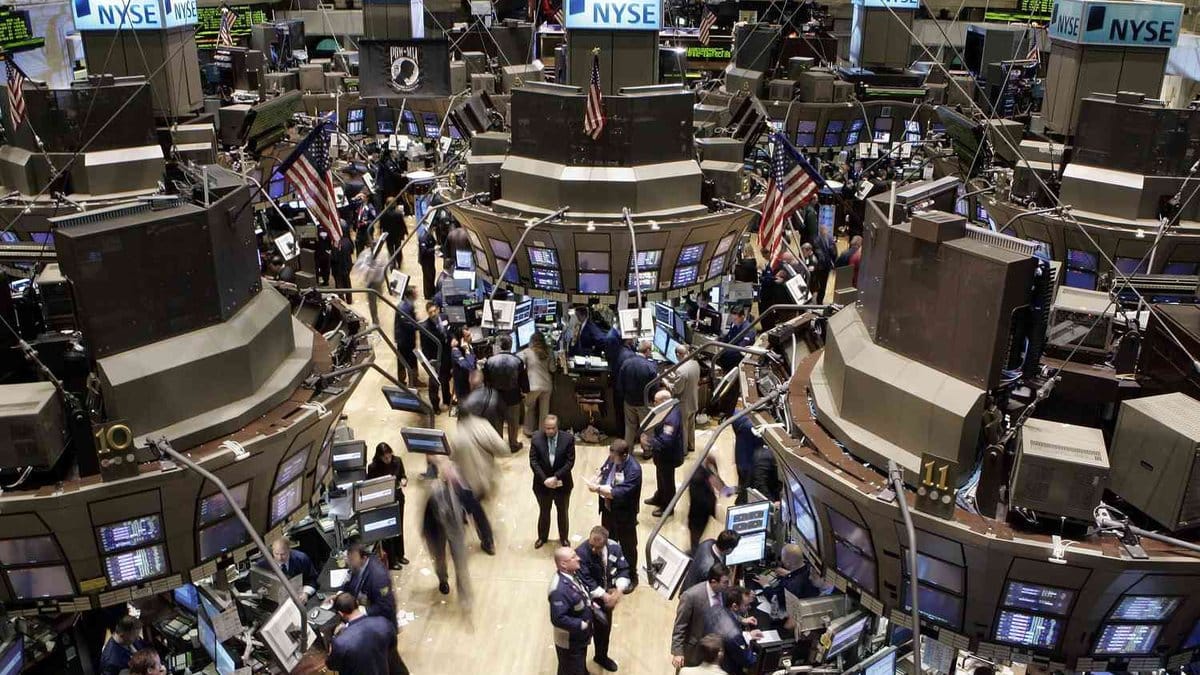
Market Overview
The S&P 500 gained 1.18% on Monday, closing at 7,440.43, snapping a five-day losing streak that had shaved roughly 2% off the index over the prior week. The Nasdaq Composite surged 2.07% to close at 25,820, driven by a broad-based recovery in technology and artificial intelligence-linked shares. The Dow Jones Industrial Average advanced 306.63 points, or 0.59%, settling at a record closing high of 52,182.74 — the first time the blue-chip index has ever closed above 52,000. The Russell 2000 small-cap index posted a modest gain of approximately 0.07%, reflecting more cautious sentiment among smaller-capitalization names.
The dominant theme of the session was the return of buyers to the technology sector following a period of elevated geopolitical risk tied to U.S.-Iran military exchanges over the weekend. A fragile ceasefire agreement announced Sunday, combined with quarter-end portfolio rebalancing flows, helped fuel the rally. Semiconductor stocks led the charge, with the SMH semiconductor ETF surging 3.33% and the Nasdaq 100 (QQQ) advancing 2.49%. The CBOE Volatility Index (VIX) fell 4.0% to 17.66, signaling a meaningful reduction in near-term fear. For the month of June, the S&P 500 gained approximately 5%, the Nasdaq jumped more than 6%, and the Dow rose over 4%.
Top Market Movers
Comcast Soars on NBCUniversal Spinoff Plans
Comcast (CMCSA) was the standout single-stock story of the session, with shares surging approximately 9% after the media and telecommunications giant announced plans to separate its media and technology businesses into two independent, publicly traded companies. Under the plan, NBCUniversal — which encompasses NBC, Telemundo, Sky, the Peacock streaming service, Universal film studio, and theme parks — will be spun off from Comcast around mid-2027. Post-separation, Comcast will operate solely as an internet and wireless provider under the Comcast and Xfinity brands, retaining a 19.9% stake in the new NBCUniversal entity. Co-CEO Mike Cavanagh will lead the new NBCUniversal, while former CFO Michael Angelakis returns to head the slimmed-down Comcast.
Investment implications: The spinoff reflects a broader industry trend of media conglomerates separating content from distribution infrastructure. Investors appear to view the separation as value-unlocking, as the market assigns a higher multiple to pure-play broadband and connectivity businesses. Shareholders in both resulting companies should monitor integration timelines, debt allocation, and the competitive dynamics of a standalone NBCUniversal in a crowded streaming landscape.
Alphabet Joins the Dow Jones Industrial Average
In a historic index change, Alphabet (GOOGL) made its debut as a component of the Dow Jones Industrial Average on Monday, gaining 4.8% on its first day as a Dow member. The addition of the Google parent company to the 30-stock blue-chip index underscores the growing dominance of technology and artificial intelligence in the broader economy. Alphabet replaced a prior Dow component, reflecting the ongoing evolution of the index toward a more technology-centric composition.
Investment implications: Alphabet's inclusion in the Dow will drive passive buying from index-tracking funds and ETFs that benchmark to the DJIA. The move also signals growing institutional recognition of AI-driven mega-cap technology companies as core holdings in diversified portfolios. Investors should be aware that Dow inclusion can create short-term price momentum as funds rebalance.
SpaceX Set to Join Nasdaq 100 on July 7
Shares of SpaceX (SPCX) rose approximately 3.5% on Monday after Nasdaq confirmed the company will join the Nasdaq 100 index before the open on July 7. The announcement comes less than a month after SpaceX's landmark IPO on June 12 at $135 per share, which saw shares surge to a post-IPO high near $226 before retreating to around $153. SpaceX's inclusion in the Nasdaq 100 is expected to trigger significant passive buying from funds tracking the index, including the widely held Invesco QQQ Trust (QQQ).
Investment implications: Nasdaq 100 inclusion creates a structural demand catalyst as passive funds are required to purchase shares to match index weightings. While SpaceX's relatively small public float could amplify price movements, investors should weigh the potential for near-term volatility against the long-term growth narrative in commercial space and satellite communications.
Super Micro Computer Falls on Taiwan Raid
Super Micro Computer (SMCI) shares fell 8.1% after Taiwanese government authorities raided the company's offices and those of several local affiliates as part of an expanding investigation into alleged smuggling of Nvidia chips into China. The raid, which covered approximately 12 locations and resulted in the seizure of around 50 items, extends a prior May 2026 investigation by the same authorities. The development adds to a series of regulatory and compliance challenges that have weighed on SMCI shares throughout the year.
Investment implications: The Taiwan raid introduces fresh legal and reputational risk for Super Micro at a time when the AI infrastructure buildout remains a powerful secular tailwind for the sector. Investors should monitor regulatory developments closely, as further enforcement actions or export restriction violations could materially impact the company's ability to source and distribute Nvidia hardware. The situation also highlights broader U.S.-China technology export control tensions.

Economic Data & Fed Watch
Tuesday's economic calendar is front-loaded with key data releases that will help investors gauge the health of the U.S. labor market and consumer sentiment. The Labor Department will publish May JOLTS job openings data, which will provide insight into the internal dynamics of what has been a resilient labor market. Separately, the Conference Board Consumer Confidence Index for June is expected to rise to approximately 94.4–94.5, reflecting modestly improving consumer sentiment as gasoline prices decline. The Chicago PMI for June is also expected, with consensus around 55.
On the Federal Reserve front, all eyes are on the ECB Forum on Central Banking in Sintra, Portugal, where Fed Chair Kevin Warsh is scheduled to appear on a policy panel on Wednesday alongside ECB President Christine Lagarde, Bank of England Governor Andrew Bailey, and Bank of Canada Governor Tiff Macklem. The panel, moderated by CNBC's Sara Eisen, will be Warsh's first major public comments since the Fed's most recent policy decision. Markets are keenly watching for any signals on whether U.S. rate increases are forthcoming, as the Fed has effectively shifted from pricing in cuts to pricing in potential hikes given persistent economic strength and inflationary pressures. A Supreme Court ruling on Monday affirmed that President Trump cannot currently fire Fed Governor Lisa Cook, removing a tail risk that had weighed on rate-path expectations and contributing to Monday's VIX decline.
Treasury yields were little changed on Monday, with the 10-year yield hovering near 4.37% and the 2-year yield near 4.10%. The U.S. dollar index ticked slightly lower to around 101.26, though the greenback remains on track for a fourth consecutive quarterly gain. The big labor market event of the week is Thursday's June nonfarm payrolls report, with analysts expecting approximately 118,000 net jobs added and the unemployment rate unchanged at 4.3%. U.S. markets will be closed Friday in observance of the Independence Day holiday.
Investment implications: With the Fed signaling a data-dependent stance and Warsh deliberately avoiding forward guidance, Thursday's payrolls report will be the most consequential data point of the week. A stronger-than-expected number could reinforce rate hike expectations and pressure equities, while a softer print could provide relief to rate-sensitive sectors including real estate and utilities.
International Markets
European equities ended Monday's session largely flat, with the STOXX 600 unchanged at +0.0%, the DAX falling 0.2%, and the FTSE 100 slipping 0.2%. The Euro STOXX 50 edged up 0.2% and Switzerland's SMI gained 0.4%. Technology shares provided some support, with ASML rising 2.1% as semiconductor stocks recovered globally. However, Deutsche Telekom fell 5.5% on concerns about competitive disruption from SpaceX's Starlink satellite service in mobile markets, and Heidelberg Materials dropped 9.4% on weaker revenue expectations. ECB President Christine Lagarde opened the Sintra forum by signaling a return to more conventional monetary policy tools, stating the ECB “no longer needs to act with the same force” as during the crisis era, following the central bank's June rate hike to a deposit facility rate of 2.25%.
Asian markets were mixed in the latest full session. Hong Kong's Hang Seng gained 1.6% and China's CSI 300 advanced 1.2%, supported by easing Strait of Hormuz concerns and a rebound in technology shares. Alibaba gained 3.9%, while Horizon Robotics surged 15.0% on renewed tech demand. Japan's Nikkei fell 0.4% as the yen weakened to a 40-year low of 162.41 per dollar, prompting warnings from Finance Minister Satsuki Katayama that authorities stand ready to intervene. South Korea's KOSPI slipped 0.2% after volatile chip trading, though the index remains on track for a remarkable quarterly gain of nearly 65%. China's official manufacturing PMI for June came in at 50.3, returning to expansion territory as AI-related tech export demand boosted factory activity.
Looking Ahead
The remainder of this shortened trading week — U.S. markets close Friday for Independence Day — is packed with market-moving catalysts. On the earnings front, Nike (NKE) reports quarterly results after Tuesday's close, with options markets implying a potential move of up to 8% in either direction. Nike shares have fallen 36% year-to-date amid concerns about CEO Elliott Hill's turnaround progress, and investors will scrutinize guidance carefully. Constellation Brands also reports Tuesday, followed by General Mills on Wednesday. The upcoming Q2 bank earnings season, which begins in mid-July, is also drawing attention, with financials ETFs seeing put block accumulation as investors hedge ahead of results.
On the macroeconomic calendar, ADP private-sector employment data is due Wednesday, followed by the pivotal June nonfarm payrolls report on Thursday. The ISM Manufacturing PMI for June is also scheduled for Wednesday. Geopolitically, U.S.-Iran talks are set to resume in Doha, Qatar on Tuesday, with Secretary of State Marco Rubio reiterating that any Iranian tolls on Strait of Hormuz shipping would be unacceptable. The outcome of these talks will continue to influence oil prices, which remain near pre-war levels around $70–$72 per barrel. Additionally, the MiCA regulatory deadline for cryptocurrency exchanges in the European Union takes effect on July 1, with Binance having withdrawn its Greek license application and restricting EU user onboarding.
Investors should also note that the copper tariff deadline — a potential 15% tariff on refined copper imports — falls on June 30, adding to existing 50% tariffs on semi-finished copper products. This development could have downstream implications for U.S. manufacturers and the broader industrial sector.
Disclaimer: This analysis is for informational and educational purposes only and should not be considered financial advice. Market conditions can change rapidly, and past performance does not guarantee future results. Always conduct your own research and consult with a qualified financial advisor before making investment decisions.