



Tech Week in Review: Navigating the AI Infrastructure Boom
The technology sector experienced a dynamic week in early July 2026, characterized by sweeping capital expenditure announcements and a sharp rotation within the semiconductor space. While broader market indexes maintained an upward trajectory, tech mega-caps faced intense scrutiny regarding the return on their massive artificial intelligence investments. The Nasdaq-100 welcomed SpaceX as its newest and fastest-growing constituent, signaling a continued expansion of what defines modern technology leadership.
Despite a brief selloff in high-flying chip stocks early in the week, the underlying fundamentals of the technology sector remain robust. Investors are increasingly differentiating between the “makers” of AI hardware and the “takers” who must monetize these capabilities. This nuanced approach has led to increased volatility but also created targeted opportunities for discerning market participants. The Information Technology sector is currently projected by FactSet to report the second-highest earnings growth rate of all eleven S&P 500 sectors for Q2 2026, estimated at an impressive 63.3%.
Big Tech & AI Developments: The $725 Billion Capex Commitment
The narrative surrounding Big Tech this week was dominated by a unified, massive commitment to AI infrastructure. Alphabet, Meta, Amazon, and Microsoft have collectively raised their capital spending outlooks, with projected combined 2026 spending swelling to approximately $725 billion. Alphabet hiked its 2026 capex projection by $5 billion, citing unprecedented internal and external demand for AI compute resources, which drove a record 63.4% year-over-year surge in Google Cloud revenue.
Meta similarly raised its 2026 capex guidance to between $125 billion and $145 billion — an 87% year-over-year jump — largely to support future data center capacity and navigate higher component pricing. Meanwhile, Apple is drawing closer to Nvidia in market valuation, fueled by optimism surrounding its edge AI potential and the anticipated overhaul of its Siri architecture. This “Apple Intelligence” initiative is viewed as a critical step in bringing generative AI directly to consumer devices at scale. Additionally, SpaceX signed a landmark $920 million per month AI computing deal with Google, underscoring the convergence of the commercial space and AI infrastructure sectors.
Investment implications: The sheer scale of hyperscaler spending solidifies the “picks and shovels” trade for the foreseeable future. Investors should look beyond the headline numbers and focus on companies demonstrating clear pathways to monetizing these AI investments, particularly in the cloud computing and enterprise software sub-sectors. With hyperscaler AI capex projected to rise from $650 billion in 2026 to $1 trillion in 2027, the infrastructure buildout cycle has significant runway remaining.
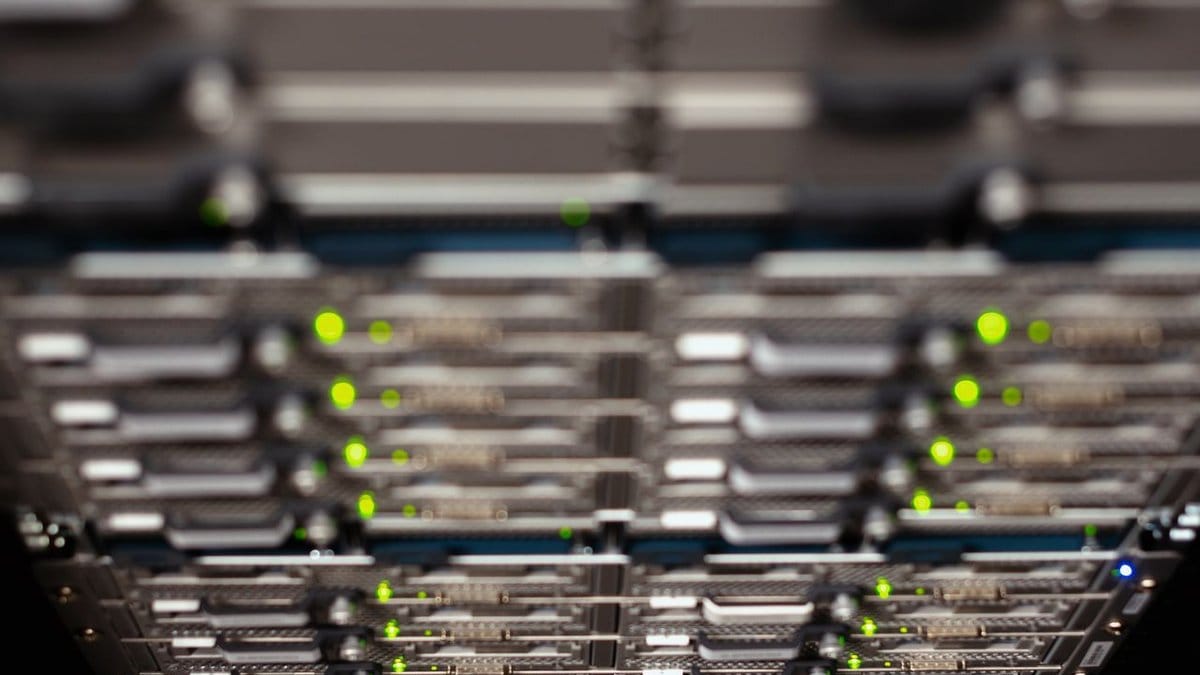
Modern data center hardware powering the AI infrastructure boom. Photo: Pexels
Emerging Tech Trends: Memory Markets and Sovereign AI
Beyond the headline-grabbing foundational models, critical shifts are occurring in the semiconductor supply chain. Samsung Electronics delivered a historic, AI-driven profit surge, reporting a 19-fold jump in quarterly operating profit fueled by insatiable demand for high-bandwidth memory (HBM) chips. This underscores a broadening of the AI hardware rally beyond pure-play GPU manufacturers, as memory constraints become the new bottleneck for data center expansion.
Additionally, the push for “Sovereign AI” is reshaping global technology investments. Chinese firms are reportedly increasing their domestic AI chip budget share from 30% to 46%, accelerating a structural shift away from Western suppliers. Nvidia’s China market share is projected to fall to approximately 8% in 2026 as a result. Simultaneously, established tech giants are facing new competition from well-funded startups; Amazon is accelerating its own AI chip development to compete more directly with Nvidia and Google’s custom silicon offerings, while also raising over $25 billion in bonds to fund its AI infrastructure expansion.
Investment implications: The memory chip cycle appears to be entering a prolonged structural upswing rather than a traditional cyclical peak. Investors should consider diversifying semiconductor exposure to include memory manufacturers and companies involved in advanced packaging and cooling solutions, which are essential for next-generation AI data centers. The Sovereign AI trend also creates opportunities in domestic chip manufacturing ecosystems across multiple geographies.
Tech Stock Spotlight: Nvidia (NVDA) and Oracle (ORCL)
Nvidia (NVDA): The undisputed leader in AI hardware faced a volatile week, enduring a broader chip sector selloff — the VanEck Semiconductor ETF (SMH) fell approximately 5% — before rebounding strongly on bullish options activity. Despite trading roughly 17% below its May record high, options traders aggressively bought the dip, with approximately 1.5 million calls traded versus 690,000 puts, signaling sustained institutional confidence. With hyperscaler AI capex projected to rise from $650 billion in 2026 to $1 trillion in 2027, Nvidia’s data center revenue runway remains exceptionally long, even as its valuation commands a premium.
Oracle (ORCL): As Oracle prepares to report its fiscal fourth-quarter earnings, the focus is squarely on its ability to capture enterprise AI workloads. The stock has experienced volatility as investors weigh its aggressive infrastructure expansion costs against its cloud revenue growth. However, Oracle’s strategic partnerships and specialized cloud architecture position it uniquely to benefit from companies seeking cost-effective, high-performance AI training environments outside the dominant hyperscaler ecosystems.
Investment implications: Volatility in high-beta tech stocks should be viewed as a feature, not a bug, of the current market environment. Strategic accumulation during broader sector pullbacks remains a viable strategy for long-term investors, provided the underlying thesis of AI infrastructure buildout remains intact. The divergence between hardware leaders like Nvidia and software/cloud players like Oracle also presents opportunities for portfolio diversification within the tech sector.
The Week Ahead for Tech
Looking ahead, market participants will closely monitor the onset of the Q2 2026 earnings season. Key reports from major semiconductor equipment manufacturers and early-reporting software firms will provide crucial data points on the health of enterprise IT budgets. Oracle’s fiscal Q4 earnings report will be a particular focal point, as its results will offer insight into whether enterprise demand for AI-optimized cloud infrastructure is translating into tangible revenue acceleration.
Investors will also parse any further commentary from hyperscalers regarding their capital expenditure timelines and the pricing environment for essential components like memory chips and power infrastructure. The integration of SpaceX into the Nasdaq-100 will introduce new dynamics to index-tracking funds and highlight the growing economic importance of the commercial space sector. As the initial hype cycle matures into an execution phase, the market will increasingly reward companies that demonstrate tangible revenue acceleration derived directly from their AI initiatives.
Disclaimer: This article is for informational purposes only and should not be considered financial advice. Market conditions can change rapidly, and past performance does not guarantee future results. Always conduct your own research and consider consulting with a qualified financial advisor before making investment decisions.