



Chip Stocks Lead Market Recovery
U.S. stock futures rose Thursday morning as markets attempted to recover from back-to-back losing sessions, with semiconductor stocks leading the charge following Taiwan Semiconductor Manufacturing Company's record quarterly earnings report. The rally in chip stocks provided a much-needed boost to investor sentiment after technology shares had pressured markets lower on Wednesday.
Futures tied to the Dow Jones Industrial Average climbed 58 points, or 0.1 percent, while S&P 500 futures advanced 0.4 percent and Nasdaq-100 futures surged 0.7 percent higher. The optimism in chip stocks extended across the Atlantic, with European semiconductor equipment makers posting substantial gains in early trading.
TSMC Earnings Spark Semiconductor Surge
Taiwan Semiconductor's record quarterly results triggered a powerful rally across the global chip sector. Taiwan Semi shares jumped 6 percent, while Micron Technology popped 3 percent in pre-market trading. Nvidia and Advanced Micro Devices each gained more than 1 percent, signaling renewed confidence in the artificial intelligence and semiconductor supply chain.
The enthusiasm spread to Europe, where Dutch semiconductor equipment maker ASML surged 7 percent in early trading. ASM International climbed 9.7 percent, and BE Semiconductor gained 5.4 percent, as investors responded to the stronger-than-expected earnings from Taiwan's chip manufacturing giant.
Trump's Semiconductor Tariff and Nvidia Approval
President Donald Trump signed a proclamation on Wednesday imposing a 25 percent tariff on certain semiconductors, though the levy will not apply to chips imported to contribute to the buildout of the U.S. technology supply chain. The move comes as the administration seeks to strengthen domestic semiconductor manufacturing while maintaining flexibility for critical technology infrastructure development.
In a significant development for Nvidia, Trump announced that his administration will approve China sales of the company's H200 chip for artificial intelligence applications, with the U.S. government taking a 25 percent cut of sales. The H200 is a version of Nvidia's Hopper generation sold in multiple markets, though its performance has been exceeded by two generations of newer chips currently in production.
Bank Earnings Disappoint Investors
Financial sector stocks underperformed on Wednesday after Wells Fargo, Citigroup, and Bank of America released quarterly earnings reports that failed to meet investor expectations. The disappointing results from major banking institutions contributed to the broader market weakness, as investors reassessed the health of the financial sector amid changing interest rate dynamics and economic conditions.
Despite the near-term earnings disappointments, analysts maintain that the underlying economic backdrop remains relatively stable. Ayako Yoshioka, portfolio consulting director at Wealth Enhancement Group, emphasized that corporate earnings remain relatively strong and that 2026 is expected to be powered by earnings growth rather than multiple expansion.
Russell 2000 Hits Record High
While the three major averages posted a second consecutive losing session on Wednesday, small-cap stocks emerged as a bright spot in the market. The Russell 2000 climbed 0.7 percent, posting its fourth positive session in the past five trading days. The small-cap benchmark touched a fresh all-time high during the session and closed at a record level.
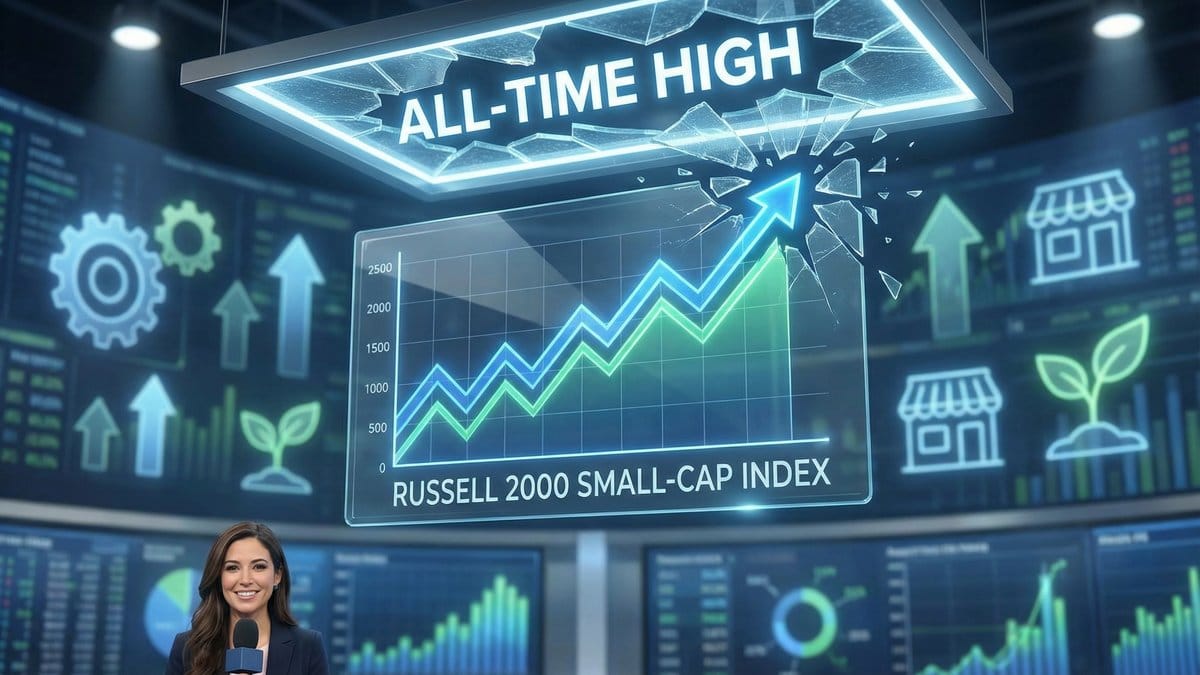
The Russell 2000's strong performance put the index on pace for its second straight positive week, with gains of 1 percent week to date. The outperformance of small-cap stocks suggests that investors are finding value in domestically focused companies that may benefit from economic stability and potential policy changes under the new administration.
Geopolitical Tensions Weigh on Sentiment
Geopolitical risks continued to weigh on investor sentiment throughout the week. Trump administration officials met with Danish and Greenlandic foreign ministers on Wednesday as the president continues to push for U.S. control of Greenland. The meeting ended with what a Danish official described as a “fundamental disagreement” over the kingdom's ownership of the territory, though both sides indicated they would continue discussions.
Trump doubled down on his position ahead of the talks, stating on social media that anything less than Greenland becoming part of the United States was “unacceptable.” The ongoing tensions add another layer of uncertainty to global markets as investors navigate an already complex geopolitical landscape.
Fears over oil supply disruptions caused by mounting tensions between the U.S. and top OPEC member Iran initially lifted oil prices, with West Texas Intermediate crude futures settling up more than 1 percent. However, prices retreated after Trump signaled he might not pursue military action against Iran, providing some relief to energy markets.
China Restricts Nvidia Chip Imports
Technology stocks faced additional pressure on Wednesday after Reuters reported that Chinese customs authorities advised customs agents that Nvidia's H200 chips are not allowed to enter the country. The restriction comes amid ongoing technology tensions between the U.S. and China, though Trump's subsequent approval of H200 sales with a government revenue share may provide a path forward for resolving the trade dispute.
Investment Implications
The market's response to Taiwan Semiconductor's earnings demonstrates the continued importance of the semiconductor sector to broader technology and economic growth themes. Investors should monitor chip stocks closely as they often serve as leading indicators for technology sector health and global manufacturing demand.
The divergence between large-cap and small-cap performance suggests that investors are actively seeking opportunities across the market cap spectrum. The Russell 2000's record high indicates confidence in the domestic economy and smaller companies' ability to navigate the current environment. Investors with diversified portfolios may benefit from maintaining exposure to both large-cap technology leaders and small-cap domestic growth opportunities.
Bank earnings disappointments highlight the importance of managing expectations during earnings season. While near-term results may fall short of elevated expectations, analysts suggest that these pullbacks could present buying opportunities for long-term investors, particularly if the underlying economic fundamentals remain sound.
Geopolitical uncertainties surrounding Greenland, Iran, and U.S.-China technology trade continue to create volatility. Investors should maintain diversified portfolios and consider hedging strategies to manage risk during periods of heightened geopolitical tension. The market's ability to recover from back-to-back losses suggests underlying resilience, but vigilance remains warranted.
Disclaimer: This analysis is for informational and educational purposes only and should not be considered financial advice. Market conditions can change rapidly, and past performance does not guarantee future results. Investors should conduct their own research, consider their risk tolerance and investment objectives, and consult with qualified financial advisors before making investment decisions. The geopolitical situations discussed are subject to rapid changes that could materially impact market conditions and investment outcomes.
