



Wall Street closed the month of July on a powerful note, with the technology sector leading a broad-based rally that pushed all major indices sharply higher on Thursday, July 30, 2026. The gains carried into Friday's pre-market session, cementing one of the most dramatic single-day recoveries of the year. Microsoft's blockbuster earnings report served as the catalyst, reviving confidence in artificial intelligence investments and lifting the entire semiconductor complex.
Market Overview
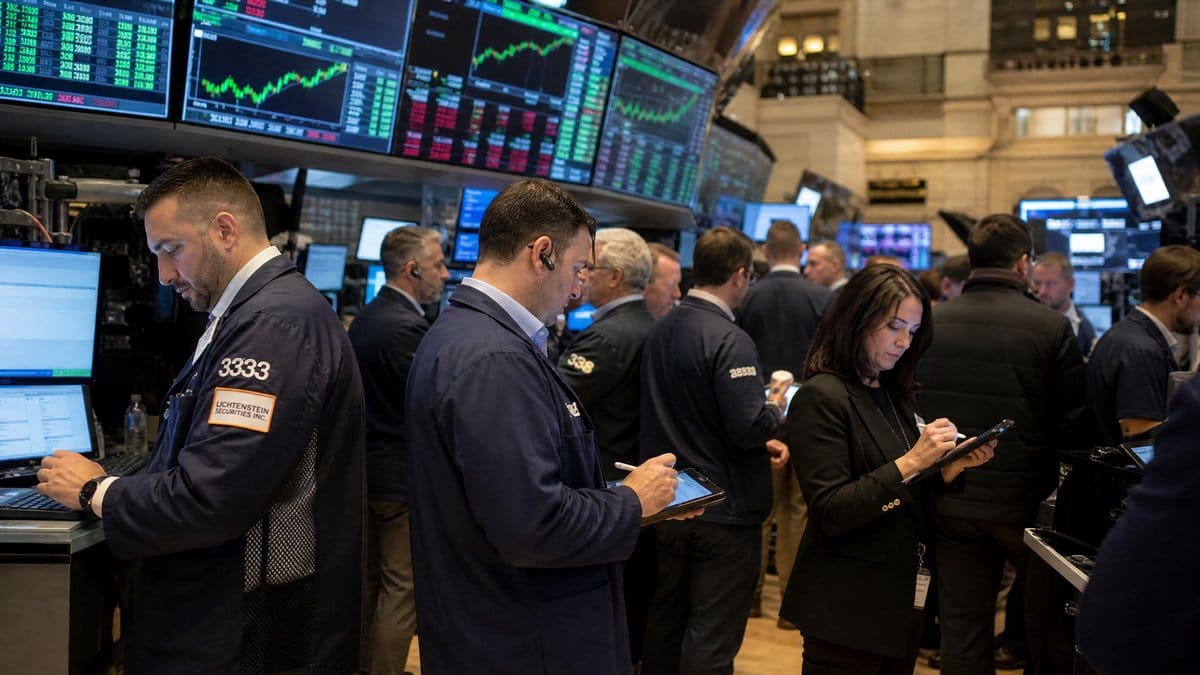
U.S. equity markets delivered a resounding rebound on Thursday, July 30, 2026, erasing much of the prior session's losses and closing the month on a decidedly bullish tone. The S&P 500 surged 1.66% to close at 7,437.63, while the Nasdaq Composite posted an even more impressive gain of 2.78%, finishing at 25,122.18. The Dow Jones Industrial Average added 1.19%, or approximately 614 points, to settle at 52,208.06. The Russell 2000 small-cap index also participated in the rally, rising 1.37% to 2,946.10, suggesting broad market participation beyond the mega-cap technology names.
The session's defining theme was the dramatic reversal in sentiment around artificial intelligence infrastructure spending. After weeks of investor anxiety about the return on investment for massive AI capital expenditures, Microsoft's stellar quarterly results provided the market with a compelling proof of concept. The CBOE Volatility Index (VIX) retreated 1.52% to 16.83, signaling a meaningful reduction in near-term fear. Seven of the eleven S&P 500 sector indexes advanced, with technology leading all sectors with a gain of 5.2%, followed by consumer discretionary at 1.6%. Volume was elevated, with 18.0 billion shares traded compared to the 20-session average of 17.2 billion.
Top Market Movers
Microsoft (MSFT) — +15.51%: The technology giant delivered the single most impactful earnings report of the season, forecasting quarterly sales and cloud growth well above analyst expectations. Microsoft also reported capital expenditures below estimates and guided for continued strong cash generation through fiscal 2027. The stock's single-day market capitalization increase of approximately $450 billion represents the greatest single-day value creation for any company in Wall Street history. The results directly addressed investor concerns that AI spending was consuming cash without generating commensurate returns.
Investment implications: Microsoft's results may mark a pivotal inflection point for the AI trade. Investors who had been rotating out of AI-linked equities may reconsider their positioning, particularly in cloud and enterprise software names that can demonstrate AI monetization. The report shifts Microsoft from the “battleground” category into what analysts are calling a “trusted AI winner.”
Semiconductor Sector (PHLX SOX Index) — +8.2%: The chip sector staged a dramatic recovery, with Micron Technology (MU) surging 18%, Sandisk (SNDK) soaring 26%, and Advanced Micro Devices (AMD) jumping 13%. The rally followed weeks of pressure on chip stocks as investors questioned AI-related valuations. Microsoft's results, which implied robust demand for AI computing infrastructure, provided the catalyst for a broad-based semiconductor recovery.
Investment implications: The semiconductor sector remains highly sensitive to AI demand signals. Microsoft's positive guidance reinforces the thesis that data center buildout will continue to drive chip demand. Investors may look to add exposure to memory and AI accelerator names on any near-term pullbacks.
Meta Platforms (META) — -7.95%: Meta was the notable laggard in an otherwise bullish session, tumbling after reporting a 91% decline in second-quarter free cash flow. The social media giant's costly AI buildout is placing significant strain on its balance sheet, and investors reacted negatively to the cash flow deterioration even as revenue growth remained solid. The divergence between Meta and Microsoft underscores that the market is increasingly discriminating between companies that can demonstrate AI returns and those still in the heavy investment phase.
Investment implications: Meta's results highlight the bifurcation within the AI trade. Companies that can show near-term AI monetization are being rewarded, while those still in the capital-intensive buildout phase face valuation pressure. Investors should monitor Meta's cash flow trajectory closely heading into Q3.
Amazon (AMZN) — +3.9% / Apple (AAPL) — -1.41%: Amazon rose ahead of its after-hours earnings release, which subsequently beat estimates on quarterly cloud revenue growth. Apple dipped slightly despite reporting revenue and profit beats, as the company's guidance for revenue growth came in below analyst estimates due to chipmaking bottlenecks. Apple recently overtook Nvidia to become the world's most valuable company at approximately $4.9 trillion in market capitalization.
Investment implications: Amazon's strong cloud results reinforce the AI infrastructure demand narrative. Apple's guidance miss on chipmaking constraints is a near-term headwind but may resolve as supply chains normalize. Both remain core holdings for large-cap technology investors.
Economic Data & Fed Watch
The macroeconomic backdrop presented a mixed picture on Thursday. The Commerce Department's advance estimate showed that U.S. GDP grew at an annualized rate of just 1.5% in the second quarter of 2026, falling short of the consensus forecast of 1.8% and decelerating from the 2.1% pace recorded in Q1. However, the headline miss was largely attributable to a decline in federal government spending and inventory drawdowns rather than weakness in private-sector demand. Personal spending rose 2.1%, and final sales to private domestic purchasers — a key measure of underlying demand — posted a robust 3.9% increase.
On inflation, the Personal Consumption Expenditures (PCE) price index — the Federal Reserve's preferred gauge — fell 0.1% in June on a monthly basis, bringing the annual rate to 3.7%. Core PCE, which excludes food and energy, rose 0.1% for the month and 3.3% year-over-year, in line with forecasts. While the monthly deceleration is welcome, inflation remains well above the Fed's 2% target. Energy prices fell sharply in June, down 5.9%, aided by a temporary easing of Middle East tensions that pushed gasoline prices down 9.2%.
The Federal Reserve, under new Chair Kevin Warsh, voted 9-3 on Wednesday to hold its benchmark borrowing rate unchanged in a range of 3.5%–3.75%. The three dissenting votes came from regional presidents concerned about persistent inflation. Warsh's communication style has introduced uncertainty into markets, with the 30-year Treasury yield surging to its highest level in 19 years at 5.21%, while the 10-year yield stood at 4.66%. CME FedWatch data shows traders now pricing in only a 59% probability of a rate hike at the September meeting, down sharply from 82% a week ago.
Investment implications: The combination of slowing GDP growth and still-elevated inflation creates a challenging environment for the Fed. The bond market's reaction — with long-end yields surging — suggests investors are pricing in a “higher for longer” scenario. Equity investors should monitor the yield curve closely, as rising long-end rates could pressure equity valuations, particularly for high-multiple growth stocks.
International Markets
Asian markets staged a blistering rally on Friday, July 31, taking their cues from Wall Street's Thursday surge. South Korea's KOSPI led all global indices, blasting as much as 17% higher as investors pounced on battered semiconductor stocks, with Samsung Electronics and SK Hynix each soaring nearly 30%. Despite Friday's record gains, the KOSPI remains on track to lose approximately 25% in July, marking its largest monthly decline since the Asian financial crisis of 1997. Taiwan's TAIEX gained more than 7%, and Japan's Nikkei 225 jumped over 5%. MSCI's broadest index of Asia-Pacific shares outside Japan rose 4.7%.
In currency markets, the Japanese yen weakened to 160.69 per dollar after the Bank of Japan kept interest rates on hold, in line with expectations. Japanese and Korean authorities conducted a rare coordinated foreign exchange intervention on Thursday to strengthen their respective currencies, but the boost proved short-lived. In European markets, the pan-European Stoxx 600 rose 0.8% on Thursday, led by miners and banks, with ASML gaining 5.7% and Infineon advancing sharply. European futures pointed to a further 0.4–0.6% gain at Friday's open. The U.S. Dollar Index stood at approximately 100.08, reflecting modest dollar strength.
Looking Ahead
Friday, July 31 brings a final slate of economic data to close out the month. The Employment Cost Index for Q2 is due at 7:30 AM ET, with a consensus forecast of 0.8%, down from 0.9% in Q1, providing a key read on labor cost inflation. The Chicago PMI for July is expected at 8:45 AM ET, following the prior reading of 56.7. The University of Michigan Consumer Sentiment Index (final reading for July) is due at 9:00 AM ET, with a consensus of 54.4, reflecting ongoing consumer caution amid elevated inflation and interest rate uncertainty. One-year inflation expectations from the Michigan survey are forecast at 4.2%, a level that will draw close attention from Fed officials.
On the earnings front, major reports scheduled for Friday include ExxonMobil (XOM) and Chevron (CVX), which will provide important signals for the energy sector and broader commodity markets. Looking into the week of August 3, investors will be closely watching for any further commentary from Federal Reserve officials following the divided FOMC vote, as well as developments in the Middle East that could influence energy prices. The July non-farm payrolls report, typically released on the first Friday of the month, will be a critical data point for assessing labor market health and the Fed's policy path. Analysts will also continue to monitor Q2 earnings results, with S&P 500 aggregate earnings expected to jump approximately 40% year-over-year, driven largely by AI-related names.
Disclaimer: This analysis is for informational and educational purposes only and should not be considered financial advice. Market conditions can change rapidly, and past performance does not guarantee future results. Always conduct your own research and consult with a qualified financial advisor before making investment decisions.