



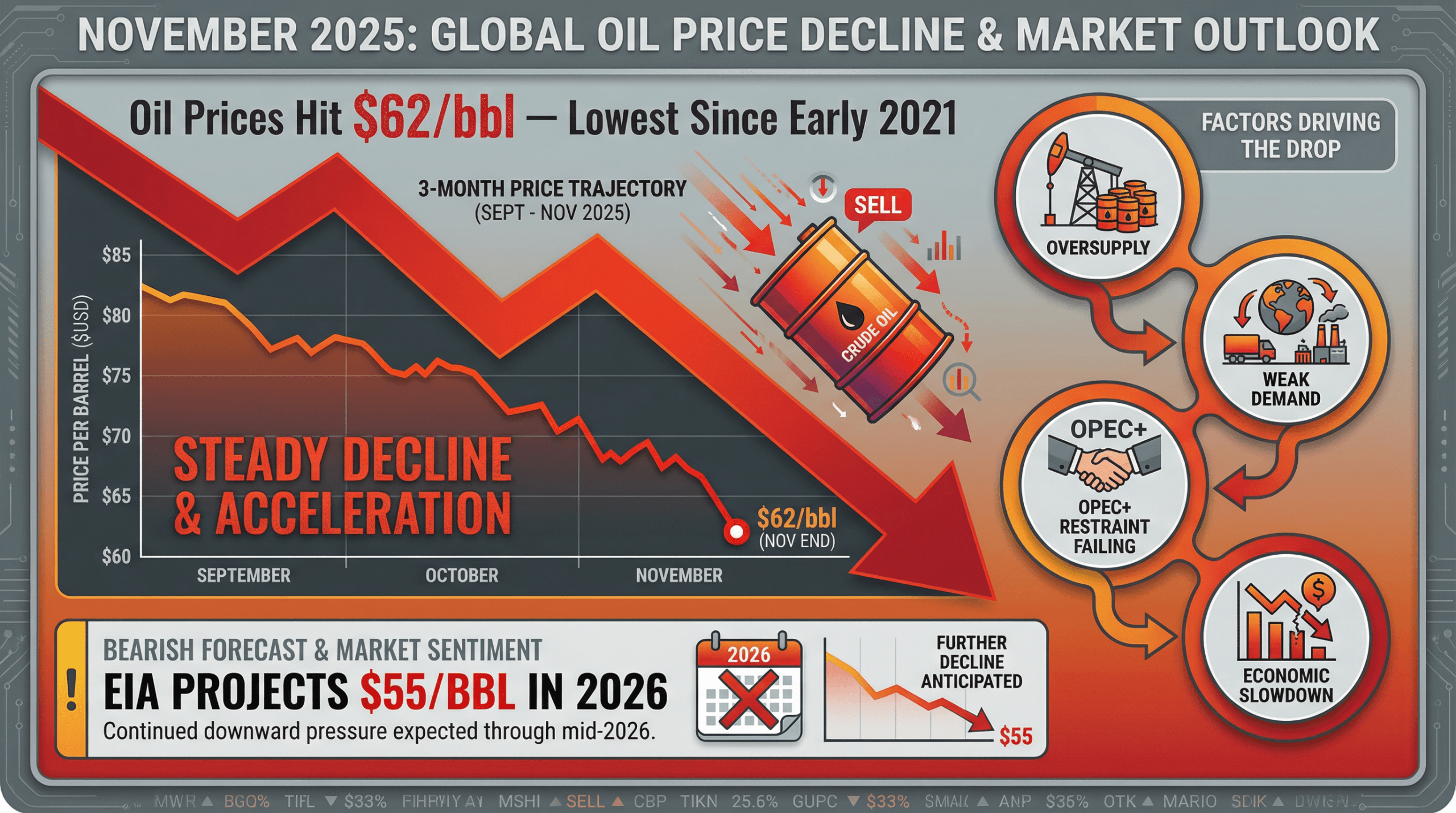
Energy Sector Navigates Post-Election Uncertainty and Volatility
The energy sector was whipsawed this week by a combination of post-election uncertainty in the US and a bearish inventory report. The US presidential election, which was held on Tuesday, has not yet yielded a clear winner, leaving the market in a state of limbo. The uncertainty over the election outcome, and its potential implications for US energy policy, led to a volatile week of trading in the energy sector. Adding to the volatility was a bearish inventory report from the EIA, which showed a surprise build in US crude inventories.
Weekly Energy Market Performance
| Metric | Value | Weekly Change (%) |
|---|---|---|
| WTI Crude Oil (USD/bbl) | $74.50 | -2.2% |
| Brent Crude Oil (USD/bbl) | $78.80 | -2.1% |
| Natural Gas (USD/MMBtu) | $2.55 | -1.9% |
| Energy Sector ETF (XLE) | $80.90 | -2.0% |
Post-Election Uncertainty Weighs on Market
The main driver of the energy market's volatility this week was the US presidential election. The election, which was too close to call on election night, has left the market in a state of uncertainty. The two candidates have vastly different energy policies, and the outcome of the election will have a major impact on the future of the US energy sector. A victory for the incumbent would likely mean a continuation of the current policies, which have been supportive of the fossil fuel industry. A victory for the challenger, on the other hand, would likely lead to a more aggressive push towards renewable energy and a more restrictive environment for the fossil fuel industry.
The uncertainty over the election outcome has led to a great deal of volatility in the energy sector. Investors are hesitant to take large positions until there is a clearer picture of the political landscape. The market is likely to remain volatile until a winner is declared, which could take several days or even weeks.
Bearish Inventory Report Adds to Volatility
Adding to the volatility was a bearish inventory report from the EIA. The EIA reported that US crude inventories rose by 2.5 million barrels last week, confounding expectations for a draw. The build was driven by a combination of lower refinery runs and a rebound in imports, and it raised concerns that the market may be oversupplied. The bearish inventory report, coupled with the post-election uncertainty, led to a sell-off in oil prices on Wednesday.
However, the sell-off was short-lived, as prices rebounded on Thursday on the back of a weaker dollar and hopes for a resolution to the election. The market is now in a wait-and-see mode, as it awaits a clearer picture of the political landscape and the global supply-demand balance.
Forward-Looking Conclusion
The energy sector is facing a period of heightened uncertainty and volatility as it navigates the post-election landscape. The outcome of the US presidential election will have a major impact on the future of the US energy sector, and the market is likely to remain on edge until a winner is declared. Adding to the uncertainty is a bearish fundamental backdrop, with a weak global economy and rising non-OPEC supply weighing on prices.
Investors should be prepared for continued volatility in the energy sector in the coming weeks. The key to the market's direction will be the interplay between politics, supply, and demand. For now, the market is likely to remain in a range-bound trading pattern as it awaits a clearer picture of the future. The energy sector is not for the faint of heart in the current environment.