



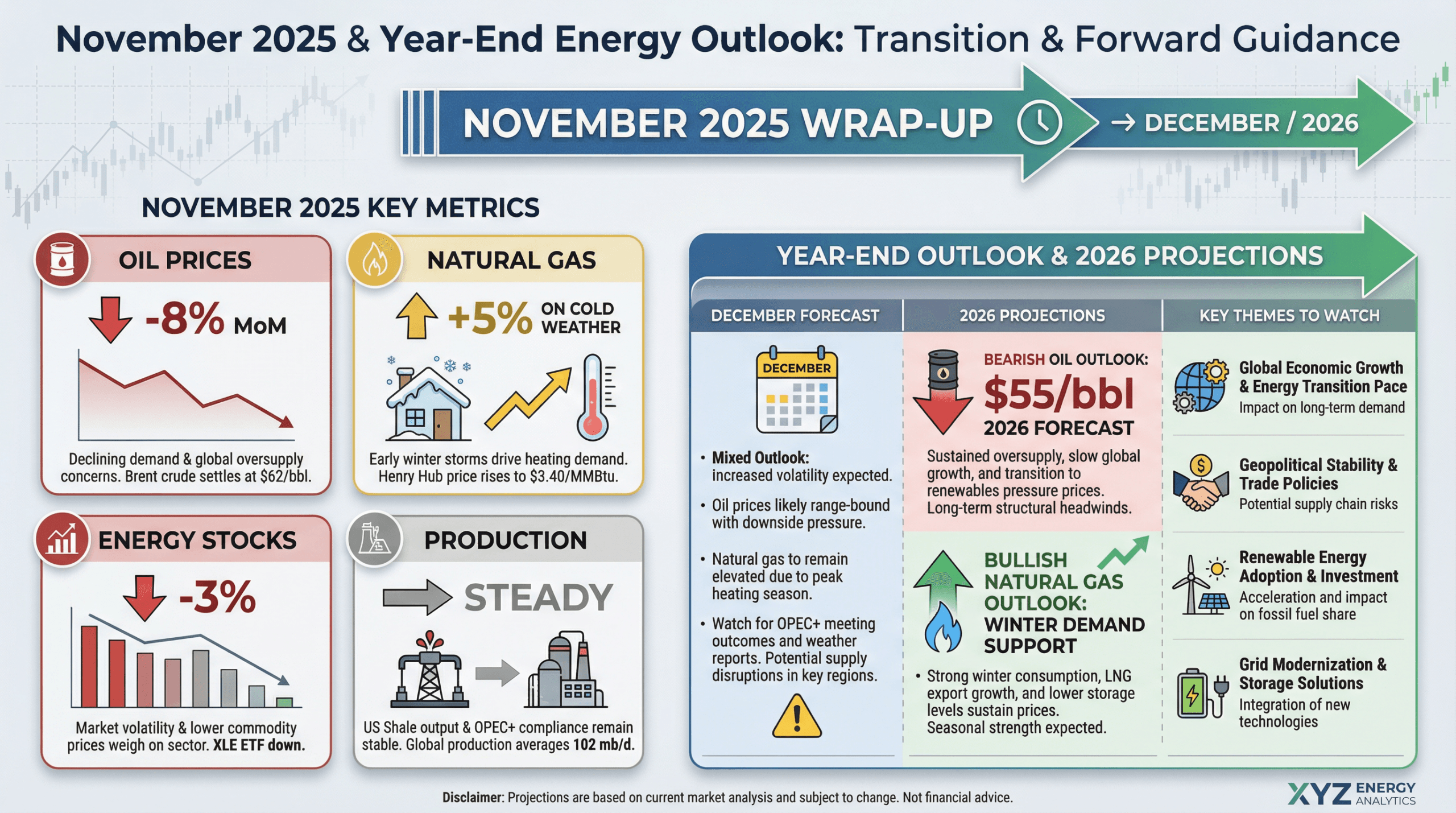
Energy Sector Ends November on a Weak Note as Demand Concerns Linger
The energy sector ended November on a weak note, with both oil and natural gas prices falling on the back of renewed concerns about global demand. The market, which had found a floor in the middle of the month, gave back a portion of its recent gains as investors shifted their focus from supply-side risks to the deteriorating economic outlook. The energy sector was one of the worst-performing sectors in the S&P 500 for the month, a stark reversal from its strong performance in October.
Weekly Energy Market Performance
| Metric | Value | Weekly Change (%) |
|---|---|---|
| WTI Crude Oil (USD/bbl) | $69.80 | -2.0% |
| Brent Crude Oil (USD/bbl) | $73.90 | -2.1% |
| Natural Gas (USD/MMBtu) | $2.80 | -3.4% |
| Energy Sector ETF (XLE) | $77.10 | -2.2% |
Demand Concerns Trump Supply Risks
The main driver of the energy market's weakness this week was a string of disappointing economic data from around the world. In China, industrial production and retail sales both missed expectations, raising concerns about the strength of the world's second-largest economy. In Europe, the latest PMI data pointed to a contraction in manufacturing activity, while in the US, there were signs that the labor market is starting to cool. The weak economic data, coupled with the ongoing war in Ukraine and the prospect of further interest rate hikes from the Federal Reserve, created a bearish outlook for global oil demand.
The demand concerns were enough to overshadow the ongoing supply-side risks. OPEC+ is still implementing a production cut of 2 million barrels per day, and the group is expected to announce a deeper cut at its upcoming meeting in early December. However, the market is skeptical that even a deeper cut will be enough to offset the impact of a global recession on oil demand.
Thanksgiving Travel Provides Little Support
The Thanksgiving holiday in the US, which is typically a period of high gasoline demand, provided little support for the oil market this year. While travel was up from last year, it was still below pre-pandemic levels. The muted holiday demand was a further sign that the US economy is starting to slow, and it added to the bearish sentiment in the oil market.
Investors will be closely watching the upcoming OPEC+ meeting for clues on the group's production policy. A deeper-than-expected cut could trigger a short-term rally in oil prices, but the longer-term outlook will depend on the strength of the global economy. For now, the market is likely to remain in a volatile trading pattern as it digests the latest economic data and awaits a clearer picture of the global supply-demand balance.
Forward-Looking Conclusion
The energy sector is ending November on a weak note, with both oil and natural gas prices under pressure. The market is facing a challenging fundamental backdrop, with a weak global economy and rising non-OPEC supply all weighing on prices. While OPEC+ is likely to remain proactive in its efforts to support the market, the group faces an uphill battle.
Investors should remain underweight the energy sector in the current environment. The sector is likely to underperform the broader market as long as the global economy remains weak and oil prices remain under pressure. The path of least resistance for oil prices appears to be to the downside, with the potential for further weakness if the global economy continues to deteriorate.