



Story 1: Precious Metals Hit Record Highs as Debt Fears and Geopolitical Tensions Escalate
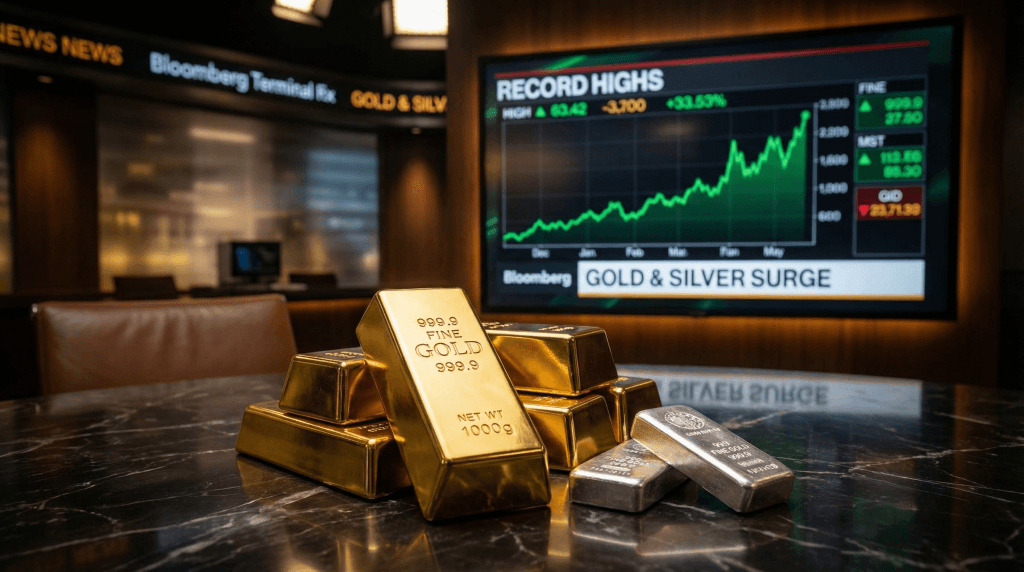
Silver prices surged 9.6% to top $78 per ounce for the first time ever on Friday, while gold rose 1.3% to a fresh record of $4,561 per ounce. Platinum jumped 10.5% and palladium leapt 13% to their own record highs. Year-to-date, silver has spiked 169%, platinum has shot up 172%, and palladium has soared 124%, all easily beating gold's 73% gain and significantly outperforming the S&P 500's 18% advance.
Why it matters for investors: The precious metals rally reflects two critical concerns for portfolio positioning. First, the “debasement trade” has roared back as investors fear governments will let inflation run hotter to erode unsustainable debt burdens rather than cutting deficits. This makes hard assets increasingly attractive as hedges against currency devaluation. Second, escalating geopolitical tensions—including U.S. strikes on Islamic State targets in Nigeria, increased pressure on Venezuela, and Pentagon military buildups in the Caribbean—are driving safe-haven demand. Investors should consider whether their portfolios have adequate exposure to precious metals and other inflation-resistant assets, as these trends suggest continued upward pressure on gold and silver prices into 2026.
Story 2: Tech Giants Shift $120 Billion in AI Data Center Debt Off Balance Sheets

Major technology companies have moved $120 billion worth of AI data center debt off their balance sheets through creative financing structures, according to Financial Times reporting. This massive shift comes as AI companies have borrowed more than $100 billion this year to finance infrastructure buildout. Applied Digital, a data center builder, sold $2.35 billion of debt in November at a 9.25% coupon—roughly 3.75% above similarly rated companies—signaling that debt investors are growing increasingly wary of AI infrastructure investments.
Why it matters for investors: This development reveals both the massive capital requirements of the AI boom and growing concerns about its sustainability. By moving debt off balance sheets, Big Tech companies are insulating themselves from immediate financial risk while binding Wall Street to the sector's future success or failure. The elevated borrowing costs for AI infrastructure companies suggest the market is pricing in higher default risk. Investors holding tech stocks should understand that their exposure may be indirectly tied to this debt through complex financing arrangements. If AI revenue growth disappoints or infrastructure utilization falls short of projections, the unwinding of these structures could trigger significant volatility in tech valuations.
Story 3: Copper Prices Hit Record High on Tariff Fears and Supply Disruptions
Copper prices exceeded $12,000 per tonne for the first time on record, with Shanghai futures hitting nearly 100,000 yuan ($14,270) per ton and New York Comex futures climbing as much as 5.6% to $5.8075 per pound. The surge comes despite weak demand in China, driven instead by mine disruptions and concerns about potential tariffs under the Trump administration. Over the past four weeks, copper has gained 13%, and the metal has increased 40.75% over the last 12 months.
Why it matters for investors: Copper's record rally signals critical shifts in global trade and industrial policy that extend far beyond the metal itself. As a key component in electronics, electric vehicles, renewable energy infrastructure, and construction, copper prices serve as a leading indicator for industrial activity and inflation pressures. The fact that prices are surging despite weak Chinese demand suggests supply constraints are severe enough to override traditional demand dynamics. Mining stocks like Freeport-McMoRan have responded accordingly, hitting 19-month highs. Investors should recognize that copper's strength may foreshadow broader commodity inflation, particularly if tariffs materialize, while also presenting opportunities in mining equities and industrial metals exposure.
Story 4: Italy and Spain Shake Off ‘Periphery' Tag as Bond Spreads Hit 16-Year Low
Government borrowing costs for Italy and Spain have fallen to their lowest level relative to Germany in 16 years, as investors reward Rome and Madrid for cutting deficits while France and Germany face pressure to borrow more. The narrowing of bond spreads marks a dramatic reversal in European sovereign debt markets, with traditional “periphery” countries now viewed more favorably than core European economies.
Why it matters for investors: This historic shift in European bond markets reflects fundamental changes in fiscal discipline and economic performance across the eurozone. Italy and Spain's improved fiscal positions make their bonds more attractive on a risk-adjusted basis, while France and Germany's expanding deficits raise concerns about their debt trajectories. For fixed-income investors, this presents opportunities to capture higher yields in Italian and Spanish debt with reduced risk premiums. The trend also has implications for European equity markets, as improved sovereign creditworthiness typically supports domestic stock valuations and reduces systemic risk. Investors should reassess their European exposure, as traditional assumptions about “core” versus “periphery” markets no longer reflect current fiscal realities.
Story 5: Zelenskyy to Meet Trump at Mar-a-Lago as Ukraine Peace Push Intensifies
Ukrainian President Volodymyr Zelenskyy confirmed he will meet with President Donald Trump at Mar-a-Lago on Sunday afternoon, marking a critical moment in efforts to negotiate a peace deal to end Russia's war in Ukraine. The meeting comes after a flurry of diplomatic discussions and follows Zelenskyy's indication of willingness to make territorial concessions in exchange for security guarantees. The White House confirmed the talks will focus on advancing peace negotiations.
Why it matters for investors: A potential resolution to the Ukraine conflict would have far-reaching implications across multiple asset classes. Energy markets, particularly European natural gas and global oil prices, could see significant volatility depending on the outcome of peace negotiations and any changes to sanctions on Russian energy exports. Defense contractor stocks, which have benefited from increased military spending, may face headwinds if peace reduces demand for weapons systems. Conversely, European equities could rally on reduced geopolitical risk and lower energy costs, while emerging market assets might benefit from decreased global uncertainty. Agricultural commodity prices, especially wheat and corn, could also be affected as Ukrainian exports normalize. Investors should monitor these negotiations closely and consider hedging geopolitical risk exposure in their portfolios.