



Tech Week in Review
The technology sector capped off a stellar 2025, once again outpacing the broader market and solidifying its position as the primary engine of growth. While the final week of the year saw a slight pullback in some heavyweight tech names and a fizzling of the anticipated “Santa Claus rally,” the overall sentiment remains bullish. The tech-heavy Nasdaq Composite soared approximately 21% in 2025, while the S&P 500 information technology sector posted a gain of around 24%. This performance stands in stark contrast to the Dow Jones Industrial Average’s more modest 13.4% rise, highlighting the market’s continued fascination with innovation and AI-driven growth. Despite a turbulent year marked by tariff concerns and whispers of an AI bubble, the tech sector demonstrated remarkable resilience, powering through to new all-time highs and carrying the market on its back. The year-end retreat appears to be more of a consolidation after a strong run rather than a shift in underlying sentiment, with investors eagerly looking ahead to the catalysts of the new year.
Big Tech & AI Developments
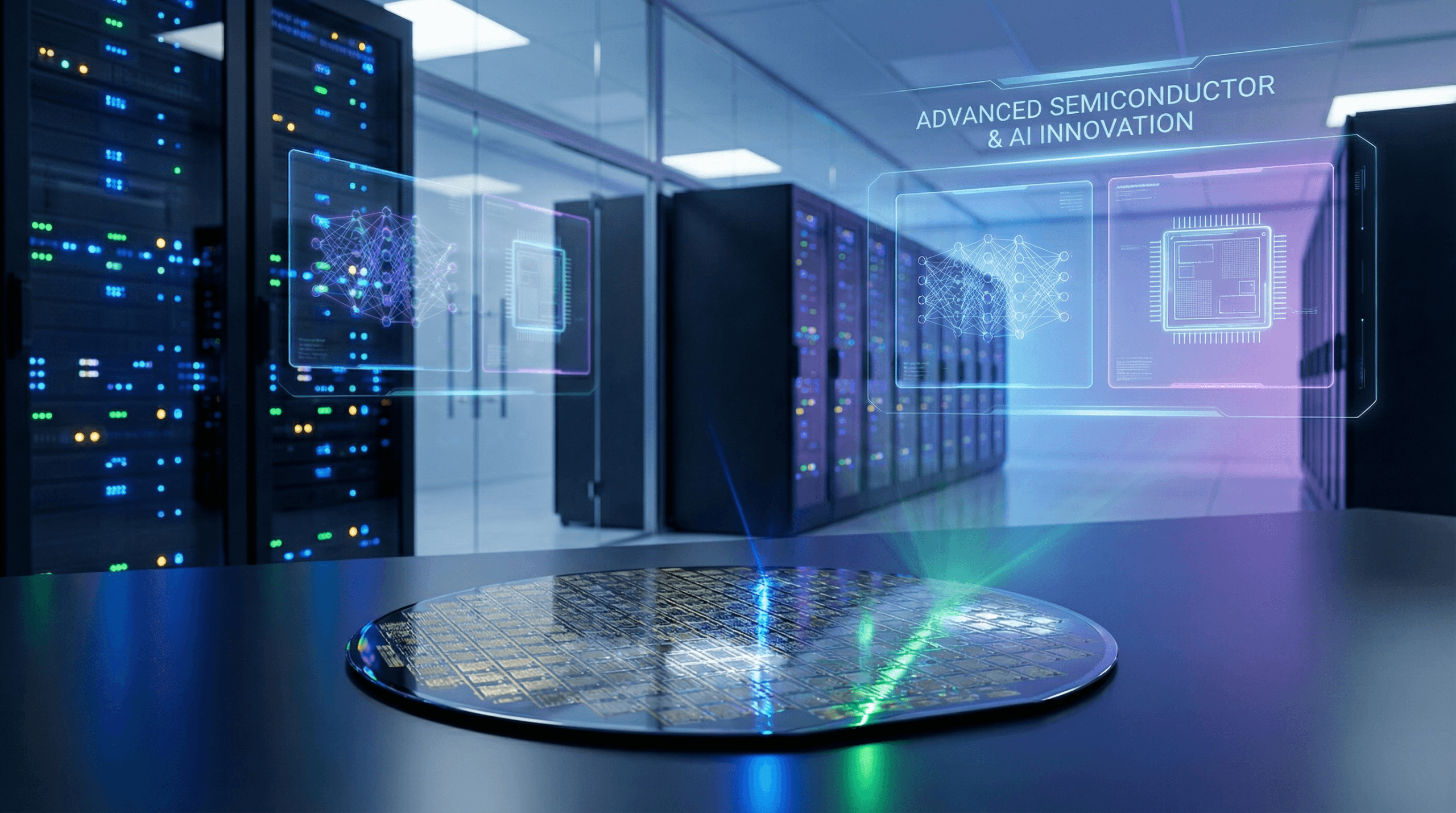
The semiconductor industry was rocked this week by the finalization of a landmark $5 billion deal between two of its fiercest competitors: Nvidia and Intel. Nvidia’s strategic investment in Intel, acquiring a significant stake and becoming one of its largest shareholders, signals a major realignment in the chip landscape. The collaboration will see Intel produce custom x86 CPUs for Nvidia’s AI platforms and co-develop integrated system-on-chip (SoC) designs, leveraging Nvidia’s high-speed NVLink interconnect technology. This partnership aims to create a powerful new hybrid computing architecture optimized for AI servers, data centers, and high-performance PCs. The move comes as Intel seeks to regain its footing after a challenging period, while Nvidia looks to further entrench its dominance in the AI space by gaining deeper influence over the entire CPU-GPU stack. The AI arms race continues to escalate, with tech giants collectively pouring an estimated $320 billion into artificial intelligence in 2025, a 39% increase from the previous year. This insatiable demand for processing power is fueling a boom in the semiconductor market, with projections showing AI accelerator chip sales could approach $900 billion and overall semiconductor spending hitting $1 trillion in 2026.
Investment implications: This Nvidia-Intel alliance could create a formidable new force in the semiconductor industry, potentially blunting the competitive edge of rivals like AMD and TSMC. Investors should monitor the development of this partnership closely, as it could influence industry standards and create new opportunities for companies that align with this emerging ecosystem. The continued surge in AI investment underscores the long-term growth potential of the entire semiconductor value chain, from chip designers to equipment manufacturers.
Emerging Tech Trends
Beyond the headlines of Big Tech, several emerging technology trends are gathering momentum and poised for significant growth in 2026. The relentless expansion of cloud computing continues to be a primary driver of innovation, providing the foundational infrastructure for everything from AI development to the Internet of Things (IoT). However, this increasing reliance on cloud environments also brings heightened cybersecurity risks. Experts predict a surge in AI-powered cyberattacks in 2026, forcing companies to adopt more sophisticated, AI-driven defense mechanisms. The rollout of 5G technology is also set to accelerate, unlocking new possibilities for high-speed, low-latency applications in areas like autonomous vehicles, smart cities, and advanced IoT deployments. Meanwhile, the once-distant promise of quantum computing is inching closer to reality. While still in its early stages, advancements in quantum hardware and hybrid quantum-classical systems are opening up new avenues for solving complex problems in fields like drug discovery, materials science, and financial modeling. These trends, while diverse, are interconnected, with advancements in one area often fueling progress in others.
Investment implications: The convergence of these emerging technologies creates a fertile ground for investment opportunities. Companies at the forefront of cybersecurity, particularly those leveraging AI for threat detection and response, are likely to see strong demand. The expansion of 5G and IoT will benefit a wide range of companies, from network equipment providers to sensor manufacturers and data analytics platforms. While quantum computing remains a long-term play, early-stage investors may find opportunities in companies developing key enabling technologies or software for this nascent field.

Tech Stock Spotlight
In a market teeming with high-flying tech stocks, Microsoft (MSFT) stands out as a beacon of stability and continued growth. The software giant’s stock rose a respectable 15% in 2025, and it currently trades at a fair price-to-earnings ratio of 26. Microsoft’s dual engines of growth—the established Microsoft Cloud segment and the rapidly expanding Intelligent Cloud segment—provide a powerful combination of financial strength and future potential. The company’s Azure cloud platform, in particular, is a key beneficiary of the AI boom, with revenue growing an impressive 40% year-over-year. With analysts projecting 16-17% annualized earnings growth, Microsoft offers a compelling blend of upside potential and blue-chip reliability.
For investors seeking a more under-the-radar opportunity, Motorola Solutions (MSI) presents an interesting case. This is not the mobile phone company of old; Motorola Solutions is a leader in communications equipment and software for public safety and enterprise clients. The stock is currently trading at a discount to its historical valuation, offering an attractive entry point. A key catalyst for the company is its recent $4.4 billion acquisition of Silvus Technologies, a specialist in proprietary communications technology for challenging environments. This acquisition provides a significant opportunity for Motorola Solutions to integrate and sell this advanced technology to its extensive customer base. With analysts forecasting 9% annual earnings growth, Motorola Solutions is a solid business with a clear path to future expansion.
Investment implications: Microsoft represents a core holding for any tech-focused portfolio, offering exposure to the broad trends of cloud computing and artificial intelligence with a relatively lower risk profile. Motorola Solutions, on the other hand, offers a more value-oriented play on the critical communications and security sector, with a recent acquisition providing a clear catalyst for growth.
Week Ahead for Tech
The tech world will turn its attention to Las Vegas next week for the annual Consumer Electronics Show (CES), which runs from January 6-9. The event is expected to be a hotbed of innovation, with AI slated to be the dominant theme across all product categories. Major announcements are anticipated from a slew of tech giants. Samsung and LG are set to showcase their latest advancements in display technology, with both companies expected to unveil new lines of Micro RGB TVs. The semiconductor industry will also be in the spotlight, with Intel launching its new Core Ultra Series 3 processors and AMD and Nvidia expected to provide updates on their AI strategies. Beyond the big names, CES will also provide a glimpse into the future of robotics, smart home automation, and a host of other cutting-edge technologies. The show will set the tone for the tech landscape in 2026, providing investors with valuable insights into the key trends and products that will shape the market in the coming year.
Investment implications: CES is a key event for identifying emerging trends and potential investment opportunities. Investors should pay close attention to the announcements coming out of the show, particularly in the areas of AI, display technology, and semiconductors. The products and technologies showcased at CES often provide a leading indicator of future consumer and enterprise demand, offering a valuable edge for those looking to stay ahead of the curve.
Disclaimer: This analysis is for informational and educational purposes only and should not be considered financial advice. Always conduct your own research and consult with a qualified financial advisor before making investment decisions.